
Free visual inspection and a written scope of work before any mitigation begins - photos, moisture readings, and drying logs go in your claim file
The scope we write is the scope we bill. Anything new gets shown to you, in writing, before we touch it.
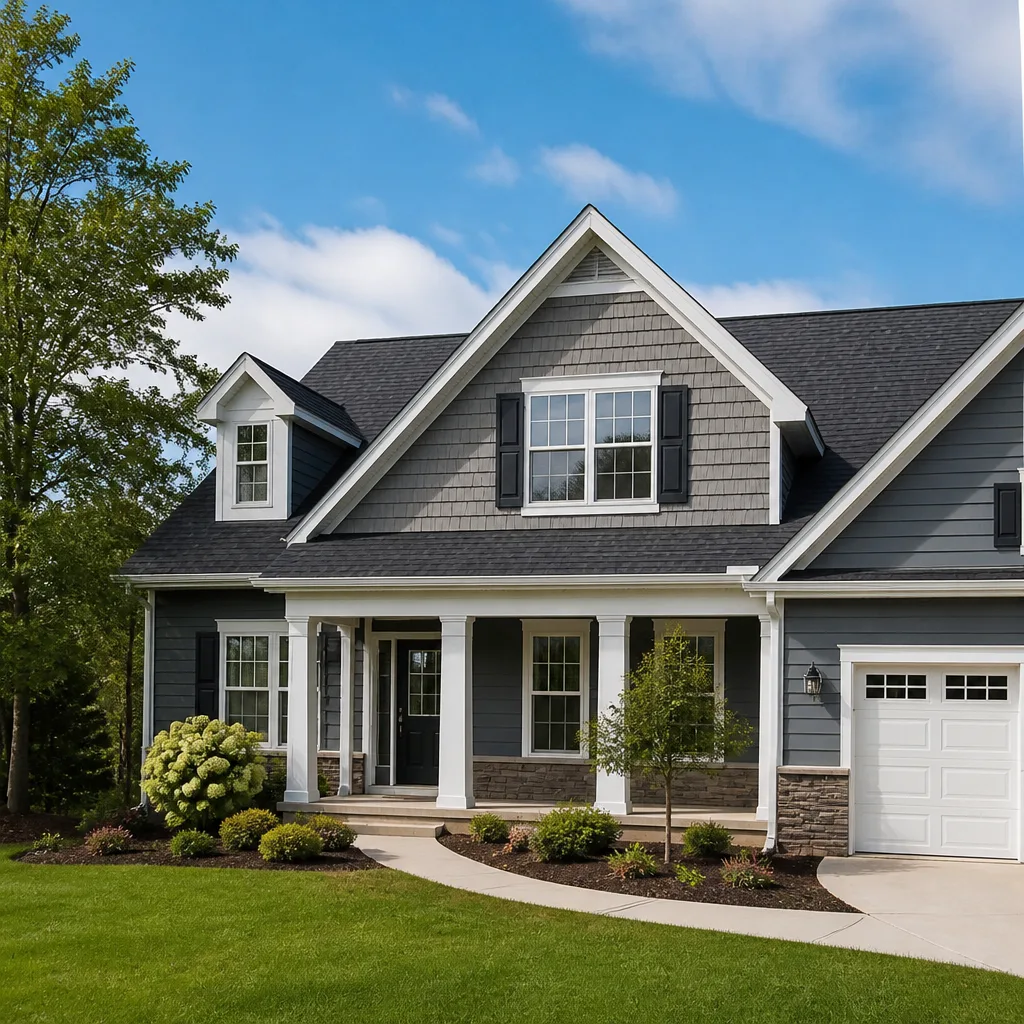
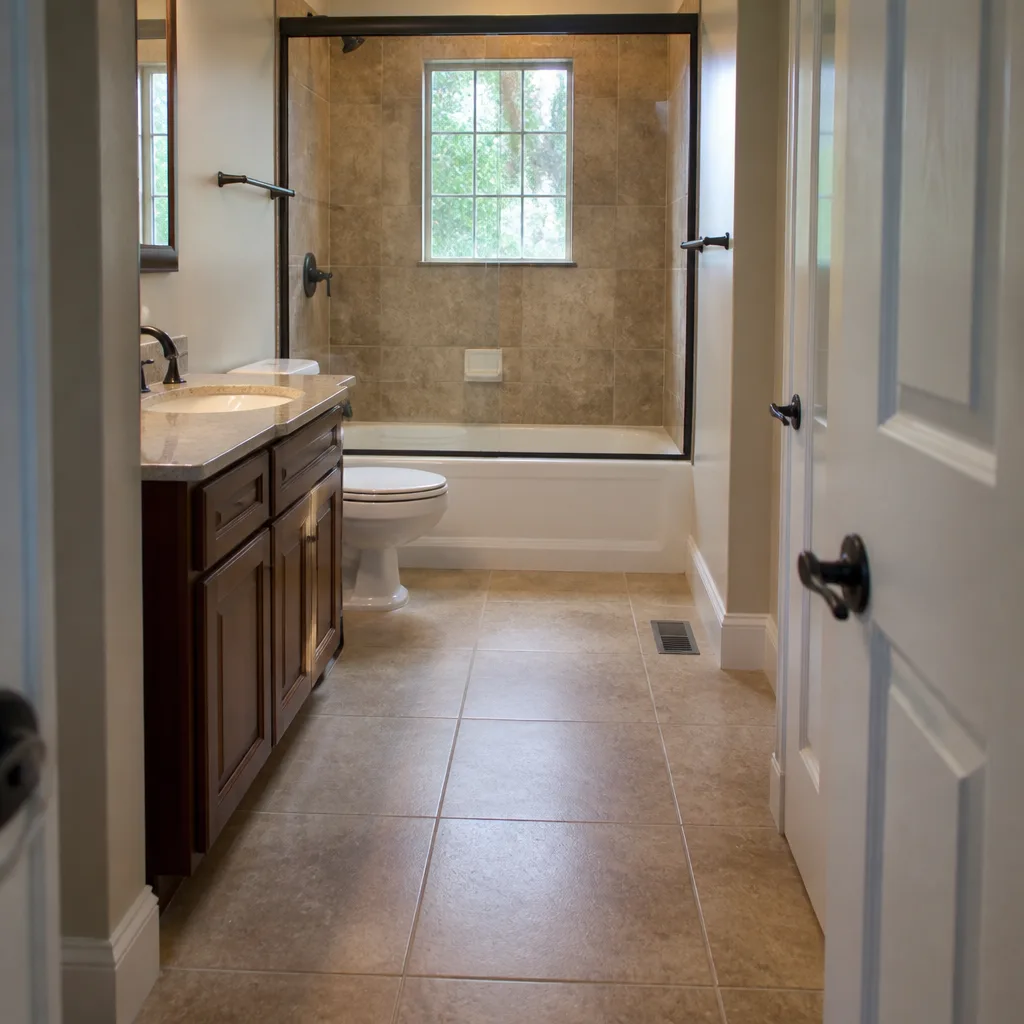
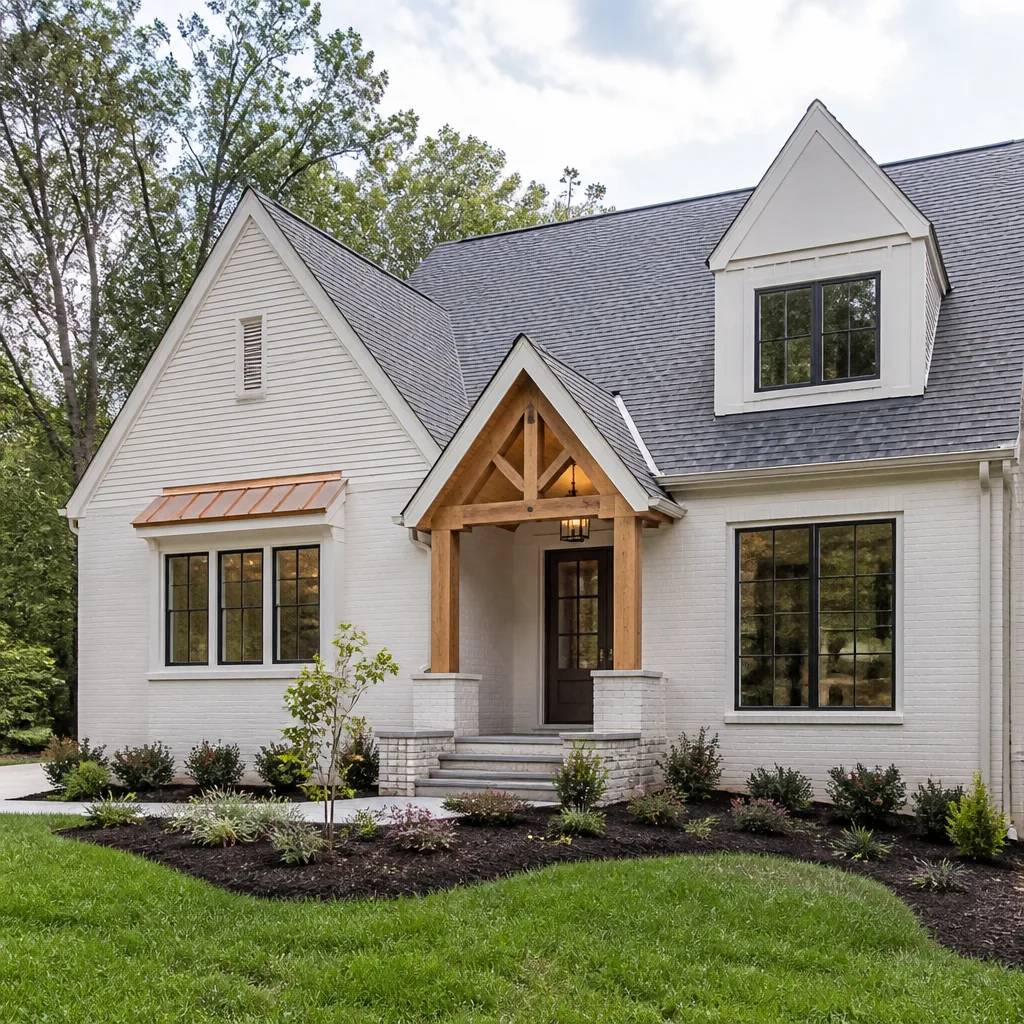
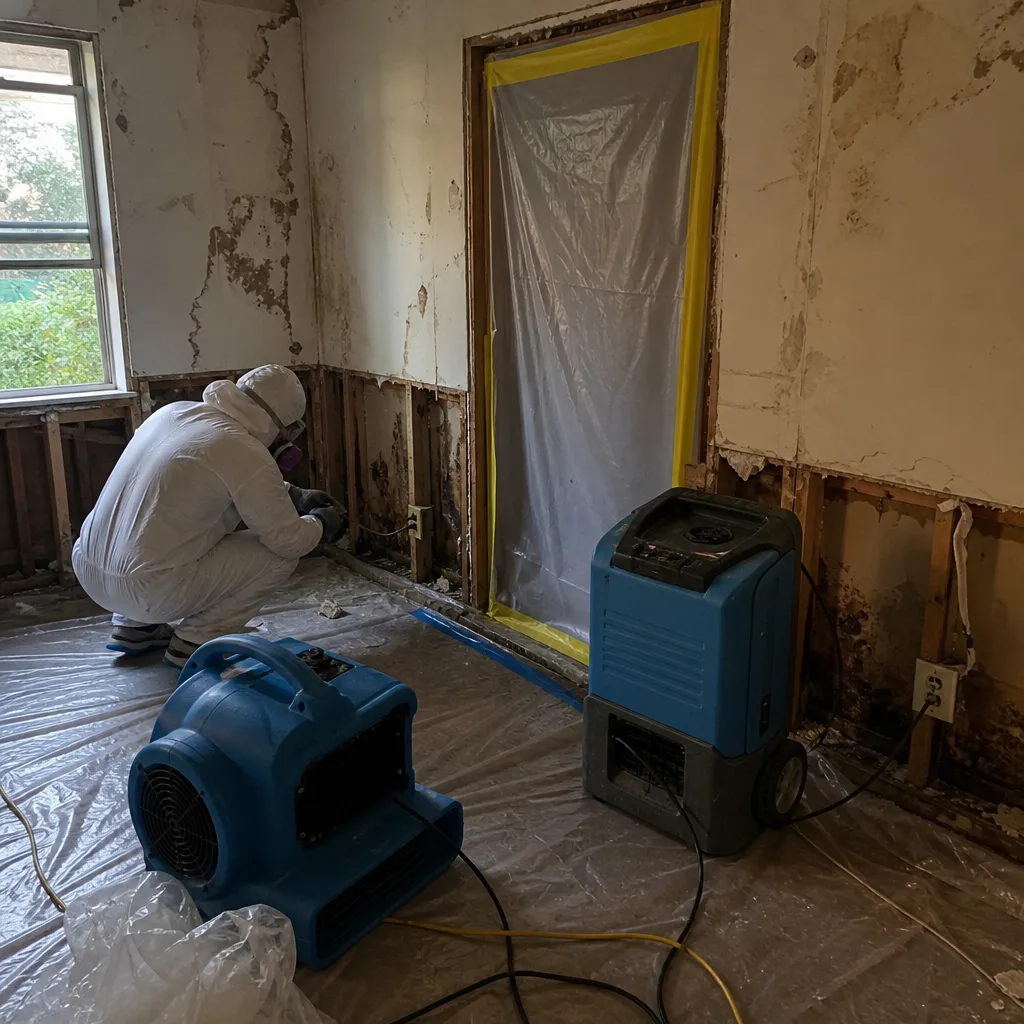 Before
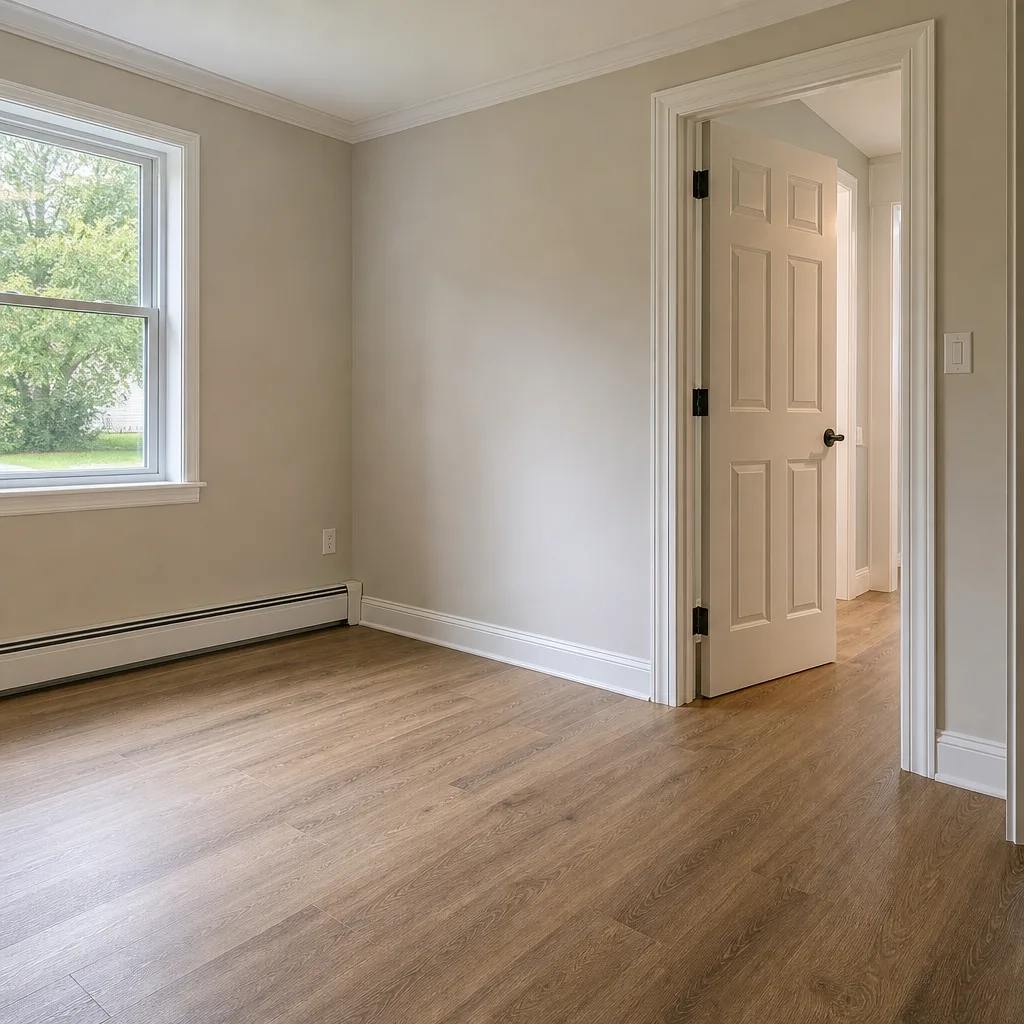 After
After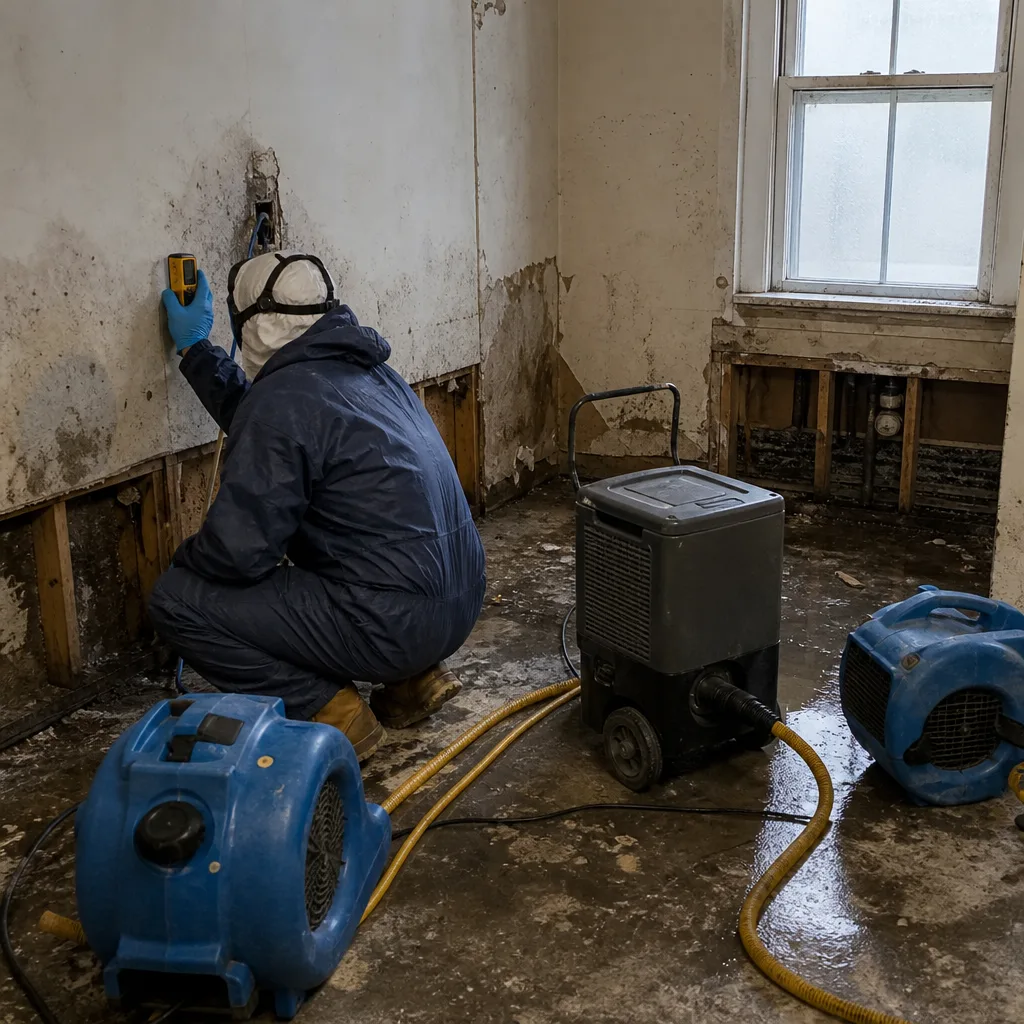 Before
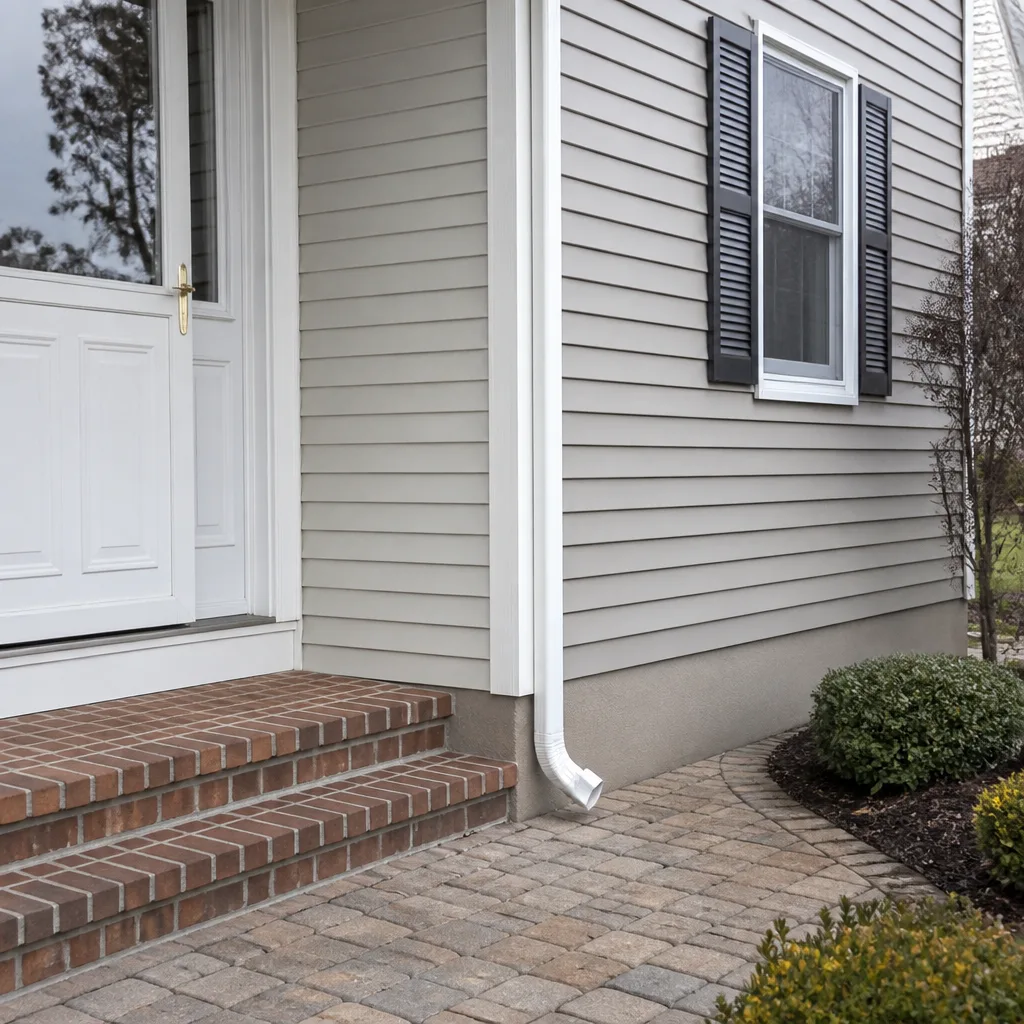 After
After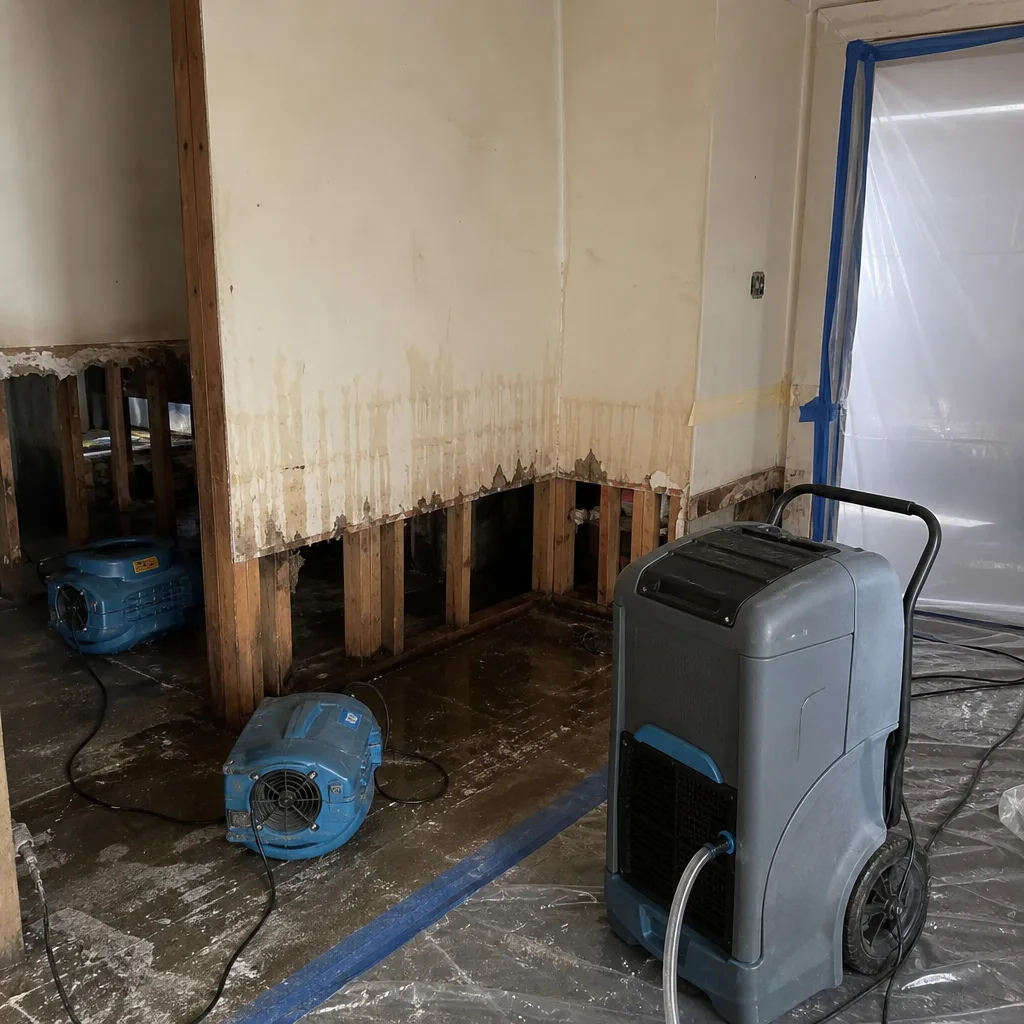 Before
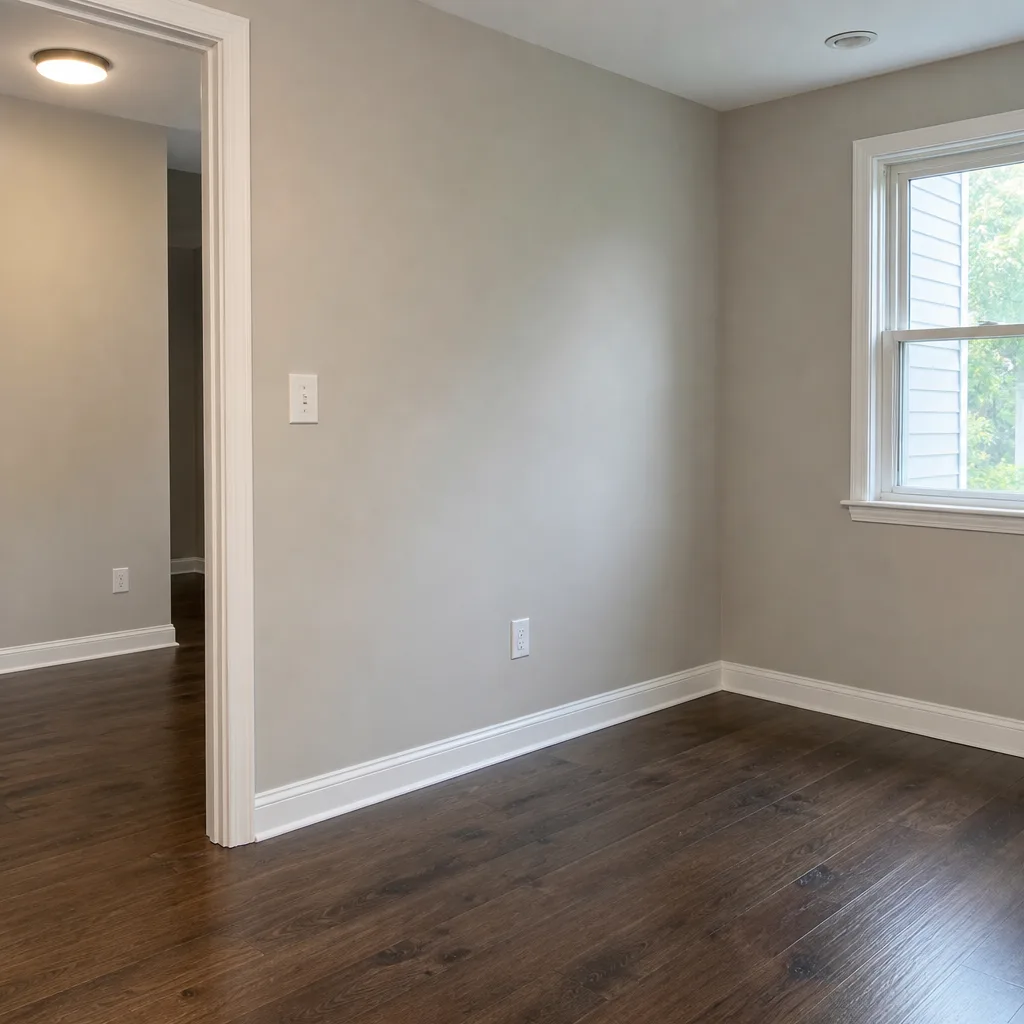 After
After24/7 Emergency Storm & Disaster Restoration in Nyack
Storm and flood damage in Nyack needs a response measured in minutes, not days. When the Hudson overflows the bulkhead or a nor’easter drives water through the river side of your basement, the clock starts before you’ve even finished calling your insurance company. Floodline Restoration Co. keeps a live dispatcher on the phone at (914) 809-9936 around the clock, every day, because storm surge does not check business hours. We dispatch crews to Nyack, West Nyack, Congers, Nanuet, and New City the moment you call, and the visual inspection is free. The first hour decides whether you’re drying a room or rebuilding a foundation, and we’ve seen enough Hudson floods to know which way it’s going within minutes of walking through the door.
Understanding Storm & Disaster Restoration Severity in Nyack Properties
Nyack homes pose a specific restoration profile that most national franchises don’t account for. The village’s dominant housing stock is late-Victorian through 1930s construction: original wood-lath plaster walls, rubble stone or brick foundations, and no modern vapor barriers anywhere. When Category 3 floodwater, which is what the Hudson delivers during surge events, enters those assemblies, the moisture does not behave like it does in a drywall-and-vapor-barrier house in Rockland County’s newer subdivisions. Plaster acts as a reservoir. Lath behind it holds water between the keys. Rubble foundations wick saline moisture upward through capillary action for weeks after the visible water is gone. Standard drying timelines based on gypsum and batt insulation simply do not apply here. We moisture-map every affected surface, we take daily readings with hygrometers, and we run professional-grade Dri-Eaz dehumidifiers and XPOWER air movers until every wall assembly hits its pre-loss moisture content, not just until the surface feels dry.
Why Nyack Property Owners Choose Floodline Restoration Co.
- 45-minute response commitment to Nyack: when a crew is dispatched, we commit to a 45-minute arrival window to the village proper, and we hit it because our dispatch board is live, not a voicemail.
- 24/7 live answer from a real person: call (914) 809-9936 at 2 a.m. and a live dispatcher picks up. No recorded menu, no “leave a message and we’ll get back to you.”
- IICRC-certified crews: our technicians train to IICRC standards including WRT (Water Damage Restoration Technician) and FSRT (Fire & Smoke Restoration Technician) and use the same protocols on every job, including the brackish-water complications specific to Nyack.
- Free visual inspection: you don’t pay to find out what you’re facing. We walk the property, map the moisture, identify the salt concerns, and tell you what we found in plain language before you sign anything.
- Direct insurance billing: we bill your carrier directly and keep the paperwork between us and the adjuster. You are not the messenger running estimates back and forth in the middle of a flood.
- One team from extraction to reconstruction: the same Floodline Restoration Co. crew that extracts the water is the crew that rebuilds the wall. No mid-job handoff, no inherited strangers. We finish what we start, and the 90-Day Done Right Promise backs it in writing.
Our Storm & Disaster Restoration Process
Inspection & Assessment
We arrive, we walk the property inside and out, and we take thermal imaging and moisture readings to find where the water actually went. This is where we test for salt contamination in Nyack flood events, because brackish Hudson surge water behaves differently than rain water and changes the restore-versus-replace decisions on HVAC, plumbing, and the old foundation.
Extraction & Stabilization
Water comes out first, and it comes out fast. We run professional-grade extraction units on standing water, remove waterlogged contents, and stabilize the structure so the damage stops spreading. If the storm left roof damage or broken openings, emergency board-up and tarping happen in this phase.
Drying & Dehumidification
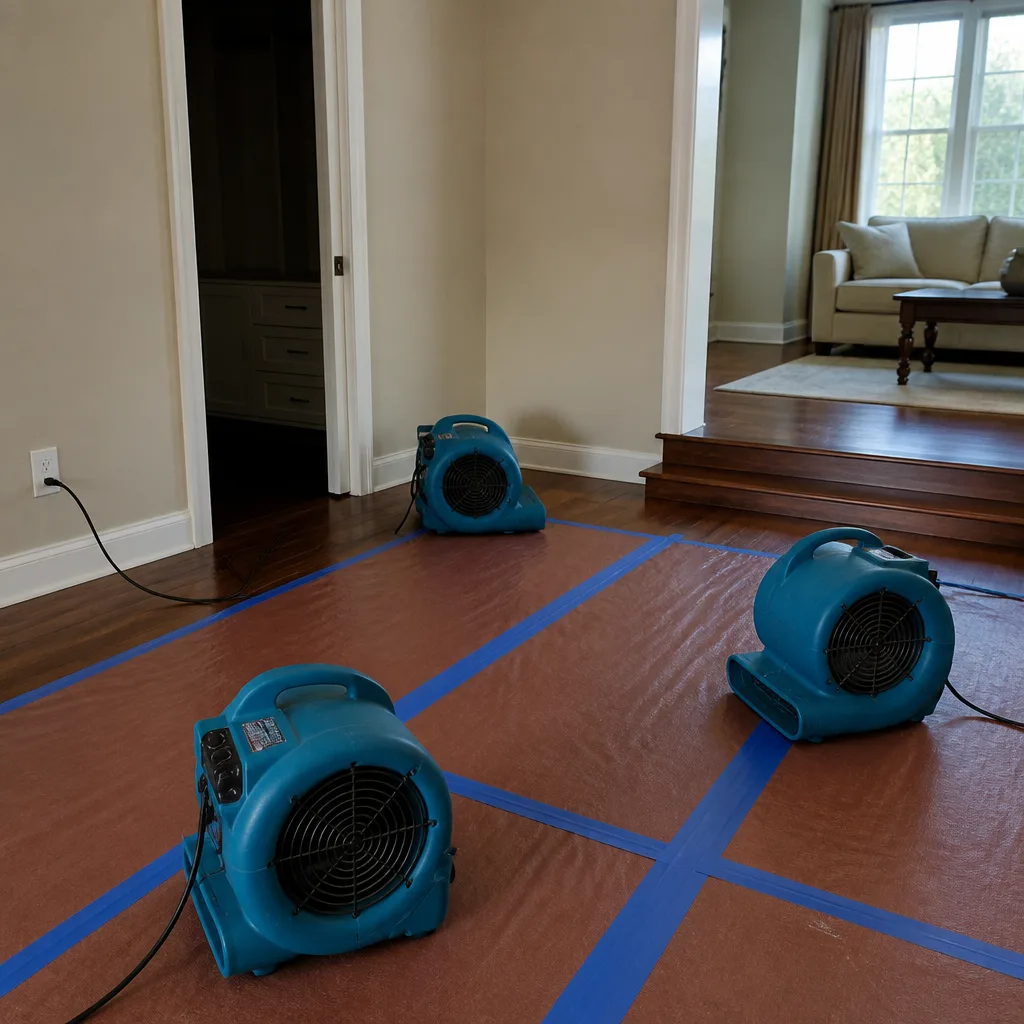
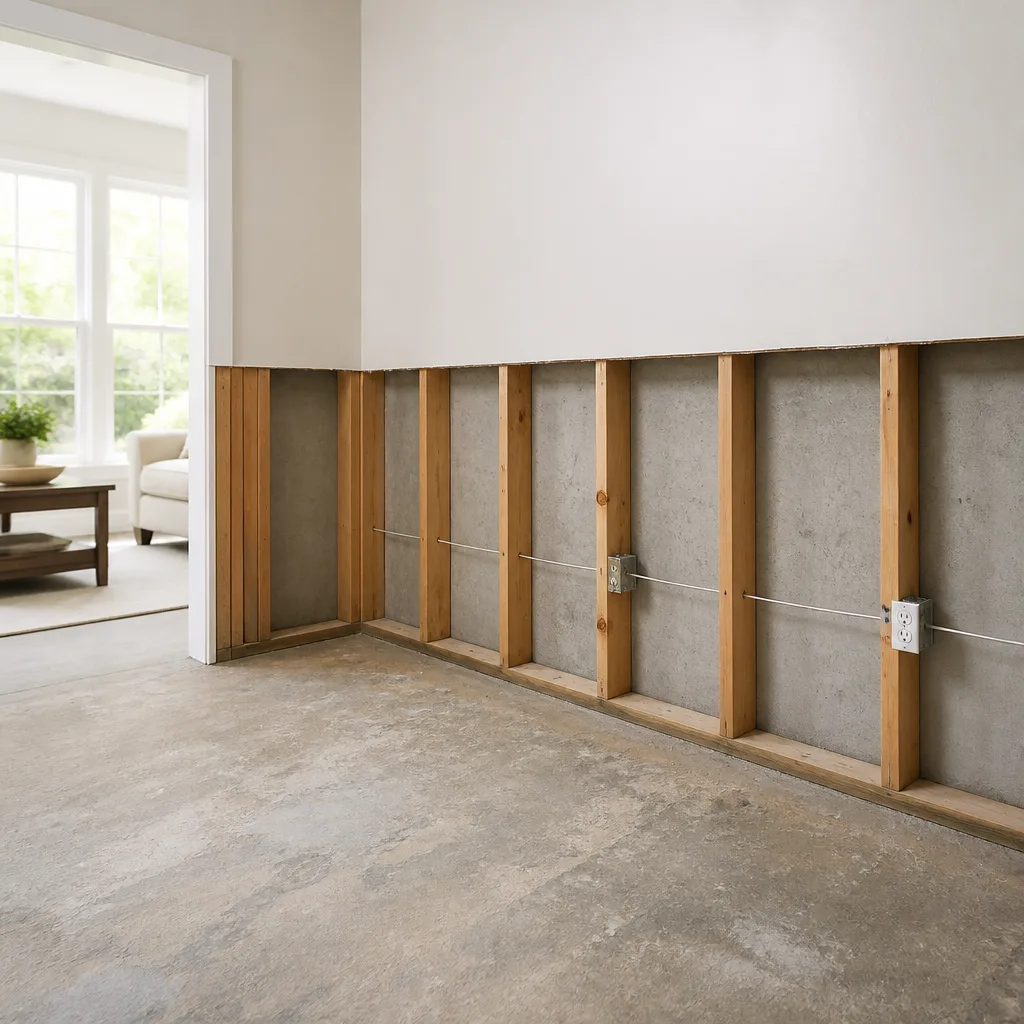
This is where Nyack’s older homes need a longer, more careful protocol. We set XPOWER air movers and Dri-Eaz dehumidifiers in an arrangement calculated for each room, then we return daily for moisture readings. In 1920s plaster-and-lath walls, we often need to open small drying ports in the plaster to pull moisture from the cavity behind it. We log every reading and hand that log to you and your carrier.
Cleaning & Sanitization
After extraction and drying, every affected surface is cleaned and sanitized with professional-grade antimicrobials. In Nyack brackish flood events, we also flush and clean salt residue from metal components - door hardware, electrical boxes, duct registers - because salt accelerates corrosion long after the water is gone.
Salt & Corrosion Treatment
Nyack-specific step, and one we do not skip. Surge water from the Hudson carries measurable salinity, and salt eats garage-door hardware, copper piping, and mortar joints. We test, we document, and we treat what can be saved and flag what cannot before it becomes a bigger problem.
Repairs & Restoration
The last phase is putting your house back together. Drywall replacement or plaster repair, trim, flooring, paint, and the rebuild of anything that could not be saved. Same crew, same supervisor, same warranty. The 90-Day Done Right Promise means if it’s not right, we make it right. Written, no argument.
Need Emergency Storm & Disaster Restoration in Nyack Now?
Crews minutes away, answering live 24 hours a day. The sooner we start, the less it costs.
Working With Your Insurance Company
Most storm and flood claims in Nyack involve a carrier adjuster who is not from the area and has never seen what Hudson salinity does to a 1920s foundation. That’s where our documentation changes the outcome. From the first hour on site, we photograph everything, room by room, before we move a single piece of debris. We take moisture readings before drying starts, daily during the drying, and final clearance numbers when we’re done. Your adjuster gets a line-item scope of work, not a lump-sum guess, and we talk to them directly so you don’t spend your evenings on hold with an insurance company. The goal is simple: your claim reflects the actual scope of the damage, and you get the full repair you’re owed under your policy.
What We Provide Your Insurer
- Thorough documentation of the loss
- Photos of all damage, room by room
- Moisture readings and drying logs
- A detailed, line-item scope of work
- Direct coordination with your carrier
Built for Nyack’s Loss Calendar
Nyack’s storm damage season runs all year, but the pattern shifts with the calendar. Late summer and early fall bring the heavy coastal systems: tropical remnants and early nor’easters that pile Hudson surge against the eastern edge of the village. Winter flips the threat inland, with deep freezes bursting supply lines in unheated basements and crawl spaces, especially in the older homes around the historic district where original plumbing runs through rubble foundation walls. Spring thaw follows, and every home with an old stone foundation along South Broadway or near the riverfront watches the same thing happen: snowmelt and rain find the path of least resistance through century-old mortar. There is no quiet month in Nyack, just a rotating cast of water sources. That’s why we run our team against a live dispatch board, not a seasonal hiring cycle, and it’s the reason Storm & Disaster Restoration in this village requires continuous local readiness, not a response plan somebody wrote in a corporate office.
Storm & Disaster Restoration Across Nyack’s Neighborhoods
The riverfront blocks along Hudson Avenue and Gedney Street see the first and hardest hit when the Hudson tops its banks. These are older homes, many with original foundations and first floors sitting only a few feet above the high-tide line. The brackish water here is not a hypothetical, it is a known quantity, and we test for salt in every riverfront loss we handle. West of Broadway, the hill climbs fast, which changes the damage profile: water coming down the slope, not up from the river, pooling in basements on Franklin Street and the side streets off Main. The South Broadway corridor has its own rhythm, a mix of old Victorians and converted commercial spaces where storm water funnels through alleys and finds the low door. Up around Upper Nyack and the North Broadway run, we see more wind-driven damage and roof failures, plus the older hillside homes with terraced drainage that backs up in a heavy downpour. The street-to-street variation in Nyack is exactly why a national franchise template fails here: the right answer on Hudson Avenue is wrong on North Midland Avenue, and we know the difference from having worked both.
Specialized Storm & Disaster Restoration Services We Offer in Nyack
Flood Damage Restoration
This is the core of what we do in Nyack. Hudson surge water, tidal backflow, nor’easter flooding, burst pipes in January, all of it gets the same disciplined response: extract, dry, test for salt, rebuild. In the older plaster homes, drying is a controlled process, not a race. We set up moisture mapping on day one so we’re not guessing where the water went behind those lath walls.
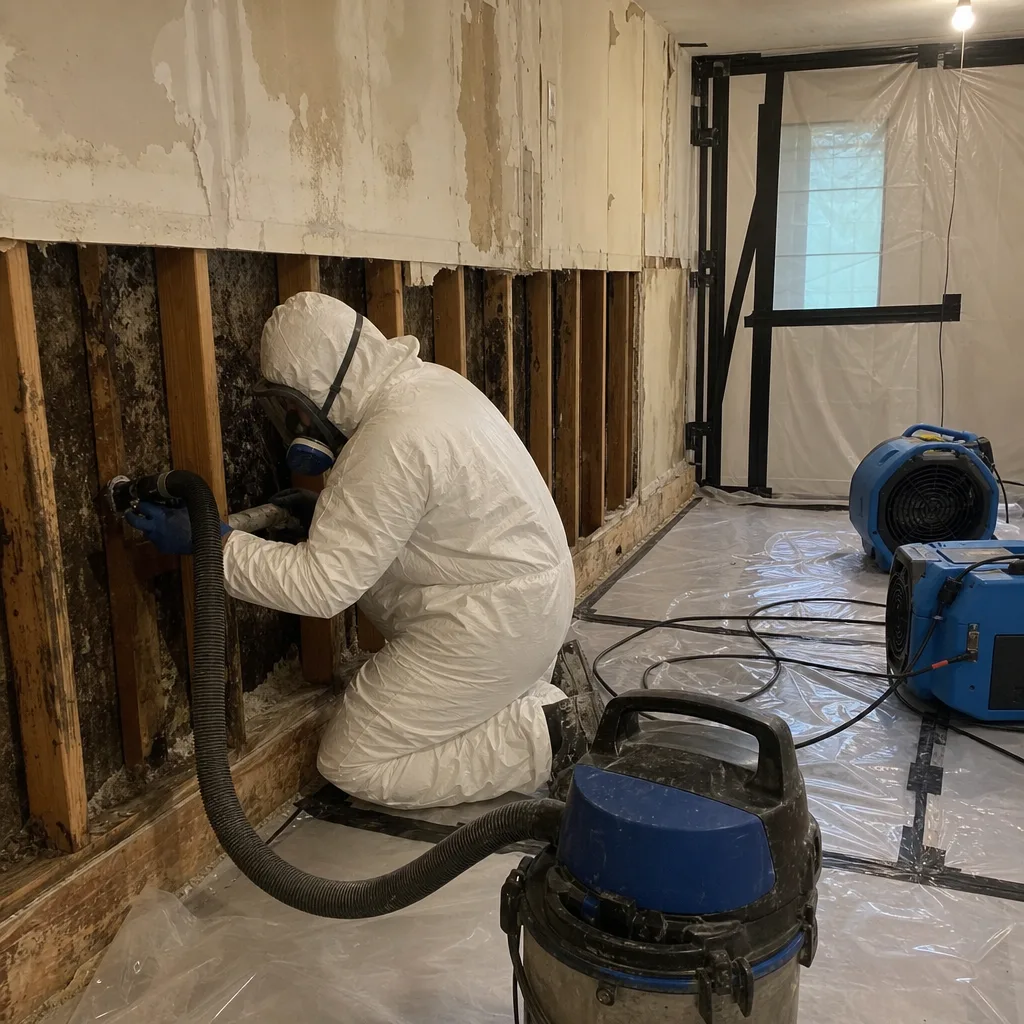
Storm Damage Cleanup
After the water recedes, the mess remains: mud, debris, ruined contents, and a film of river silt on everything. We clear it, clean it, and sanitize it. For Nyack’s brackish flood events, cleanup includes salt residue removal from floors, walls, and mechanical systems so corrosion doesn’t keep spreading after the visible damage is already handled.
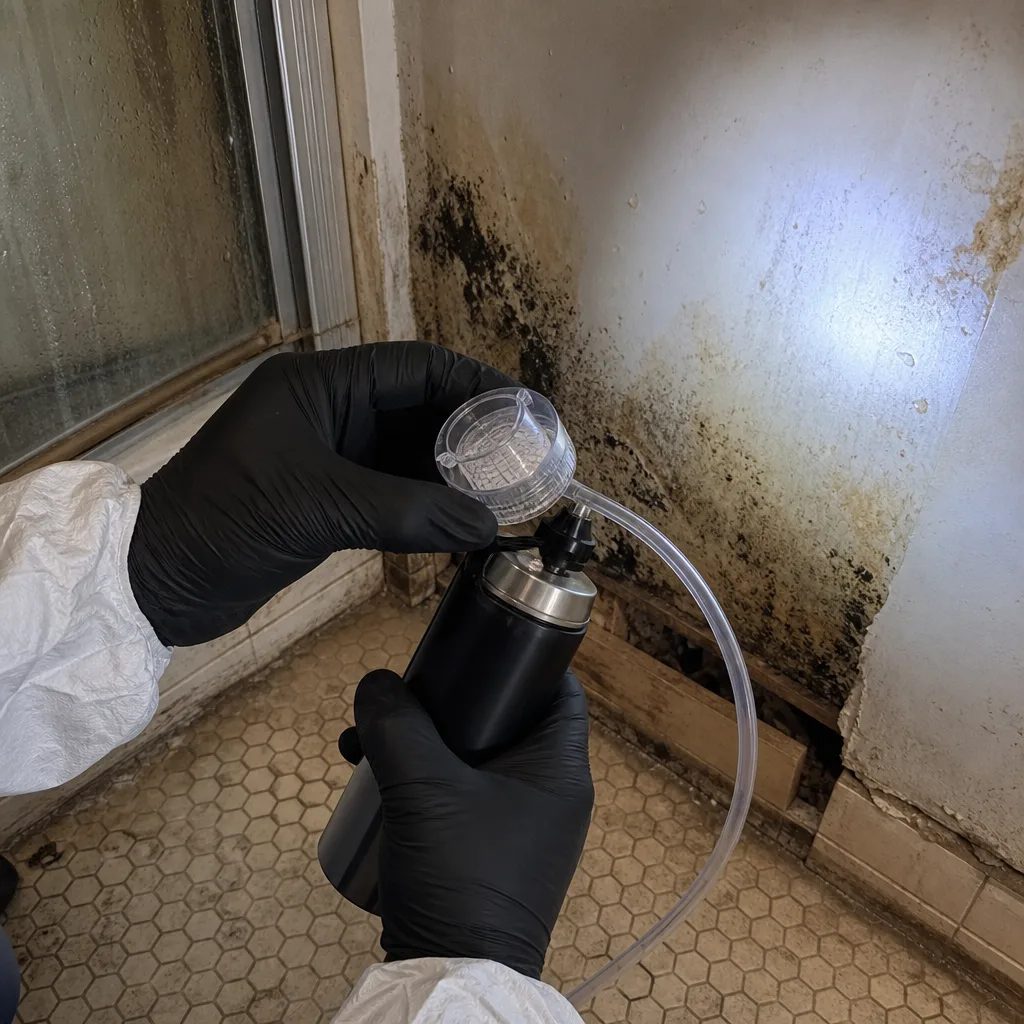
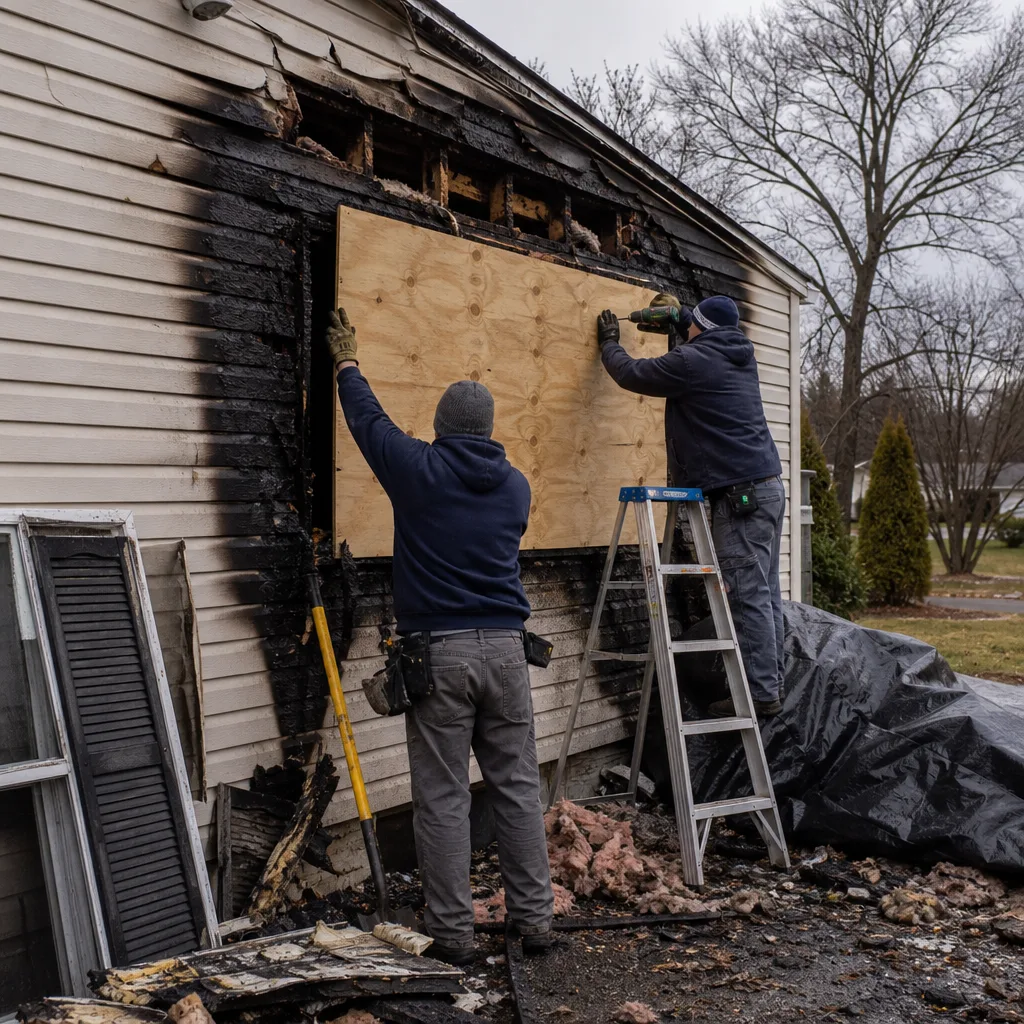
Emergency Board-Up
A broken window or missing door after a storm is an open invitation, and in a riverfront village like this one, it’s also a moisture leak that keeps working against you. We board up with plywood, secure the opening, and keep the weather outside while restoration moves forward inside. Done right, this is a same-visit task.
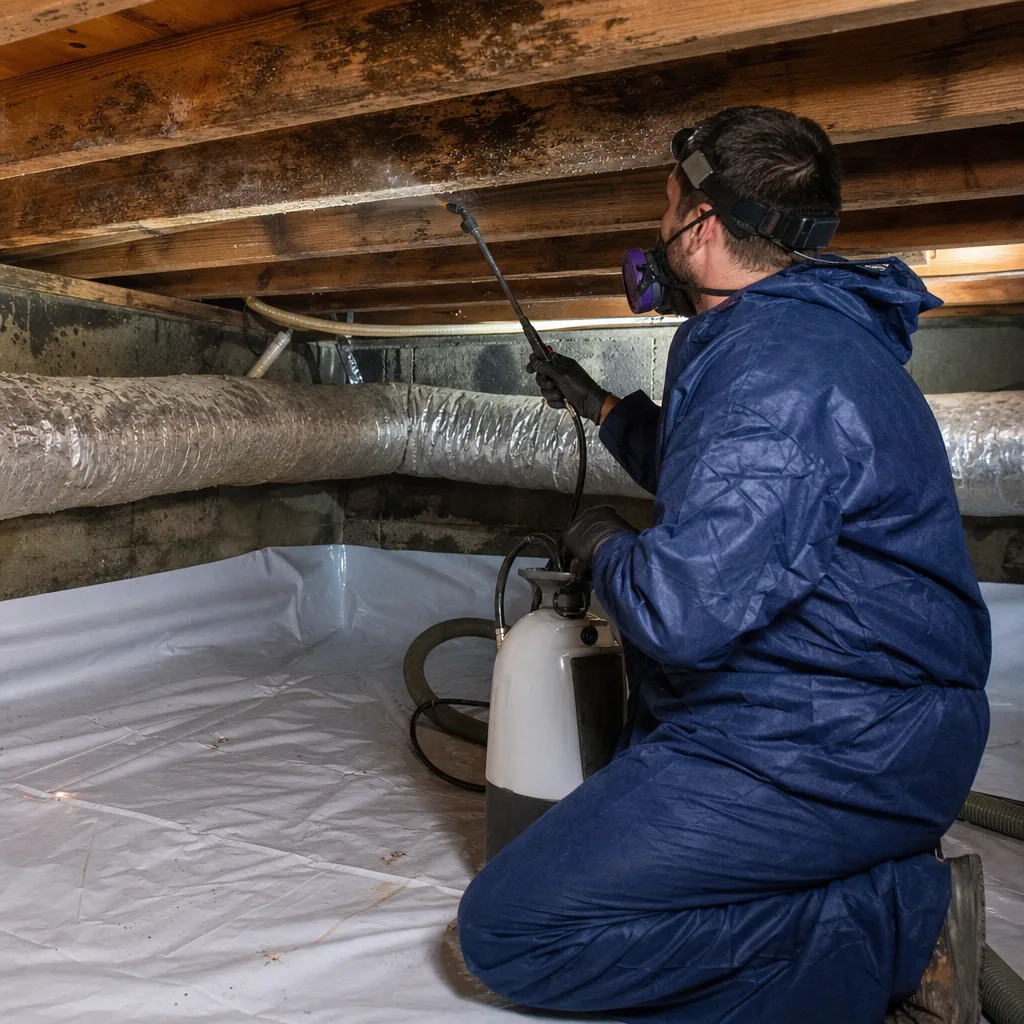
Roof Tarping
Wind damage to a Nyack roof, especially on the older Victorians with slate or original cedar, doesn’t wait for a roofer’s schedule. We tarp the opening on the same visit to stop the interior damage from compounding. The tarp is temporary, but the protection is immediate, and it buys you time to make a sound decision on the actual repair.
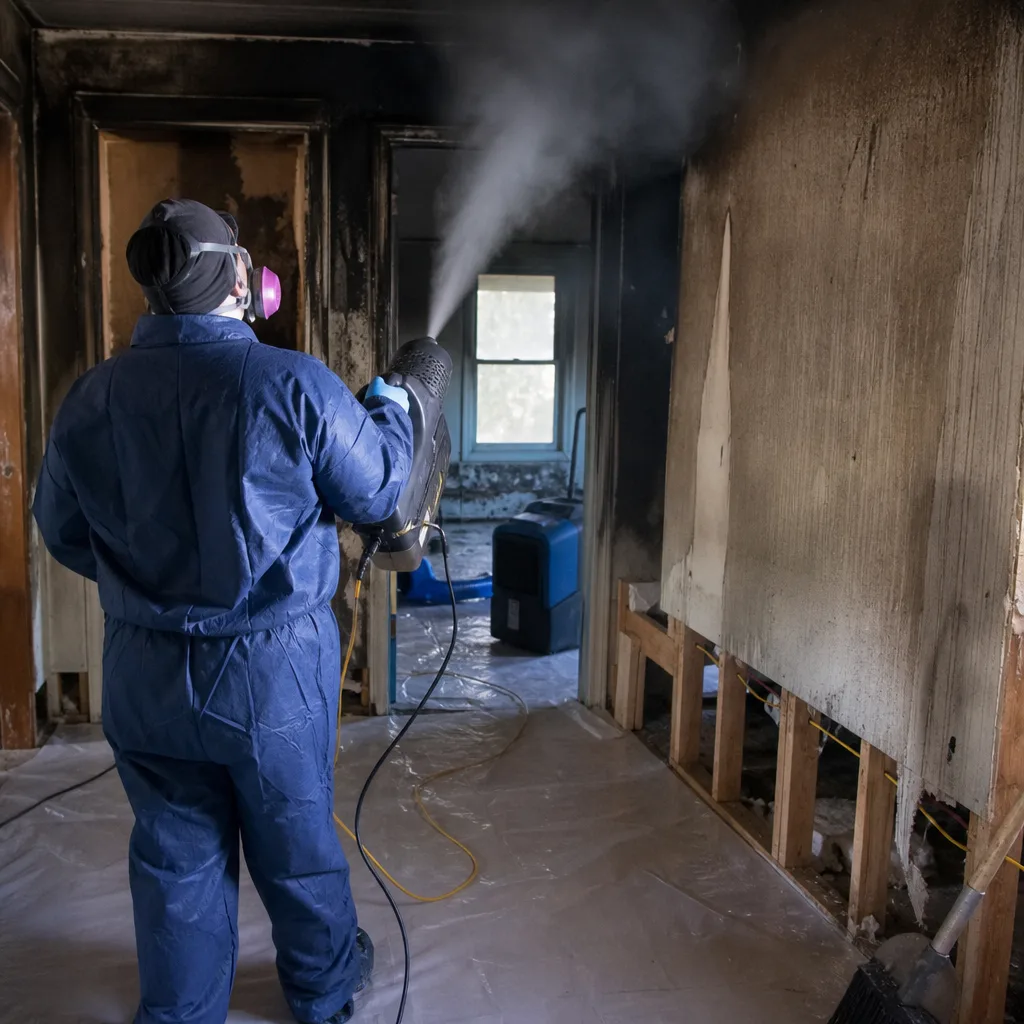
Debris Removal
No matter what the storm dropped in your yard, on your roof, or through your window, we haul it. We cut what needs cutting, clear what’s blocking access, and leave the property ready for the next step. In a village with tight streets and old driveways, our crews handle Nyack’s access constraints as a matter of routine.
What happens when you call
- 1
A real person answersNo phone trees - you reach a local pro.
- 2
You get an upfront price rangeHonest numbers before anyone is dispatched.
- 3
A background-checked tech heads outLicensed & insured, dispatched right away.
- 4
You approve before work beginsNothing starts until you say go.
Storm & Disaster Restoration Costs in Nyack, NY
We believe in giving you a real number, not a range so wide it means nothing. Here’s what we actually see in Nyack. A simple clean-water extraction from a burst pipe in a modern basement, no structural damage, runs $1,800 to $3,500. A Category 3 Hudson flood in an older home with plaster walls and salt contamination runs a very different bill, typically $8,000 to $35,000 depending on how much of the building envelope has to be opened and how long drying takes. Emergency board-up and tarping is usually $400 to $1,200 as a stabilization step. Debris removal ranges from $500 to $3,000 depending on volume and access. Most Nyack storm and flood losses are covered under homeowner’s insurance, subject to your policy’s flood coverage terms, and we bill your carrier directly. The free visual inspection is the honest way to a firm scope: we tell you what we found, what it costs, and what your insurer will likely cover, before you commit to anything. Call (914) 809-9936 and we’ll come look.
We Also Serve Cities Near Nyack
Our crews respond daily to West Nyack, Congers, Nanuet, and New City, with the same live dispatch, the same 90-Day Done Right Promise, and the same single-crew-to-finish approach. If you’re a few minutes outside the village, call the same number and we’ll be there just as fast.
Serving Nyack, NY - Our Local Coverage Area
We’re based in the Nyack area and know this community well. Use the map below to see our service coverage - if you’re nearby, we can almost certainly help.
Nyack Storm & Disaster Restoration Questions, Answered
How does Nyack’s tidal surge make floodwater more damaging than a typical rainstorm?
Tidal surge from the Hudson carries salt water, and salt changes everything. Brackish water corrodes metal, it attacks mortar in old brick and stone foundations, and it holds moisture longer than fresh rainwater, which means drying takes more time and the long-term damage to a 1920s Nyack home is worse than the same volume of rain water would cause. That’s why we test for salt in every riverfront flood we handle.
What fails first on a Nyack garage door after a coastal flood?
The torsion springs. Salt water accelerates rust on the springs and they snap under load, sometimes weeks after the flood itself is long gone. We see it regularly on riverfront homes, and it’s why corrosion treatment is part of our flood response in Nyack. We inspect the door hardware as part of the restoration scope, and we replace or coat any spring showing early corrosion before it fails.
How long does it really take to dry a Victorian Nyack home after storm flooding?
Longer than a modern home, often by a factor of two or three. Original plaster and wood-lath walls hold moisture behind the plaster keys, and the Hudson valley’s trapped humidity after a storm slows the drying process further. A standard drywall room might hit dry standard in three to five days. A 1920s plaster room on the river side of Nyack can take ten to eighteen days of continuous dehumidification with daily monitoring before it hits pre-loss moisture content.
Do I need a salt-contamination test after the Hudson floods my Nyack basement?
If the water came from the Hudson or from storm surge, yes. Rainwater flooding does not require it, but brackish surge water does. Salt residue wicks into foundation mortar, it corrodes copper and galvanized plumbing, and it damages HVAC internals in ways that are invisible at first and expensive later. We run the test as part of our initial assessment on any riverfront or low-lying Nyack property where surge water is a possibility.
Can I keep my original plaster walls after a Nyack storm flood, or do they have to be torn out?
Often yes, you can keep them, but it depends on how far the water traveled behind the plaster and how quickly drying started. Plaster is surprisingly resilient if the cavity is dried properly. We cut small drying ports, move air through the lath cavity, and take daily moisture readings until the wall hits dry standard. Full tear-out is a last resort, and we’ll show you the moisture data that supports the recommendation either way.
How fast can someone actually get here when I call?
We commit to a 45-minute arrival window for emergency response in the village of Nyack. A live dispatcher answers 24/7, a crew is dispatched immediately, and extraction starts the same visit. For non-emergency assessments, we schedule around your availability, but the 45-minute commitment applies to any water, flood, or storm emergency.
Will my insurance cover Nyack flood damage?
Most Nyack homeowners’ policies cover storm-related water damage like burst pipes and wind-driven rain intrusion, but river flooding from the Hudson may require a separate flood policy. The answer depends on your specific policy language and the source of the water. We’ll document everything, we’ll talk directly to your adjuster, and we’ll help you understand what your policy covers before any work is authorized.
What should I do in the first 30 minutes after storm flooding?
Call us at (914) 809-9936 first, then your insurance company, in that order. Do not turn on any electrical appliances in wet areas, do not attempt to pump water out through a wall outlet, and do not walk through standing water that may have been in contact with sewage or river surge. If it is safe to do so, open doors and windows to start airflow, then let our team take over. The free visual inspection costs you nothing and tells you exactly what you’re facing.
Written by Curt Bowman, Owner at Floodline Restoration Co., serving Nyack and the surrounding Rockland County communities.