
Free visual inspection and a written scope of work before any mitigation begins - photos, moisture readings, and drying logs go in your claim file
The scope we write is the scope we bill. Anything new gets shown to you, in writing, before we touch it.

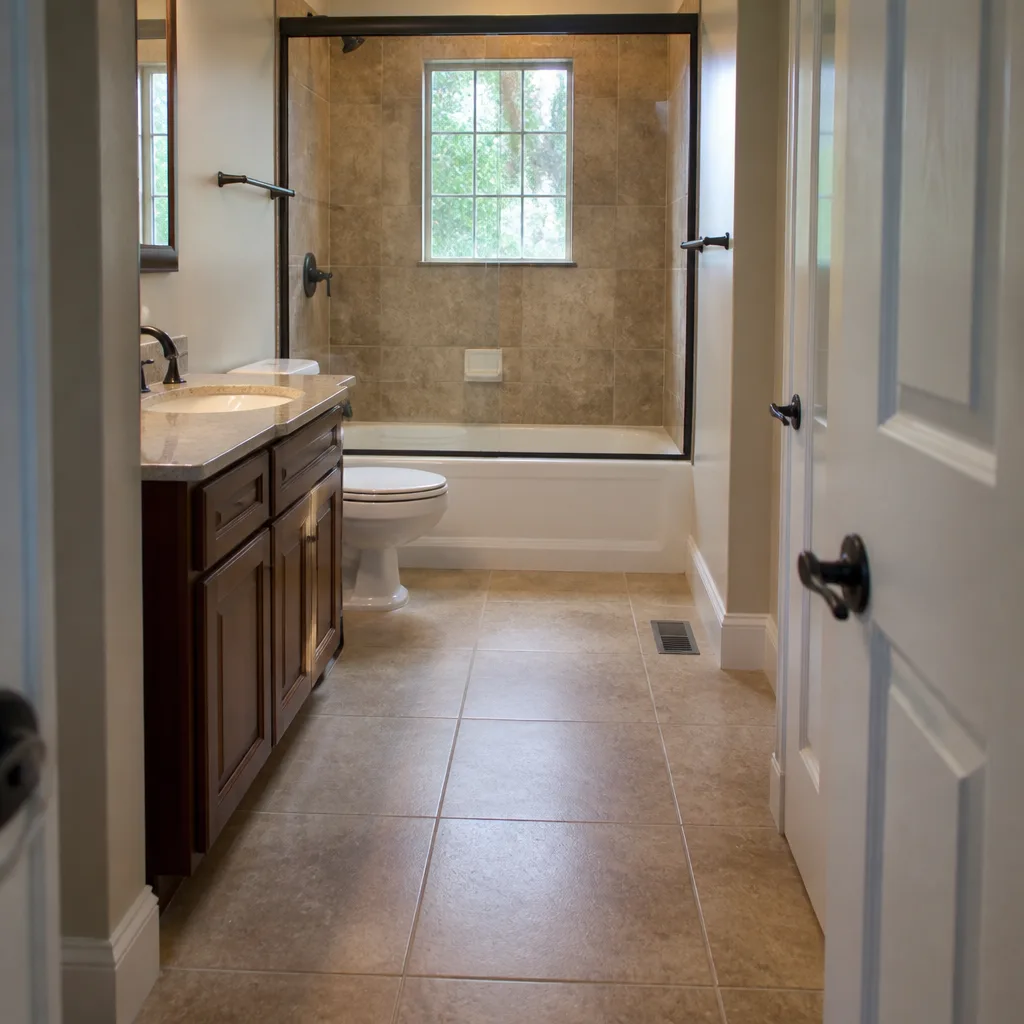

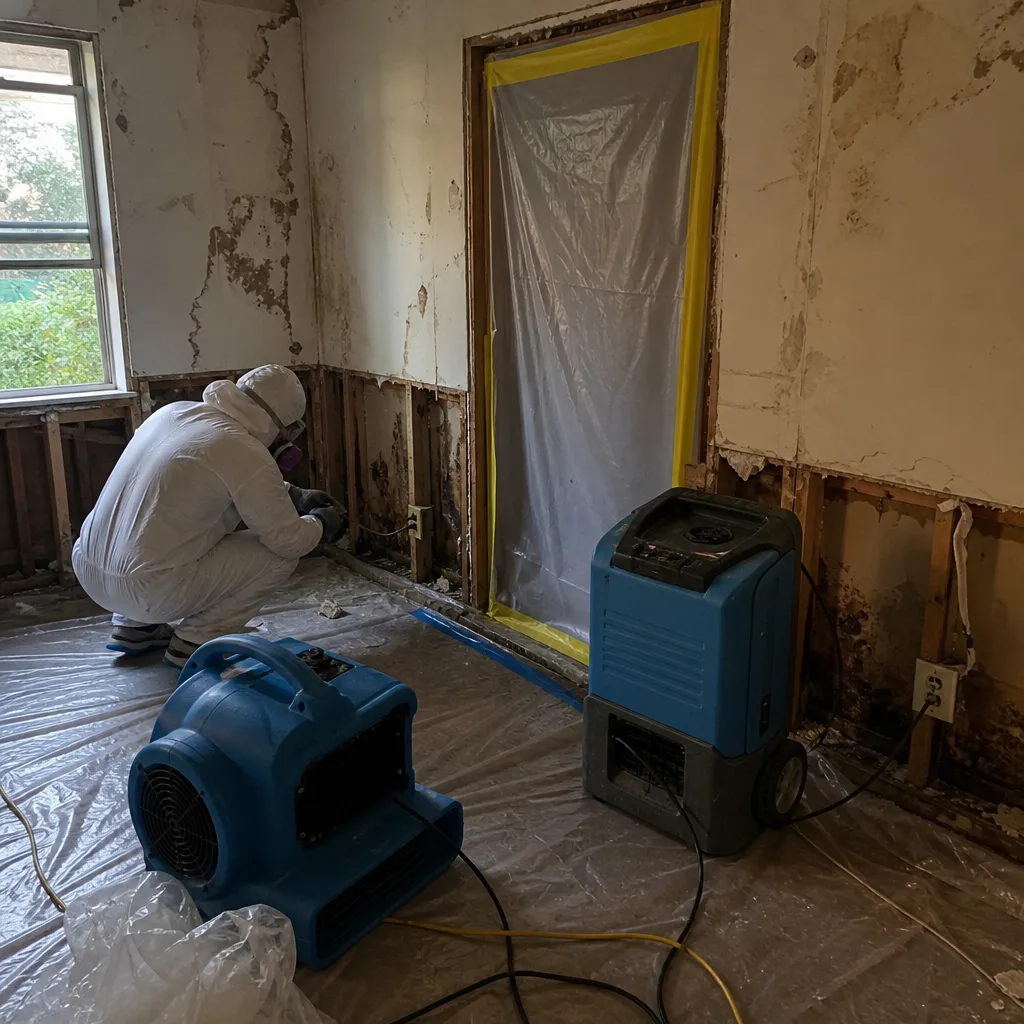 Before
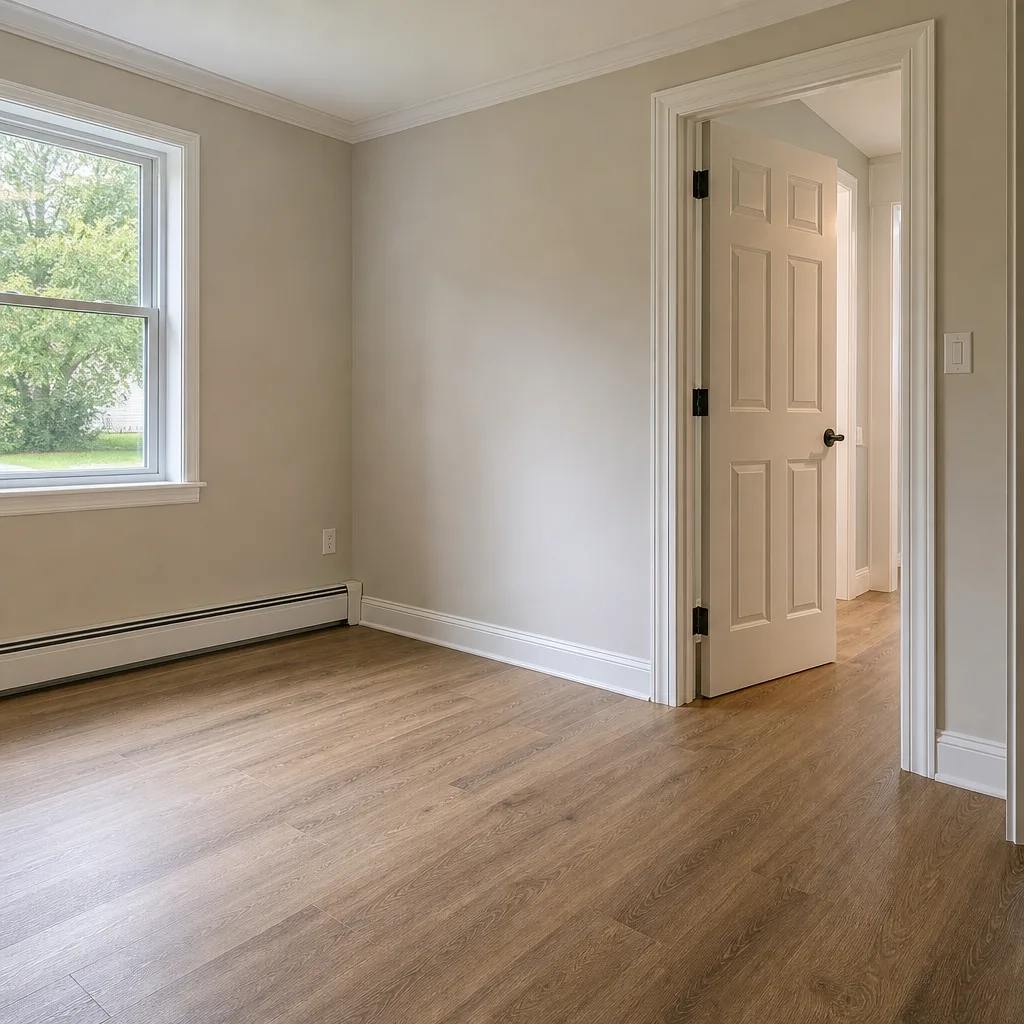 After
After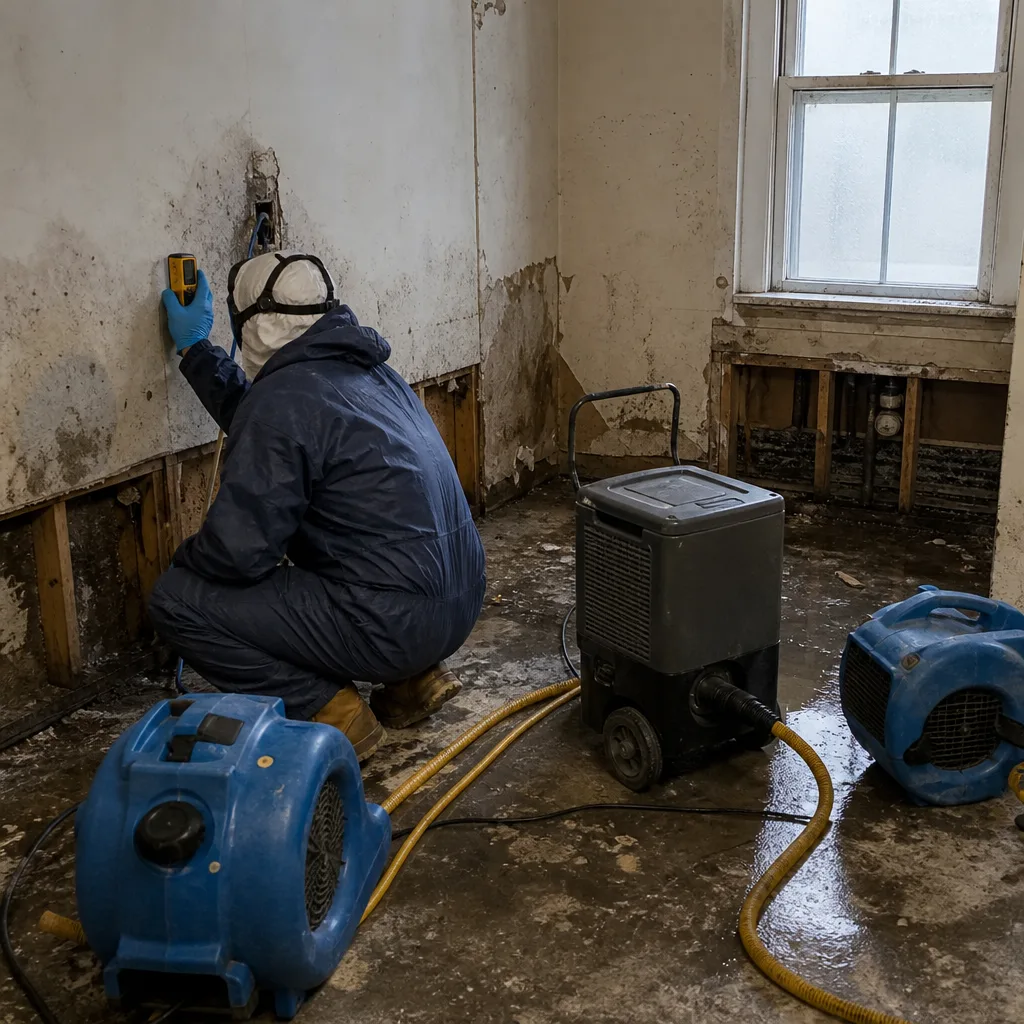 Before
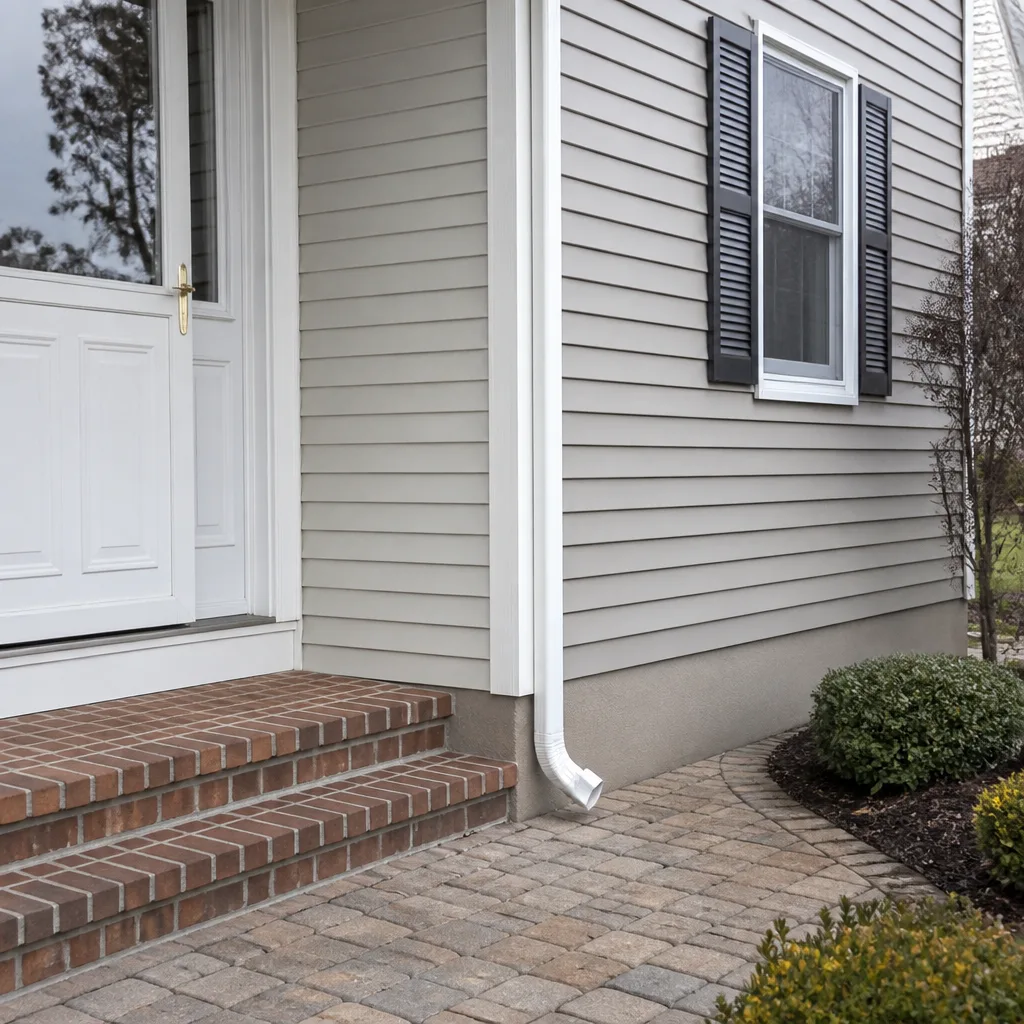 After
After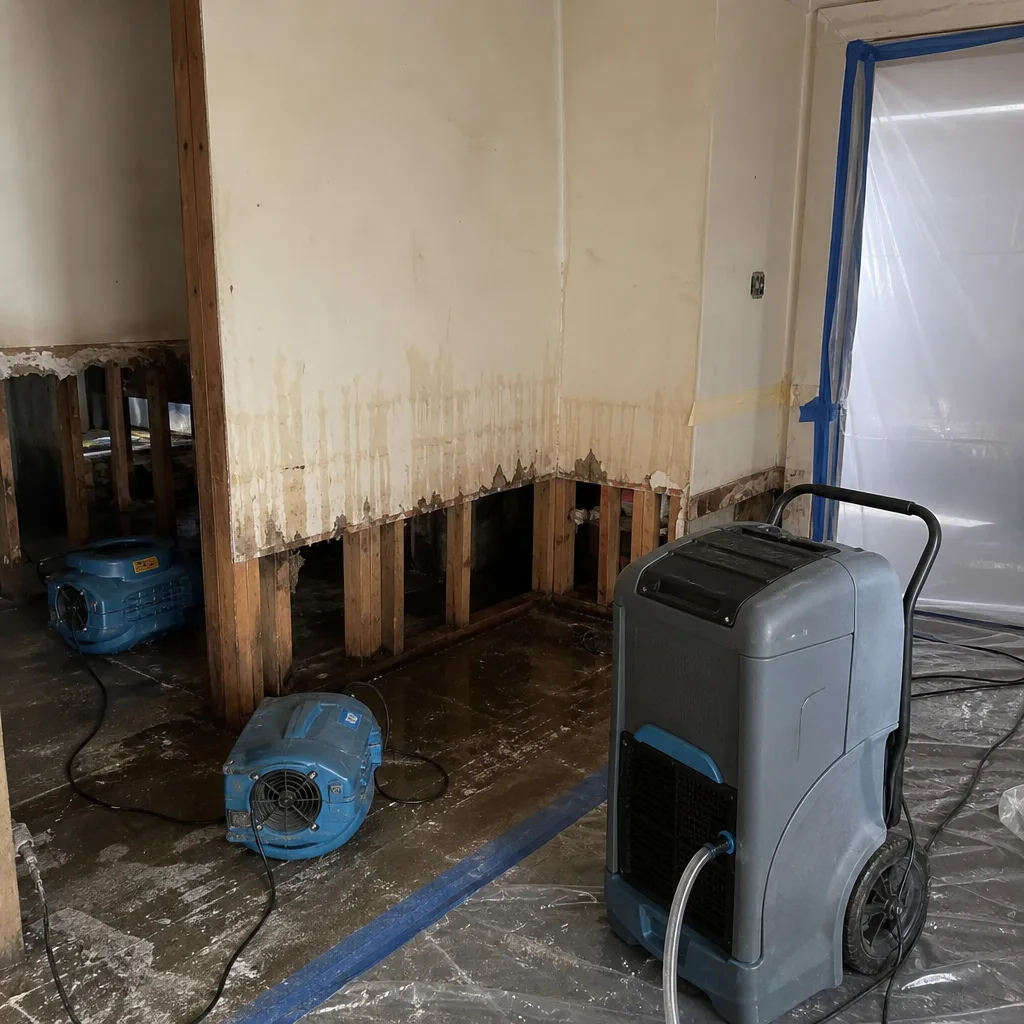 Before
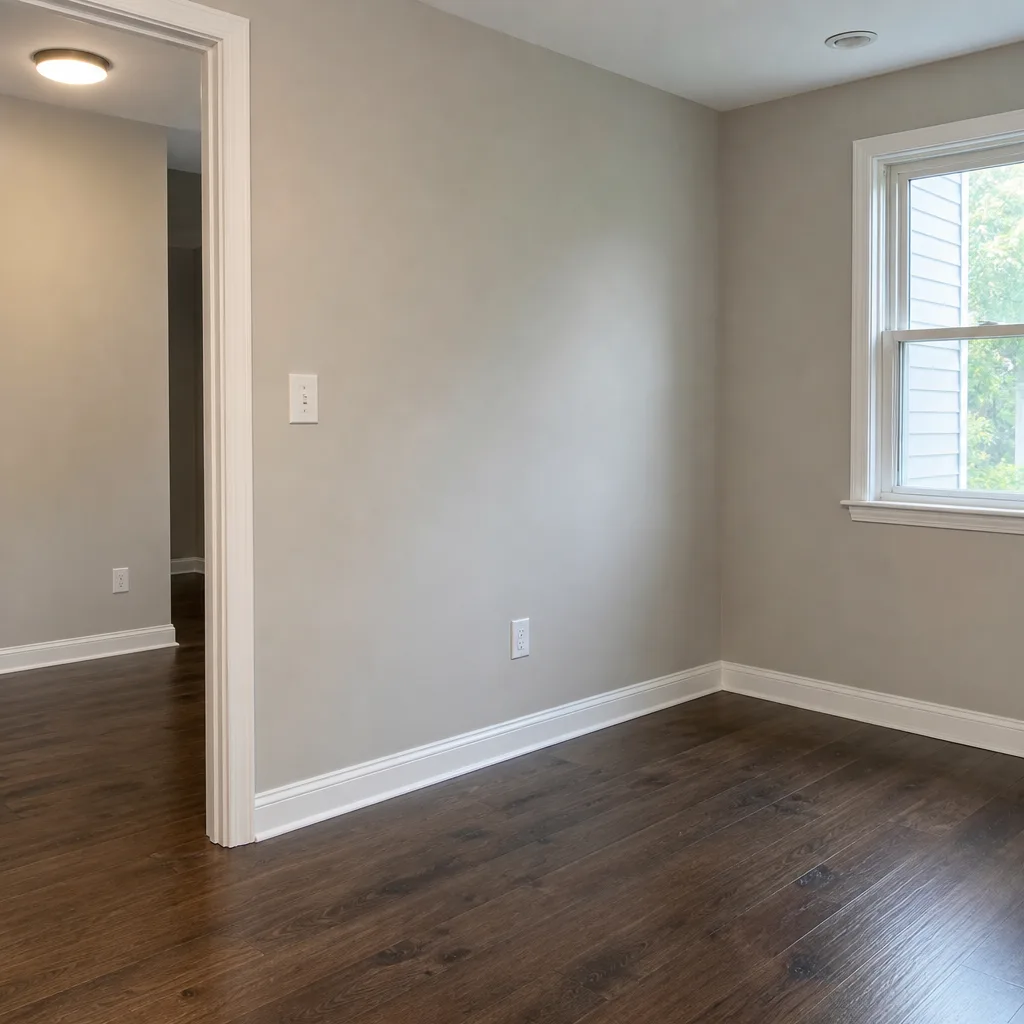 After
After24/7 Emergency Storm & Disaster Restoration in Nanuet
Storm damage in Nanuet rarely waits for business hours, and neither do we. When a nor’easter tears shingles off a ranch on Blauvelt Road or a summer thunderstorm pushes water through a cinder-block foundation wall near Lake Nanuet, you need a crew on the way, not a voicemail. We answer the phone with a live person at 2 a.m., and we dispatch certified technicians into Nanuet the same call. The first hour after water intrusion or wind damage matters. Water moves fast through drywall, wicking into stud cavities, under baseboards, and into the clay-heavy soil that holds moisture against foundation walls. Most Nanuet storm losses are fully manageable if extraction and structural drying start the same visit. Call (914) 809-9936 now. We’ll be there when we say.
Understanding Storm & Disaster Restoration Severity in Nanuet Properties
Storm restoration in Nanuet splits into clear categories based on what actually entered the home. Category 1 water is clean supply-line or roof-leak water. Category 2 carries contaminants, common when surface runoff from a flooded yard pushes through a foundation crack. Category 3 is grossly contaminated, the kind of water that backs up through a floor drain during a valley flash-flood event. Nanuet’s older split-levels and ranches, most built between 1955 and 1975, have poured-concrete or cinder-block foundations that now show decades of efflorescence and micro-fracturing. When groundwater pressure builds behind those walls during a heavy rain cycle, Category 2 or 3 water seeps through at multiple points, not one clean break. We use thermal imaging and moisture mapping with penetrating meters to find the full intrusion path, because what’s visible is rarely the whole story. Structural drying targets the mud sill, the wall cavity, and the concrete itself, not just the wet carpet. Without that depth of drying, hidden pockets stay wet behind new finishes for weeks, feeding mold growth that surfaces in the corners of a finished basement.
Why Nanuet Property Owners Choose Floodline Restoration Co.
- 45-minute response commitment. We dispatch crews from within the Nanuet response area, not from a regional call center three counties away.
- A live person answers, 24/7. No automated attendant, no “leave a message and we’ll call you back.” A dispatcher picks up.
- IICRC-certified technicians. Our crews carry WRT, FSRT, and AMRT certifications and train to RIA and IFA standards on every job.
- Free visual inspection. We assess the damage, map the moisture, and give you a clear scope before any work begins.
- Direct insurance billing. We document everything, submit it to your carrier, and talk to the adjuster so you don’t have to.
- One team from extraction to reconstruction. The same certified crew that pulls water on day one handles the rebuild. No mid-job handoff to a subcontractor you’ve never met.
Our Storm & Disaster Restoration Process
Inspection & Assessment
We walk the entire affected area with thermal imaging and penetrating moisture meters. We map every wet wall cavity, every soaked sill plate, every hidden pocket behind finishes. Then we write a line-item scope and walk you through it before anything gets torn out.
Extraction & Stabilization
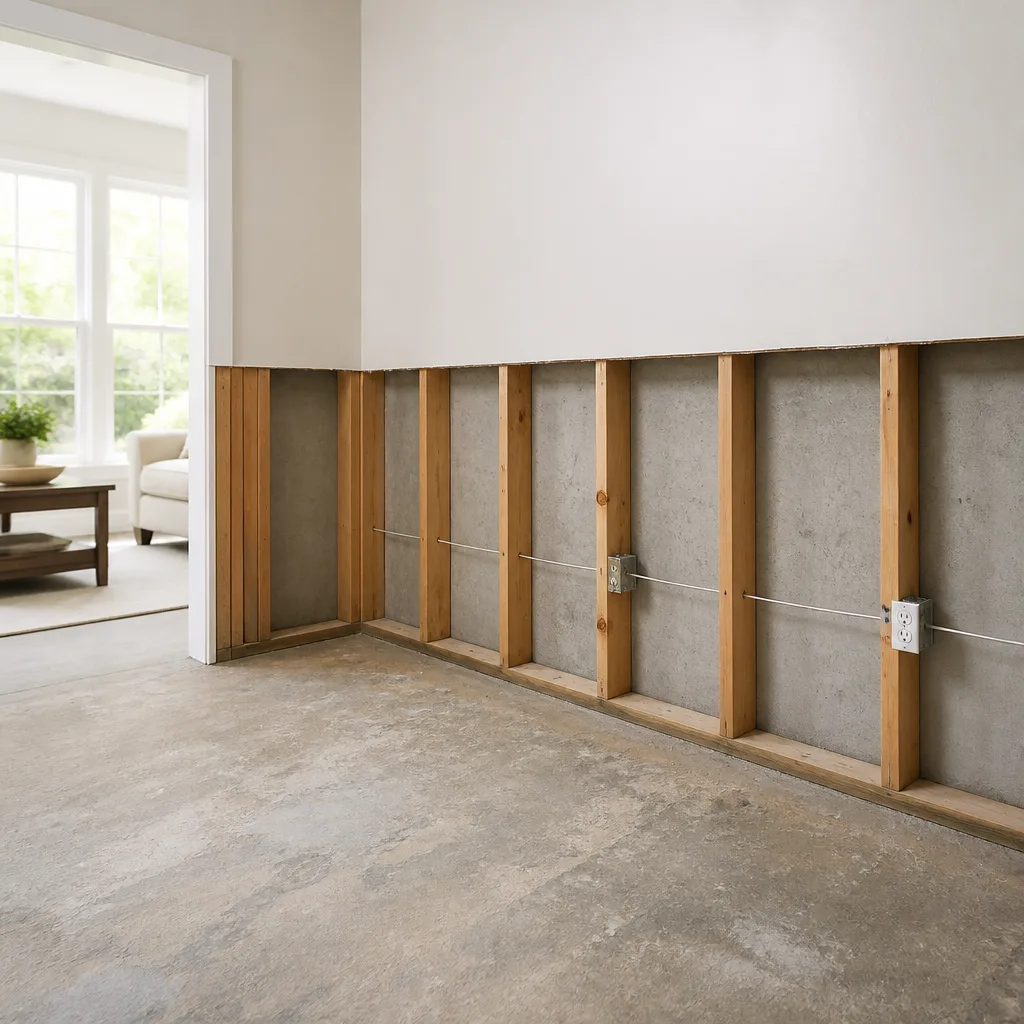
We remove standing water with truck-mounted extraction units, then stabilize the structure. That means emergency board-up where wind opened a wall, tarping where roof decking is exposed, and shutting down any compromised electrical circuits.
Drying & Dehumidification
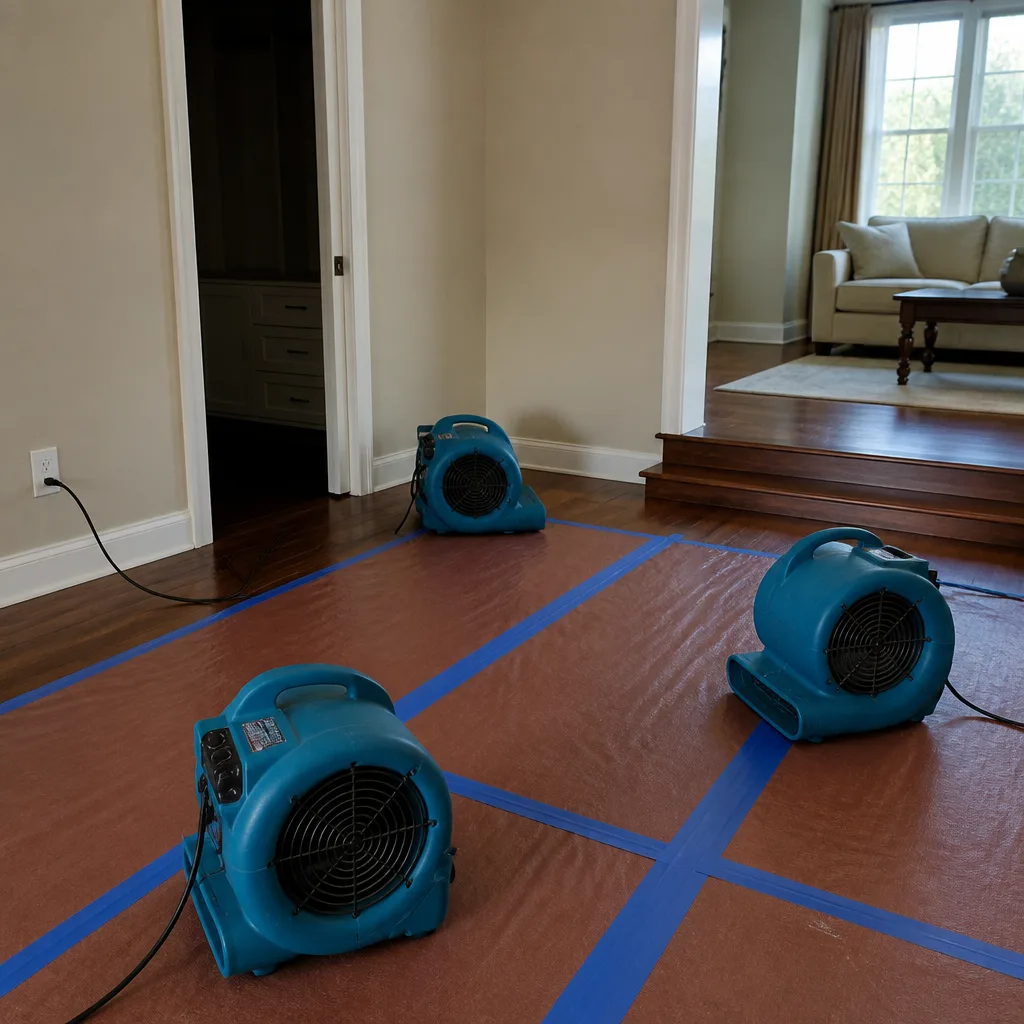
We set Dri-Eaz air movers, Phoenix dehumidifiers, and Injectidry systems where wall cavities need negative-pressure drying. Daily moisture readings are logged and shared with you and your insurer until every zone hits the dry standard.
Cleaning & Sanitization
Affected surfaces are cleaned with professional-grade antimicrobial treatments suited to the water category involved. We don’t just dry the surface. We remove the contaminants that the water carried in.
Mold Prevention & Remediation
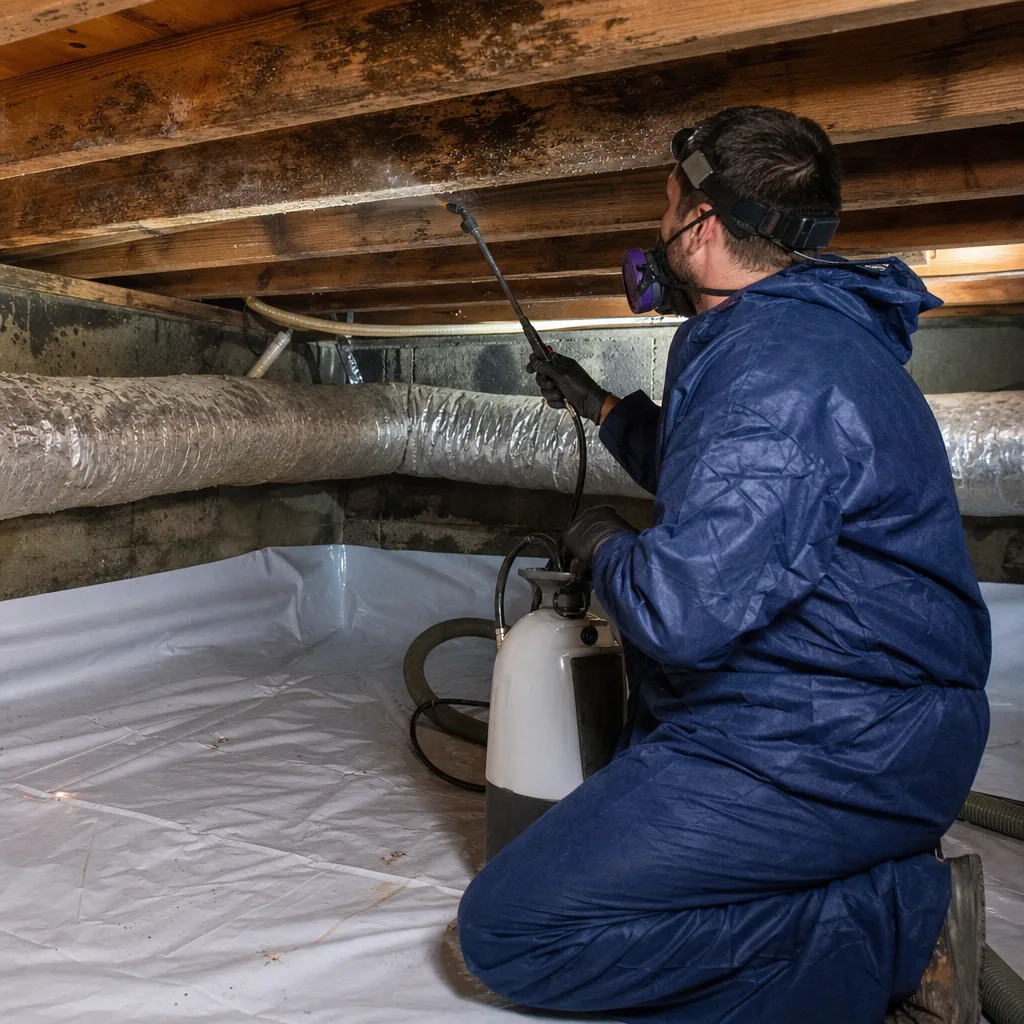
If moisture mapping finds elevated readings in cavities or behind finishes, we set containment and run HEPA air scrubbers to prevent spore spread. Secondary mold behind prior flood repairs is a pattern in Nanuet, and we treat it before it becomes a health concern.
Repairs & Restoration
We rebuild what was torn out. Drywall, insulation, trim, flooring, whatever the scope required. The same crew that did the drying does the reconstruction, and the job isn’t closed until it’s done right, in writing.
Need Emergency Storm & Disaster Restoration in Nanuet Now?
Crews minutes away, answering live 24 hours a day. The sooner we start, the less it costs.
Working With Your Insurance Company
Storm claims are only as smooth as the documentation behind them, and that starts in the first hour. We photo-document every affected room before any equipment moves in, then again at each stage of drying, rebuild, and final walkthrough. We provide your adjuster with moisture logs, thermal imaging captures, a complete equipment inventory, and a line-item scope written in industry-standard format. Our team communicates with your carrier directly, so you’re not the middleman between a claims department and a restoration crew. That matters on Nanuet storm losses, where water backing up through a foundation is often covered differently than water entering from a roof opening, and the adjuster needs clear evidence of the source and the full affected area.
What We Provide Your Insurer
- Thorough documentation of the loss
- Photos of all damage, room by room
- Moisture readings and drying logs
- A detailed, line-item scope of work
- Direct coordination with your carrier
Built for Nanuet’s Loss Calendar
Nanuet’s storm damage season runs through the whole year, but it changes shape. January and February bring deep-freeze events where supply lines in unheated crawlspaces burst, pushing Category 1 water through ceilings and into the slab-on-grade additions so common on 1960s ranches. March and April are the thaw season, when snowmelt from the Ramapo highlands saturates the glacial till and groundwater pressure starts pushing against foundation walls. May through August, thunderstorms roll through the Hackensack River valley and dump inches of rain in an hour, overwhelming undersized sump systems and filling window wells. September and October bring remnants of tropical systems up the coast, the same pattern that put Nanuet in the hardest-hit zones during Irene in 2011 and Sandy in 2012. And December’s nor’easters combine wind-driven rain with ice damming on low-pitched ranch roofs, where freeze-thaw cycles in this valley are more pronounced than on surrounding ridge lines. Each season leaves a different signature, and we’ve cleaned up after all of them in Nanuet.
Storm & Disaster Restoration Across Nanuet’s Neighborhoods
The work changes from street to street in Nanuet. Along the Route 59 corridor, where commercial roofs meet residential splits built in the 1960s, wind damage tends to hit siding, fascia, and flat roof sections first, and tight parking behind storefronts makes staging a restoration crew a logistics problem. Over in the Lake Nanuet area, homes sit closer to the water table, and basement water intrusion during heavy rain is a given, not a possibility. The Bardonia-adjacent streets north of the high school hold some of the oldest stock in the hamlet, with original clay-tile perimeter drains now collapsed or root-choked, so groundwater has nowhere to go but in. The newer townhome communities off Convent Road and near the train station face a different issue: tight exterior clearances and shared walls. When a single unit takes storm damage, containment and controlled demolition have to respect the adjacent units, and emergency board-up has to happen fast before the wind shifts and pulls more siding off the wall. We know these streets because we work them. Not every restoration company in Rockland County does.
Specialized Storm & Disaster Restoration Services We Offer in Nanuet
Flood Damage Restoration
Nanuet’s clay-heavy soils hold water against foundation walls for days after a storm passes. That means the visible water in your basement is only part of the problem. We extract, map, and dry the entire affected structure, including the wall cavities and mud sills that keep pulling groundwater in. In split-levels along Route 59, we almost always find prior flood repairs that were done without proper drying, and we correct that before it becomes another mold problem.
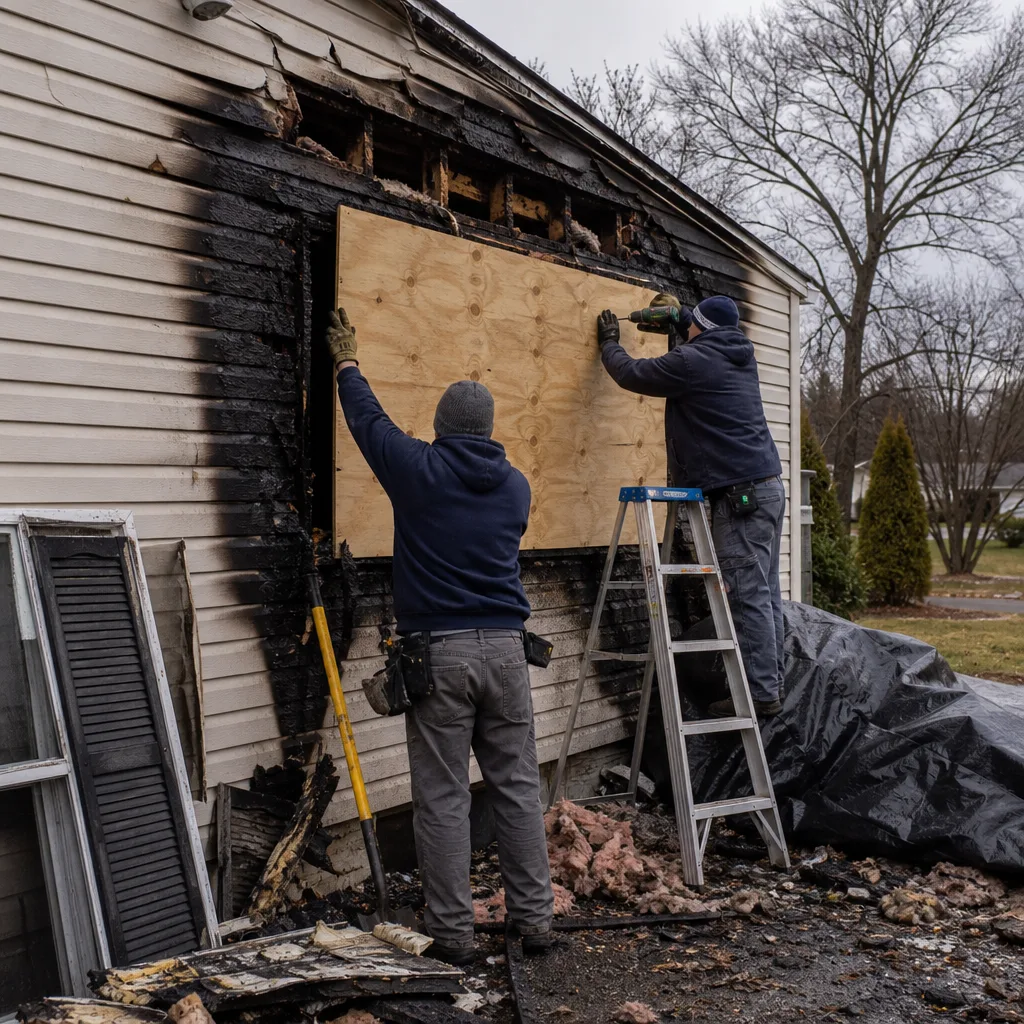
Emergency Board-Up
When a falling branch or wind-blown debris opens a window or wall section in a Nanuet home, the opening lets rain in and heat out. We board up with plywood cut to fit the actual opening, not a one-size panel nailed over the frame. On narrow subdivision streets, we stage vehicles so we’re not blocking the driveway that a townhome owner needs to get out in the morning.
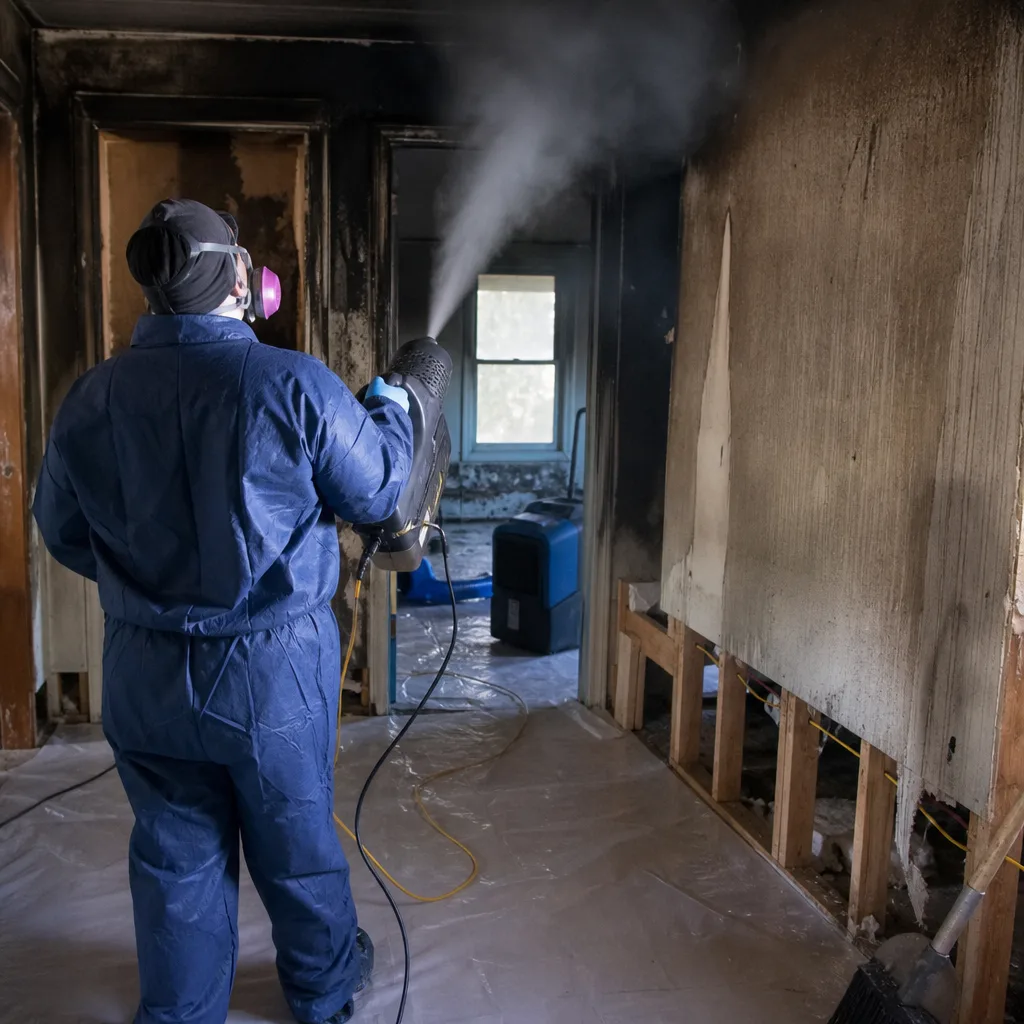
Storm Damage Cleanup
Debris removal, wet insulation disposal, contaminated drywall tear-out, and structural drying all happen under one crew. We don’t clean the surface and leave the wet framing behind. We remove what can’t be saved, treat what can, and dry what remains, then document every step for your carrier.
Roof Tarping
Nanuet’s low-pitched ranch roofs make tarping straightforward, but the valley’s wind patterns mean a poor tie-down will flap loose inside a day. We tarp with sealed edges and mechanical fastening that holds through the next weather cycle, and we schedule the permanent repair before the tarp ages out.
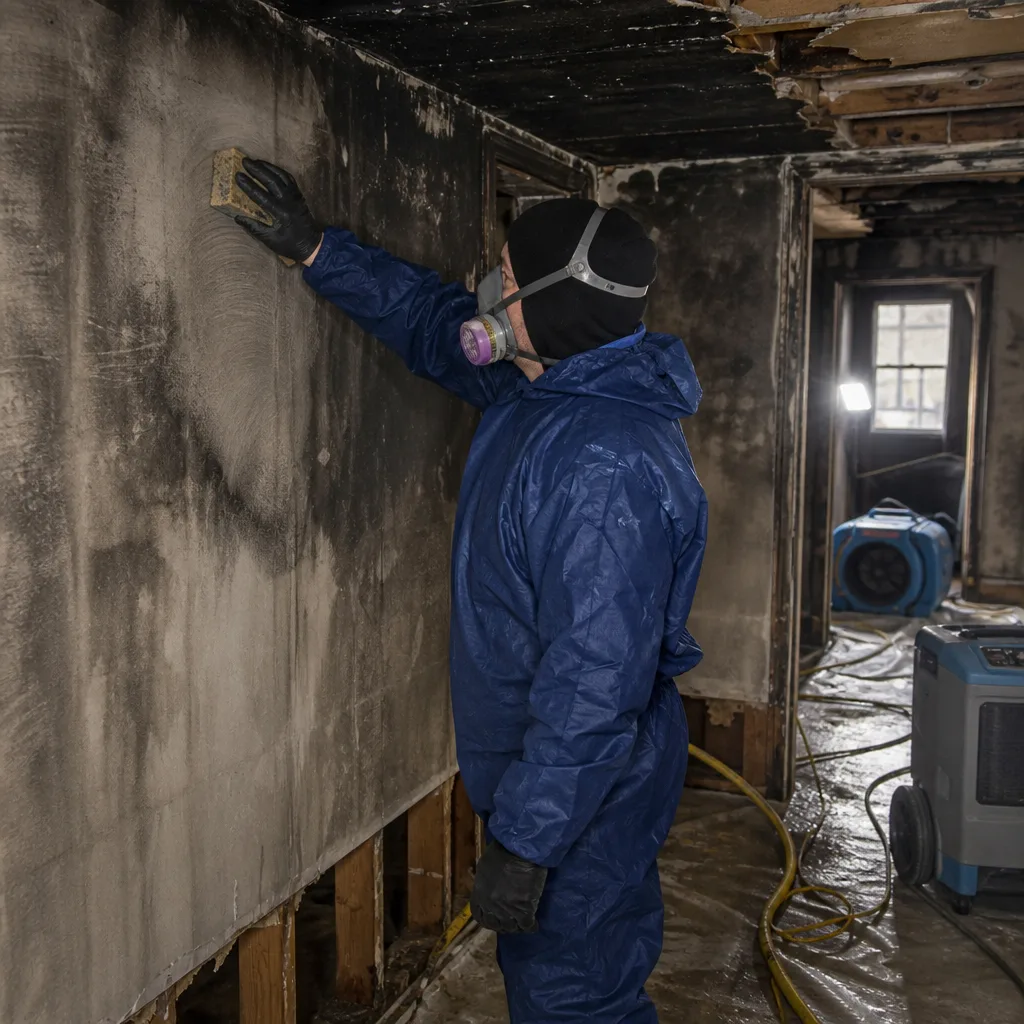
Debris Removal
Fallen trees, wind-strewn shingles, saturated insulation, damaged drywall. We haul all of it, and we separate what the insurer needs to see from what can go straight out of the home. No homeowner should spend a week dragging soaked carpet to the curb alone.
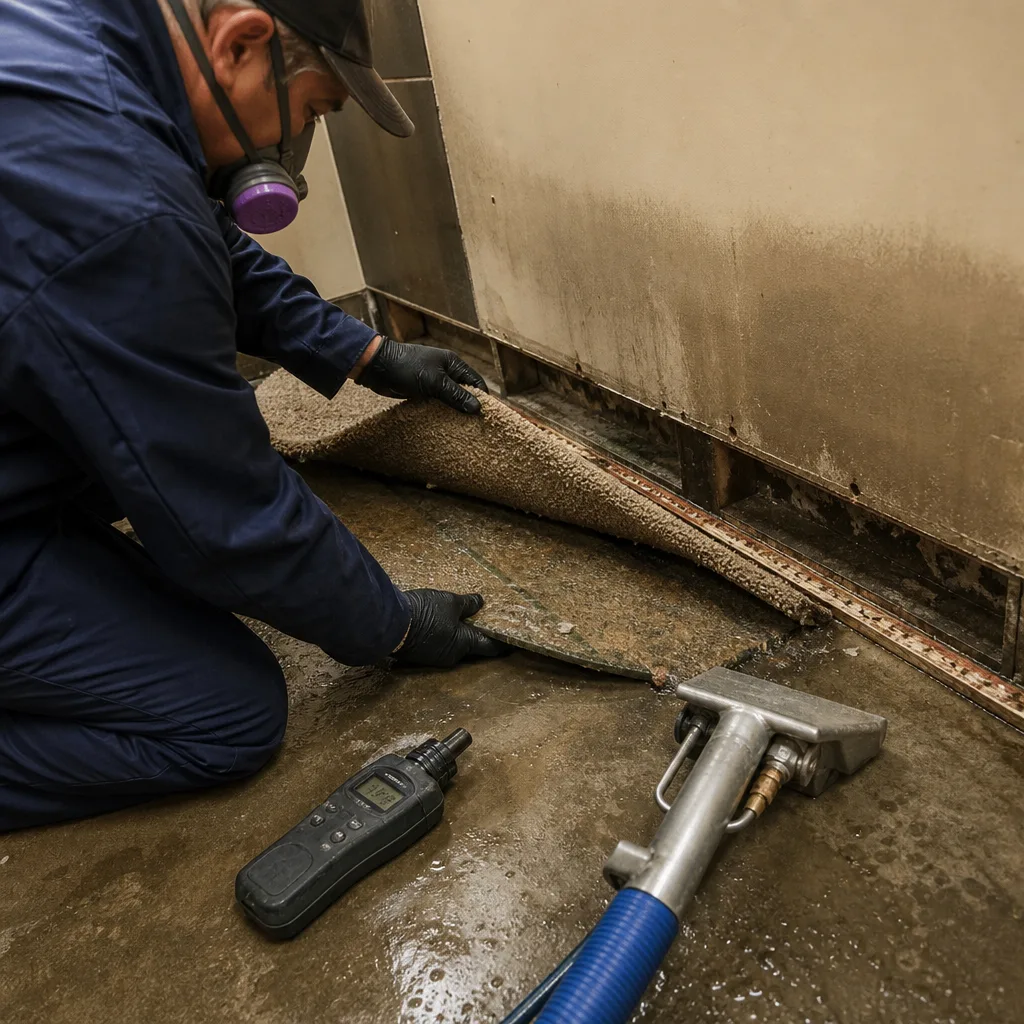
What happens when you call
- 1
A real person answersNo phone trees - you reach a local pro.
- 2
You get an upfront price rangeHonest numbers before anyone is dispatched.
- 3
A background-checked tech heads outLicensed & insured, dispatched right away.
- 4
You approve before work beginsNothing starts until you say go.
Storm & Disaster Restoration Costs in Nanuet, NY
Storm restoration pricing in Nanuet spans a real range, and honest numbers help you plan. A contained water extraction and structural drying on a small basement intrusion typically runs $1,800 to $3,400. A full finished basement flood with Category 2 water, including tear-out, drying, and rebuild of drywall and flooring, runs $8,000 to $18,000 depending on square footage and finish level. Emergency board-up for a single window or door opening runs $350 to $700, while full storm-front board-up on multiple openings can reach $1,500 to $2,500. Roof tarping on a low-pitched Nanuet ranch runs $400 to $900 per section. What moves the price most is water category, square footage, and whether the job stays in mitigation or extends into reconstruction. If the loss is covered, we bill your carrier directly and you cover only the deductible. The free visual inspection gives you a written scope before any work starts, so you know the number before you sign anything. Call (914) 809-9936 for a firm quote.
We Also Serve Cities Near Nanuet
Our crews cover the wider Rockland County area, including West Nyack, Spring Valley, New City, and Nyack. If you’re in one of those communities and dealing with storm damage, the same live dispatch and certified restoration teams are available around the clock.
Nanuet Storm & Disaster Restoration Questions, Answered
Why does my Nanuet split-level keep getting water after a heavy rain even when the sump pump runs?
The sump pump handles groundwater under the slab, but it’s not addressing water pushing against the foundation walls themselves. In Nanuet’s clay-heavy soils, hydrostatic pressure builds behind cinder-block walls during heavy rain, and water enters through micro-cracks, mortar joints, and the mud sill where the house meets the foundation. We fix this by mapping the full intrusion path with moisture meters, addressing the drainage outside where possible, and drying the wall cavities completely. Call (914) 809-9936 for a free inspection.
My basement was ‘fixed’ after Sandy, but now there’s a musty smell and black spots in the corner. What’s going on?
What you’re describing is secondary mold behind the prior repair. Many Nanuet homes that flooded during Sandy were patched quickly with new drywall over framing that never reached the dry standard. The residual moisture stayed in the wall cavities, and mold grew behind the new finishes. We set containment, remove the affected drywall, remediate the framing, and dry everything properly before any reconstruction. This is a common pattern in the split-levels along Route 59.
Can you dry out a finished basement with category 2 water without ripping out the carpet?
Category 2 water carries contaminants, and carpet that’s been saturated with it should generally be removed. The pad underneath is almost never salvageable. However, if the carpet itself is low-pile and the water contact was brief, some sections may be cleaned and re-laid after the floor beneath is fully dried. We evaluate case by case, and we give you the straight answer, even when it means more tear-out. Call (914) 809-9936 and we’ll assess your specific basement.
Do I need emergency board-up right after a storm if only one window is broken in my Nanuet townhome?
Yes, and quickly. A broken window in a townhome lets wind-driven rain into the wall cavity and the room beyond it. It also creates a security gap in an attached home, and the opening can create pressure imbalances that pull water in through other exterior wall penetrations. We board up the same day, cut the plywood to the actual opening, and secure it so the next weather event doesn’t peel it off.
Why does my low-pitched ranch roof keep leaking at the eaves every winter in Nanuet?
Low-pitched roofs in Nanuet are prone to ice damming. Cold air settles in this valley, and freeze-thaw cycles are more pronounced than on the surrounding ridge lines. Snow melts from the upper roof, refreezes at the colder eaves, and water backs up under the shingles. The fix starts with proper insulation and ventilation, but the immediate repair is removing the dam and sealing the intrusion points. We handle both the emergency repair and the underlying correction.
How fast can you actually get to a Nanuet home in an emergency?
We commit to a 45-minute response time for Nanuet addresses. Our dispatch is live around the clock, and crews are staged in the area, not dispatched from a remote office. The sooner extraction starts, the less the job costs and the less gets torn out.
Will my insurance cover storm damage restoration in Nanuet?
Most homeowner policies cover sudden and accidental storm damage, including wind-driven rain entering through a storm-created opening, fallen trees, and roof damage. Groundwater seepage into a basement is often excluded unless you carry specific flood or water backup coverage. We document the source, the affected area, and the drying process in the format adjusters expect, and we talk to your carrier directly so there’s no ambiguity. Call (914) 809-9936 and we’ll walk you through what to expect on your specific loss.
What should I do in the first 30 minutes after storm water enters my Nanuet home?
Shut off power to the affected area if you can do so safely, move what you can to a dry spot, and don’t use a household vacuum to remove water. Then call us. Document a few quick photos on your phone, but the priority is getting extraction and drying started. The first hour sets the scope for the whole job, and a fast start keeps the damage from spreading into framing, trim, and adjacent rooms.
Nanuet’s Geography Changes the Storm Equation
Nanuet sits in a low-lying valley pocket of Rockland County, hemmed in by the Ramapo highlands on one side and the Hackensack River floodplain on the other. The glacial till under the hamlet is dense and clay-heavy, which means surface water doesn’t percolate down the way it does in the sandier soils of neighboring ridge-top towns. Water pools. It sits against foundation walls. It finds the path of least resistance, and in a 1965 split-level with original cinder-block walls, that path is almost always inward. The housing stock itself compounds the problem. The post-Tappan Zee construction boom put up thousands of homes in a decade and a half, most of them with full basements, original waterproofing that’s now fifty to seventy years old, and no modern vapor barriers or perimeter drain systems. When a storm drops heavy rain on this valley, the water has nowhere to go. That’s why we run more basement water intrusion calls in Nanuet than in the surrounding higher-elevation towns, and it’s why our Storm & Disaster Restoration team treats groundwater as a structural problem, not a one-time leak.
What We’ve Seen in Nanuet Basements
Last spring we responded to a split-level off Route 59 where a homeowner noticed a musty smell and black spotting in a finished corner. The basement had been “repaired” after Sandy, with new drywall over framing that was never dried to the standard. Our techs set containment, pulled penetrating moisture readings that mapped the intrusion through the foundation wall, and ran structural drying with Dri-Eaz air movers plus a Phoenix dehumidifier. The moisture curves flat-lined within four days. We removed the hidden mold, treated the framing, and rebuilt the affected section. The client got their pre-loss condition back without ripping out the entire basement. That’s the difference between our Storm & Disaster Restoration approach and a quick patch: we read the moisture map, not just the visible stain.
Why the 90-Day Done Right Promise Matters in Nanuet
A restoration job isn’t finished when the equipment gets picked up. It’s finished when the next rain event rolls through and nothing comes back. We put that in writing. The 90-Day Done Right Promise, what we call the Keystone Standard, says if the work isn’t done right, we make it right. No paperwork battles, no arguing. That promise carries weight in a hamlet where so many homes carry the lingering effects of quick flood patches from Irene and Sandy. It’s also why we train our own people to IICRC, RIA, and IFA standards, why we log moisture readings daily until every zone hits the dry standard, and why the same crew that starts the job finishes it. We don’t hand off a half-dried basement to a subcontractor. For more on how we serve Nanuet specifically, our city page covers the area in depth.
Serving Nanuet, NY - Our Local Coverage Area
We’re based in the Nanuet area and know this community well. Use the map below to see our service coverage - if you’re nearby, we can almost certainly help.
Get Storm Restoration Started in Nanuet Today
If storm water is in your home right now, call (914) 809-9936. A live person answers, and a crew is dispatched with the equipment to start extraction the same visit. If the damage happened recently and you’re noticing a musty smell, peeling paint, or staining at the base of a wall, call for a free visual inspection. We’ll map the moisture, give you a written scope, and tell you straight what needs to happen and what it costs. Floodline Restoration Co. serves Nanuet homeowners with the full cycle of storm damage restoration, from first extraction to finished rebuild, done right and backed in writing. The line the water left is where we start.
Written by Curt Bowman, Owner at Floodline Restoration Co., serving Nanuet since our founding in 2010.