
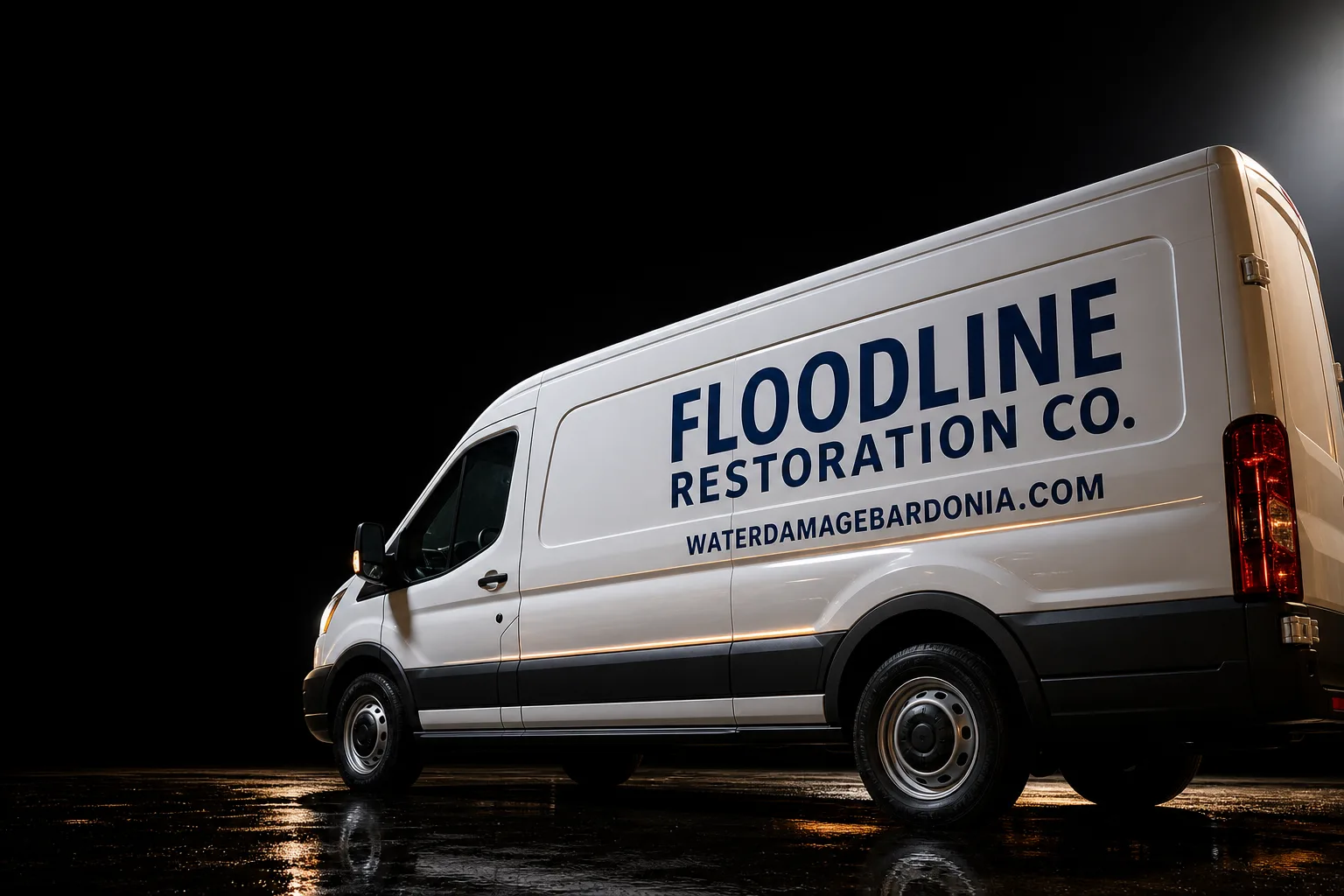
Free visual inspection and a written scope of work before any mitigation begins - photos, moisture readings, and drying logs go in your claim file
The scope we write is the scope we bill. Anything new gets shown to you, in writing, before we touch it.
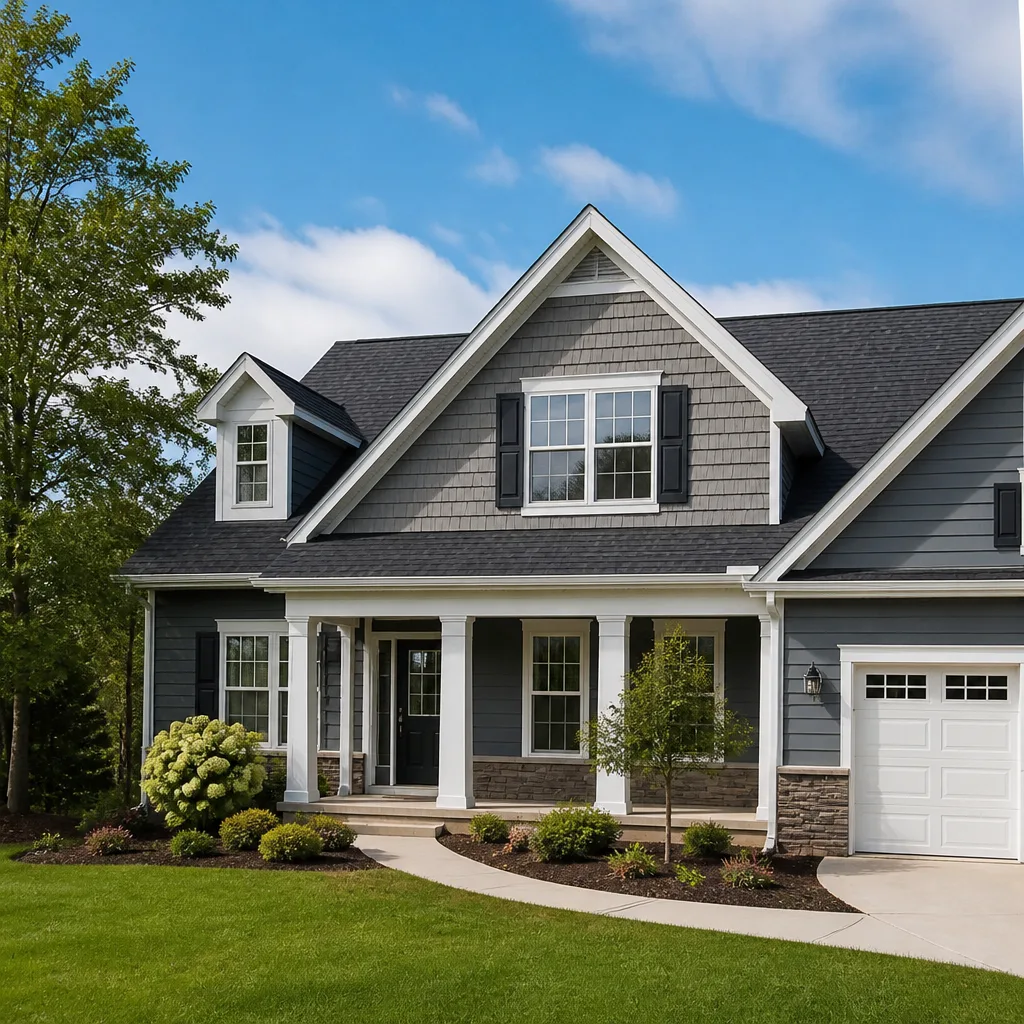
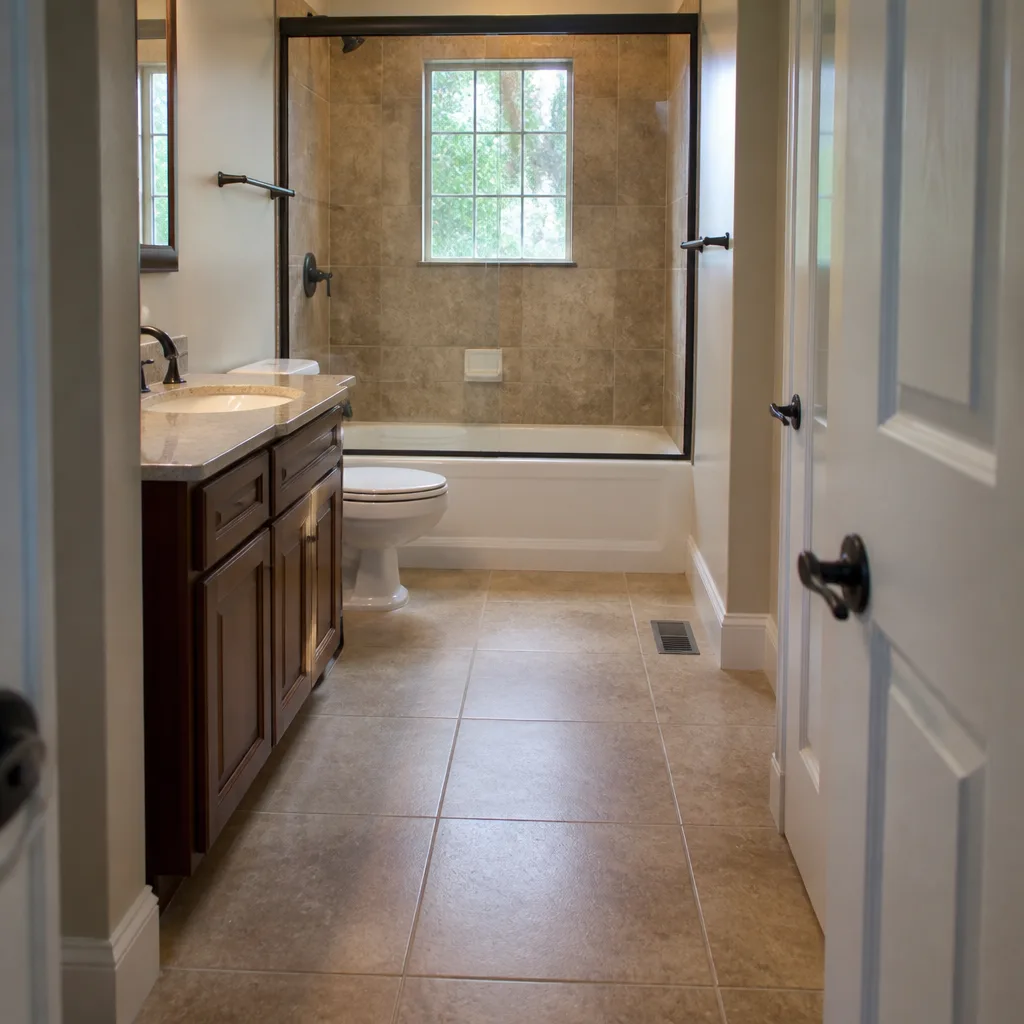
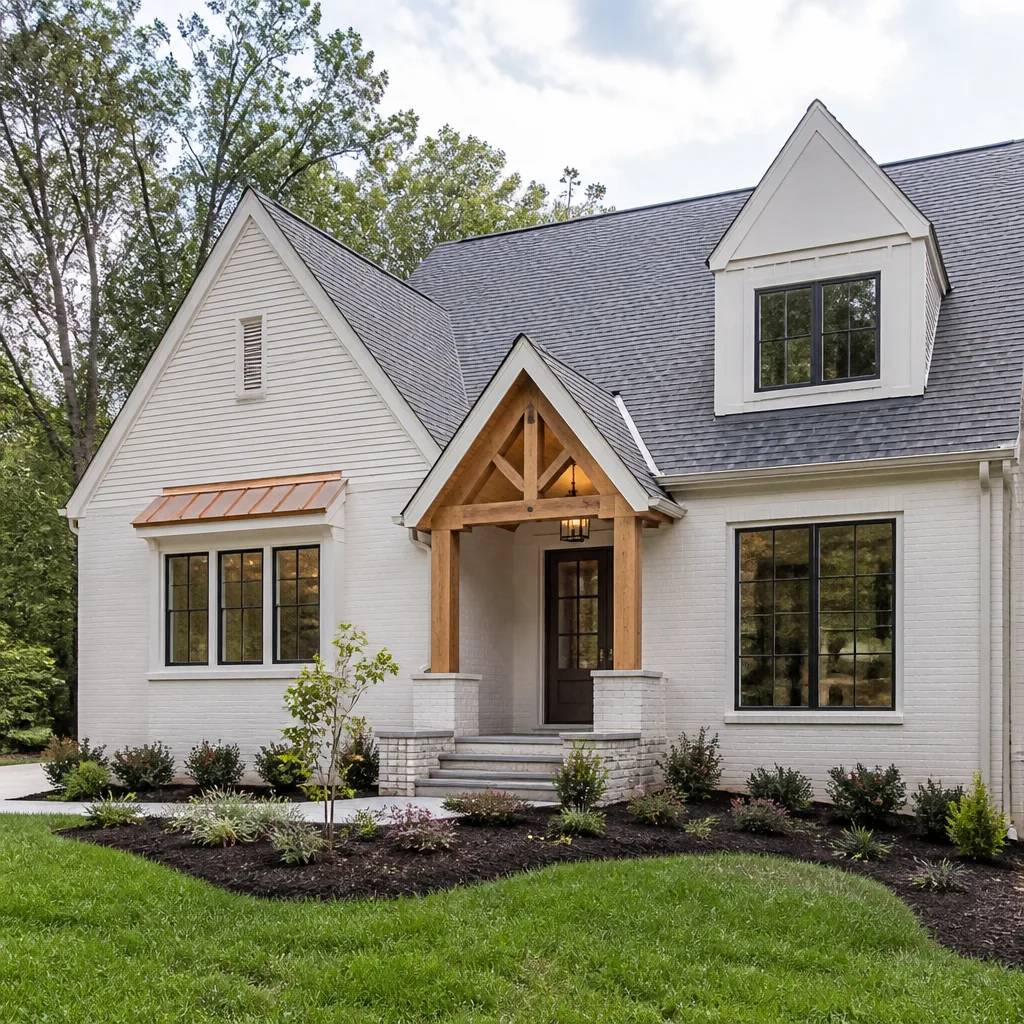
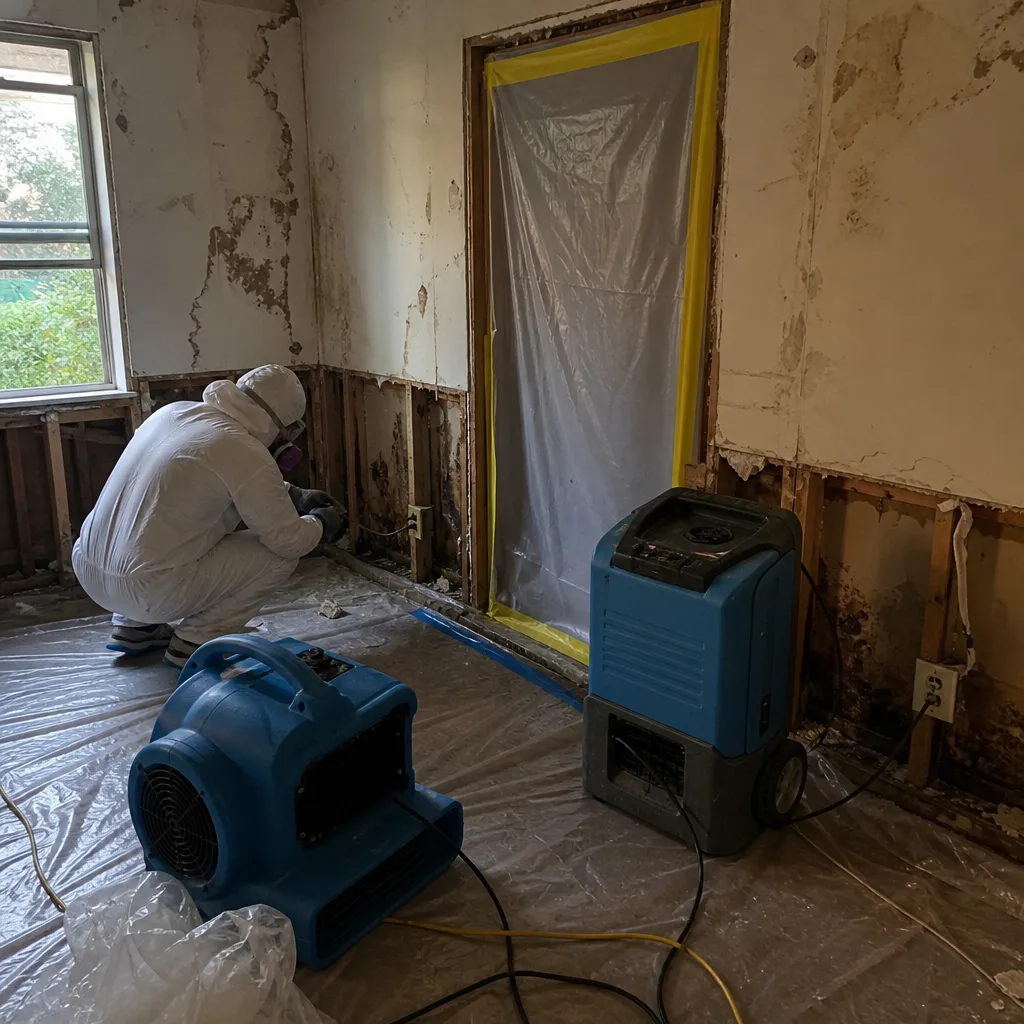 Before
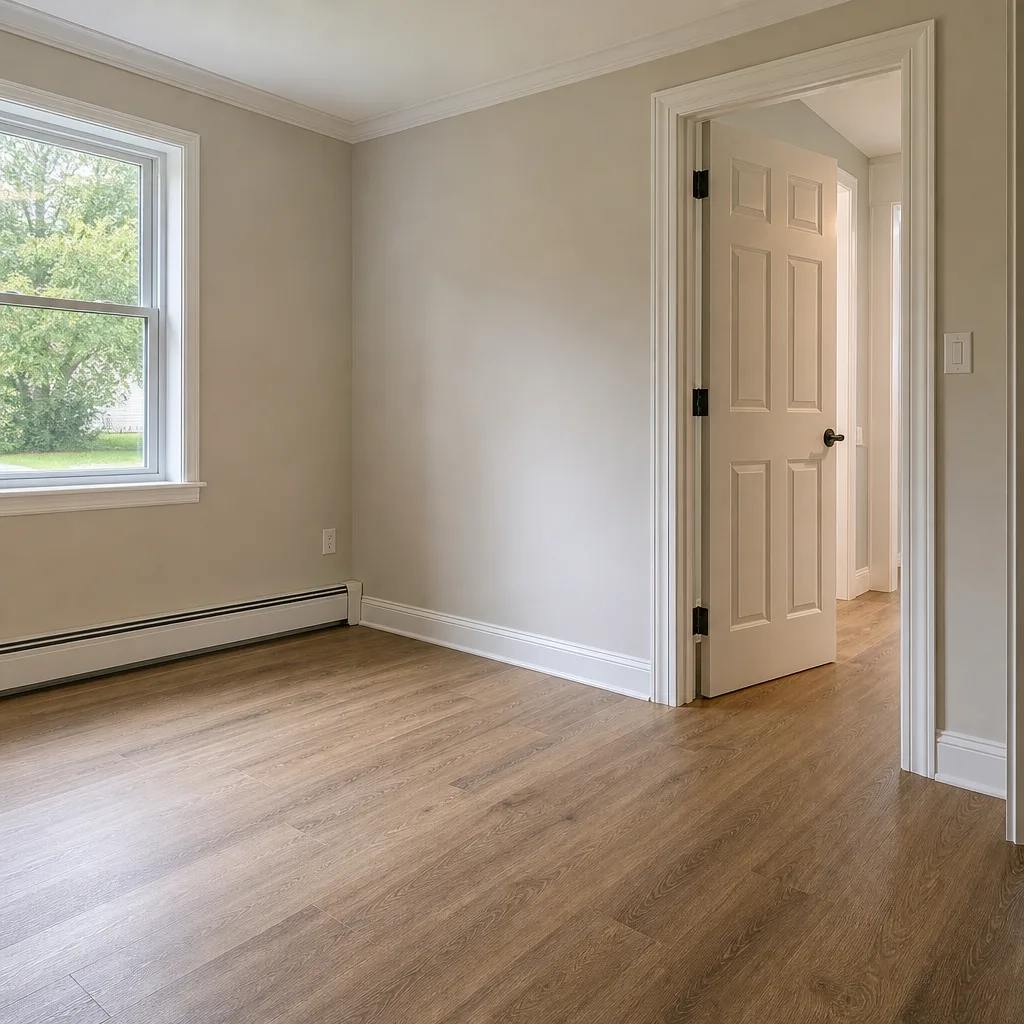 After
After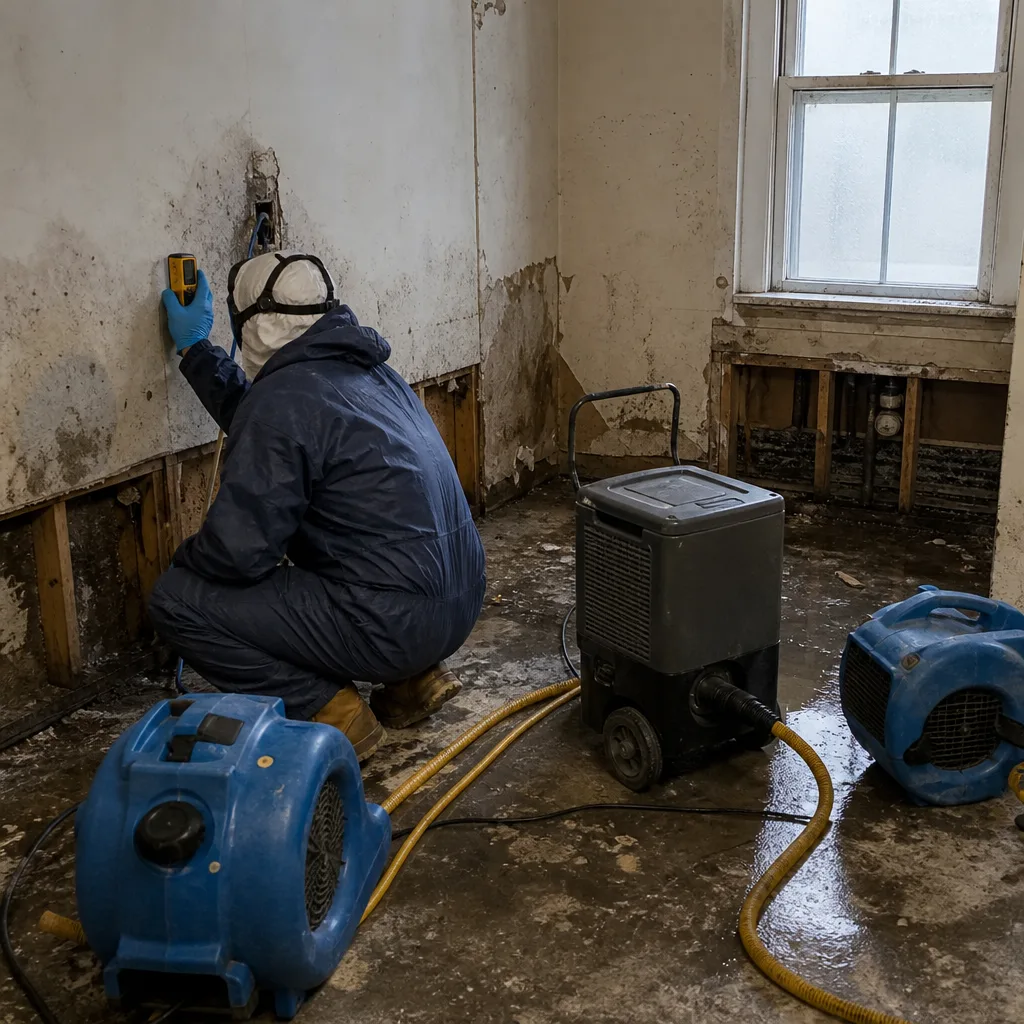 Before
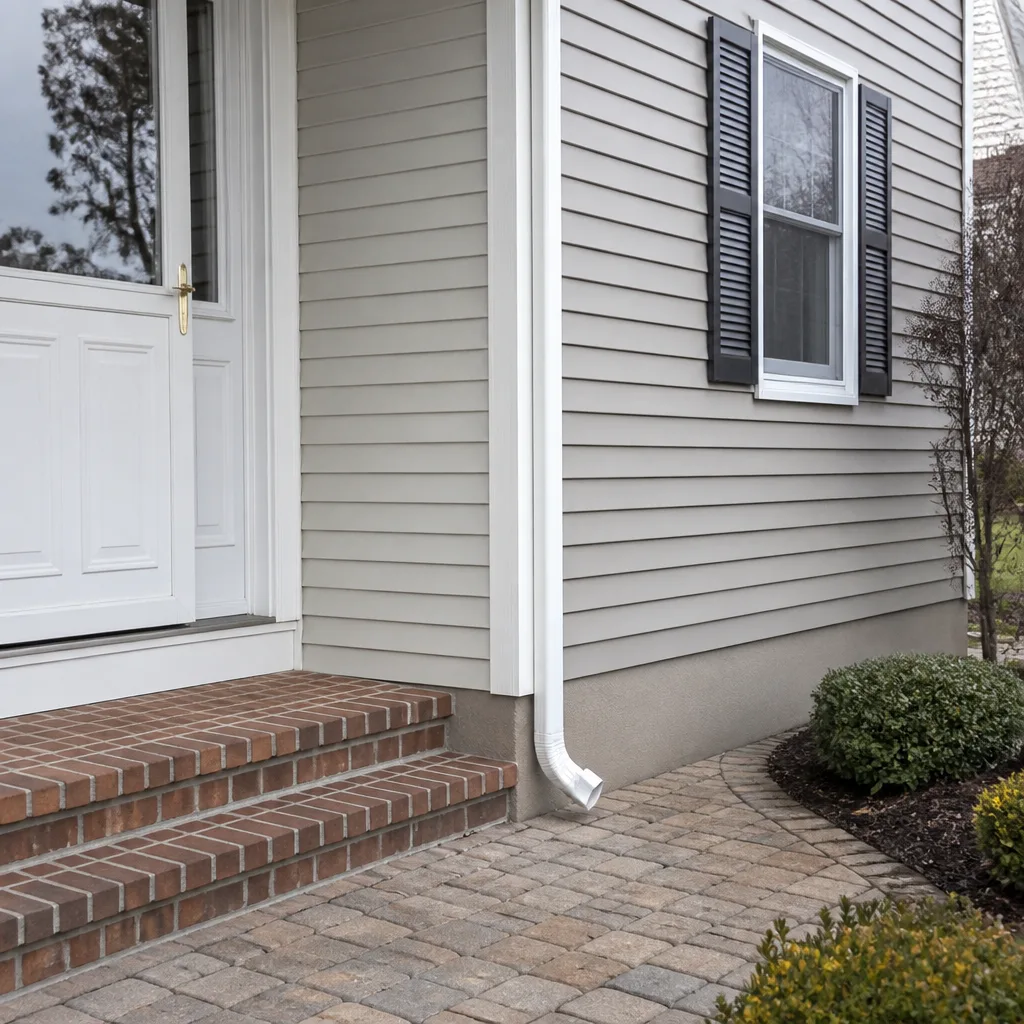 After
After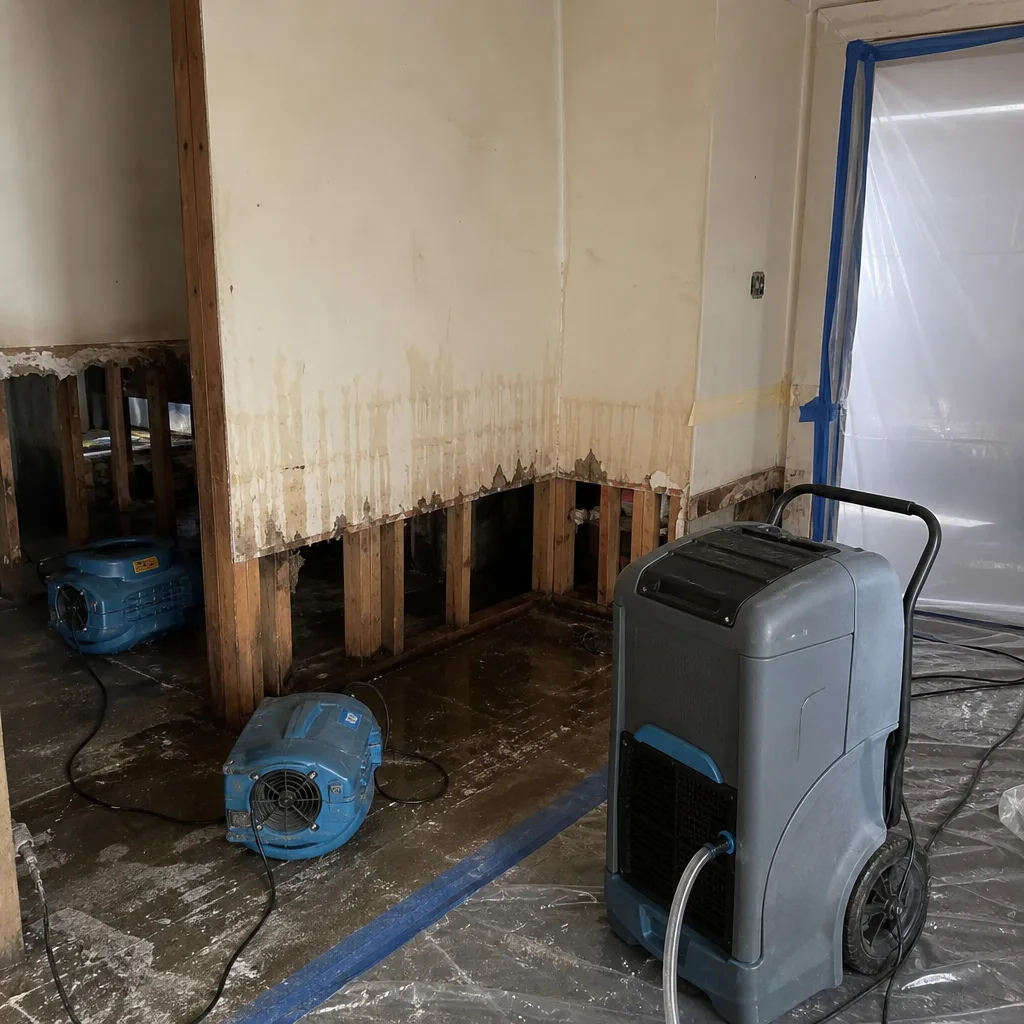 Before
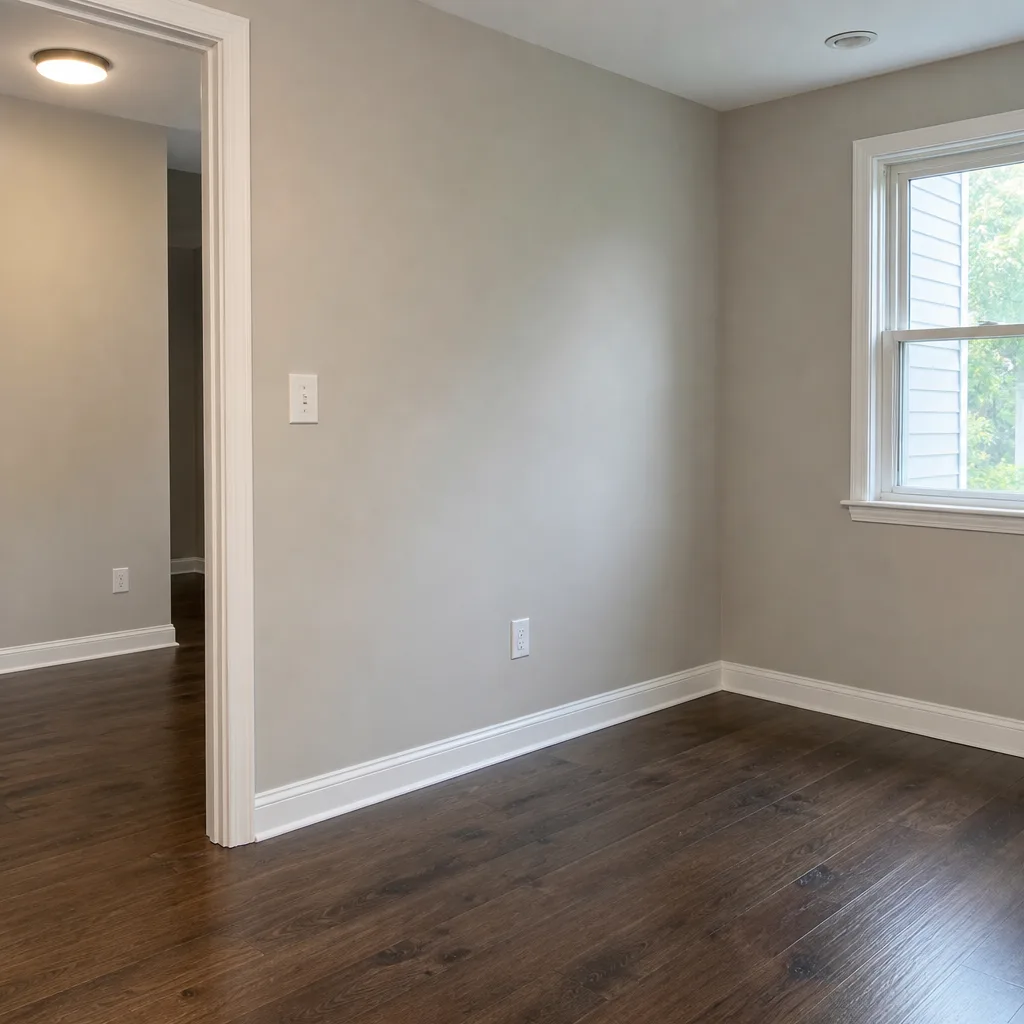 After
After24/7 Emergency Commercial Restoration in Stony Point
Commercial restoration in Stony Point runs around the clock here because floodwater, fire, and sewage don’t wait for business hours. When a loading dock floods or a mechanical room fills with water, the first hour determines how much inventory, equipment, and building material you lose. Call (914) 809-9936 and a live dispatcher answers, day or night. We route a certified crew to Stony Point immediately, with extraction equipment running the same visit. The free visual inspection tells you exactly what you’re facing before any work begins.
What makes Stony Point different from every other Rockland County town is the water. This peninsula juts into Haverstraw Bay, the widest tidal reach of the Hudson, and that changes the damage profile of nearly every commercial loss here. Salt air, storm surge, and a high water table all stack the deck against commercial buildings in ways an inland restoration company simply won’t recognize. We do.
Understanding Commercial Restoration Severity in Stony Point Properties
Commercial losses fall into categories, and the category dictates the entire remediation plan. Category 1 water is clean, from a supply line or water heater. Category 2 carries contaminants, like dishwasher overflow or sump pump discharge. Category 3 is grossly contaminated: sewage, river water, or storm surge. Here’s the Stony Point reality: any water that comes over the seawall or under a dock door from Haverstraw Bay during a nor’easter or hurricane is Category 3 by definition. It carries marine bacteria, silt, fuel residue, and salt. Treating it like freshwater from a burst pipe is a costly mistake. Salt water corrodes fast, wicks into masonry, and leaves chlorides behind that keep pulling moisture long after surfaces feel dry.
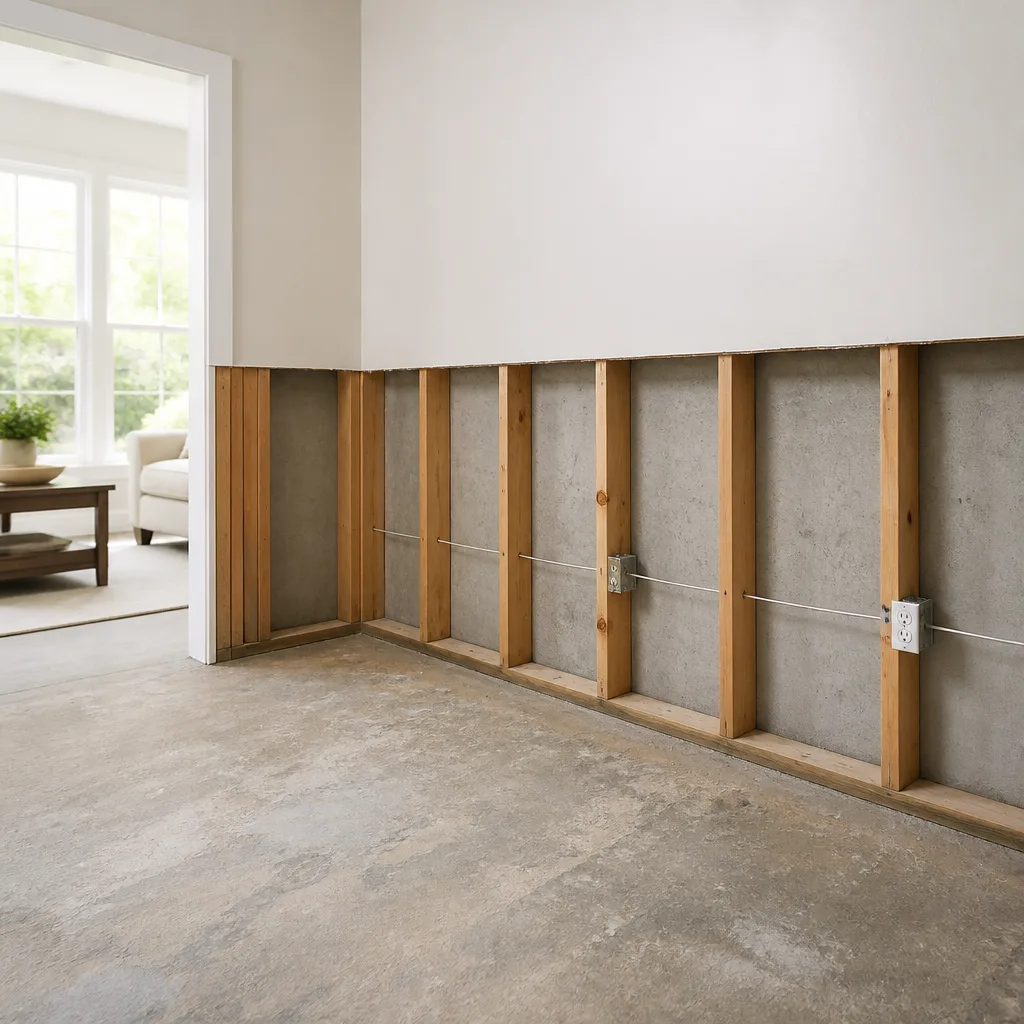
The older commercial stock in the village core also changes the math. Buildings with plaster walls, wood lath, and balloon-frame construction absorb water differently than steel-and-drywall builds. Moisture hides in wall cavities, floor systems, and against masonry that never fully dries because the river-adjacent water table keeps hydrostatic pressure on foundation walls. We map moisture with thermal imaging and hygrometers, not guesswork, because a hidden pocket of damp in an old Stony Point building is where mold starts and insurance claims get denied.
Why Stony Point Property Owners Choose Floodline Restoration Co.
- 45-minute response commitment: We dispatch crews from staging points near Stony Point so extraction starts fast. Every hour of standing water compounds the loss.
- 24/7 live answer, always a person: You call at 2 a.m. during a nor’easter, and a live dispatcher picks up. Not a recording. Not a callback service. A person who starts routing a crew to you immediately.
- IICRC-certified crews: Our technicians carry WRT, FSRT, and AMRT certifications and train to IICRC, RIA, and IFA standards. They show up background-checked and uniformed.
- Free visual inspection: We assess the damage, document everything, and give you a written scope before any chargeable work begins. No surprises.
- Direct insurance billing: We coordinate with your adjuster, provide photo documentation and moisture logs, and bill the carrier directly. You never play messenger.
- One team from water to rebuild: The same Floodline crew that extracts the water handles the drying, the mold remediation, and the reconstruction. No mid-job handoff to a subcontractor you never met.
Our Commercial Restoration Process
Inspection & Assessment
We arrive, walk the property with you, and document the loss with photos and measurements. Thermal imaging and moisture meters identify hidden water the eye can’t see. We classify the water category, mark the floodline, and give you a written scope before work starts.
Extraction & Stabilization
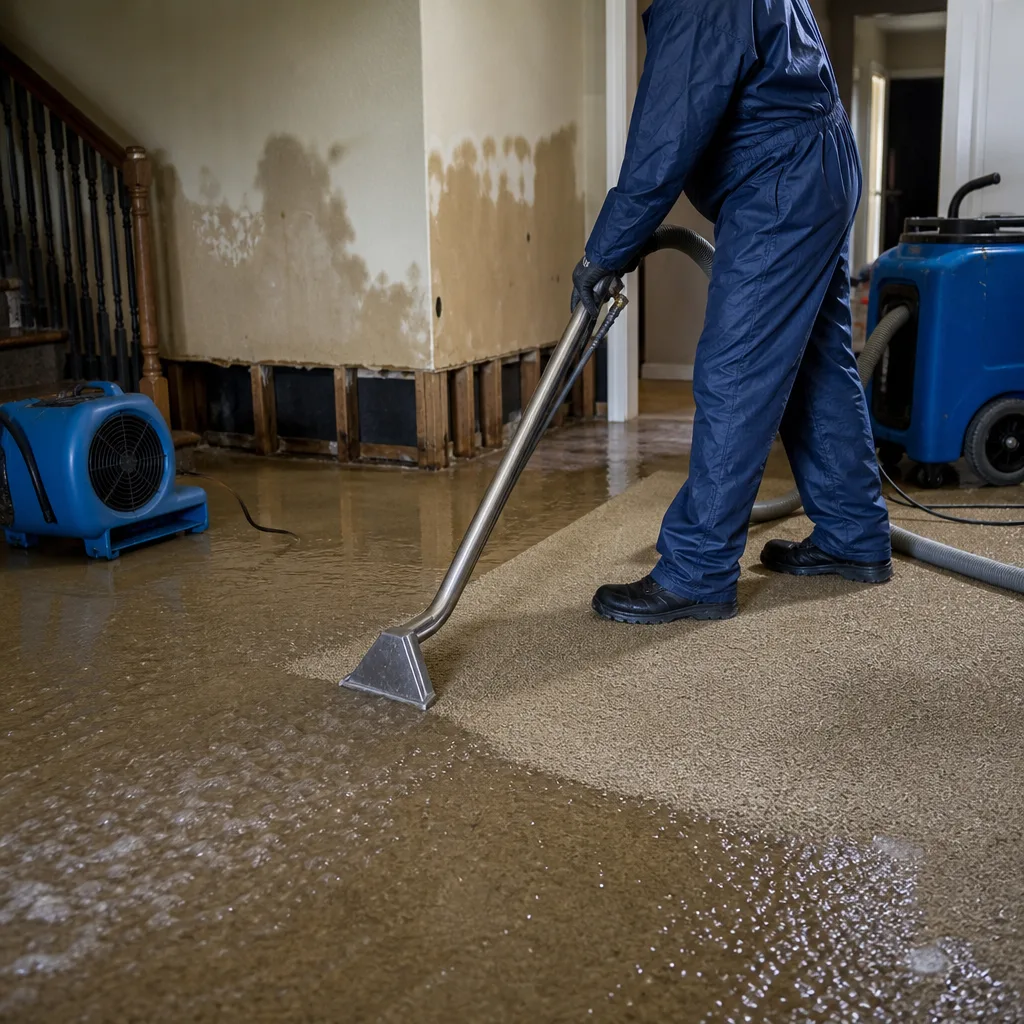
Professional-grade extraction starts immediately. We remove standing water with truck-mounted and portable extraction units, board up openings if needed, and stabilize any structural concerns. The goal is to stop the loss from spreading in the first hour.
Drying & Dehumidification
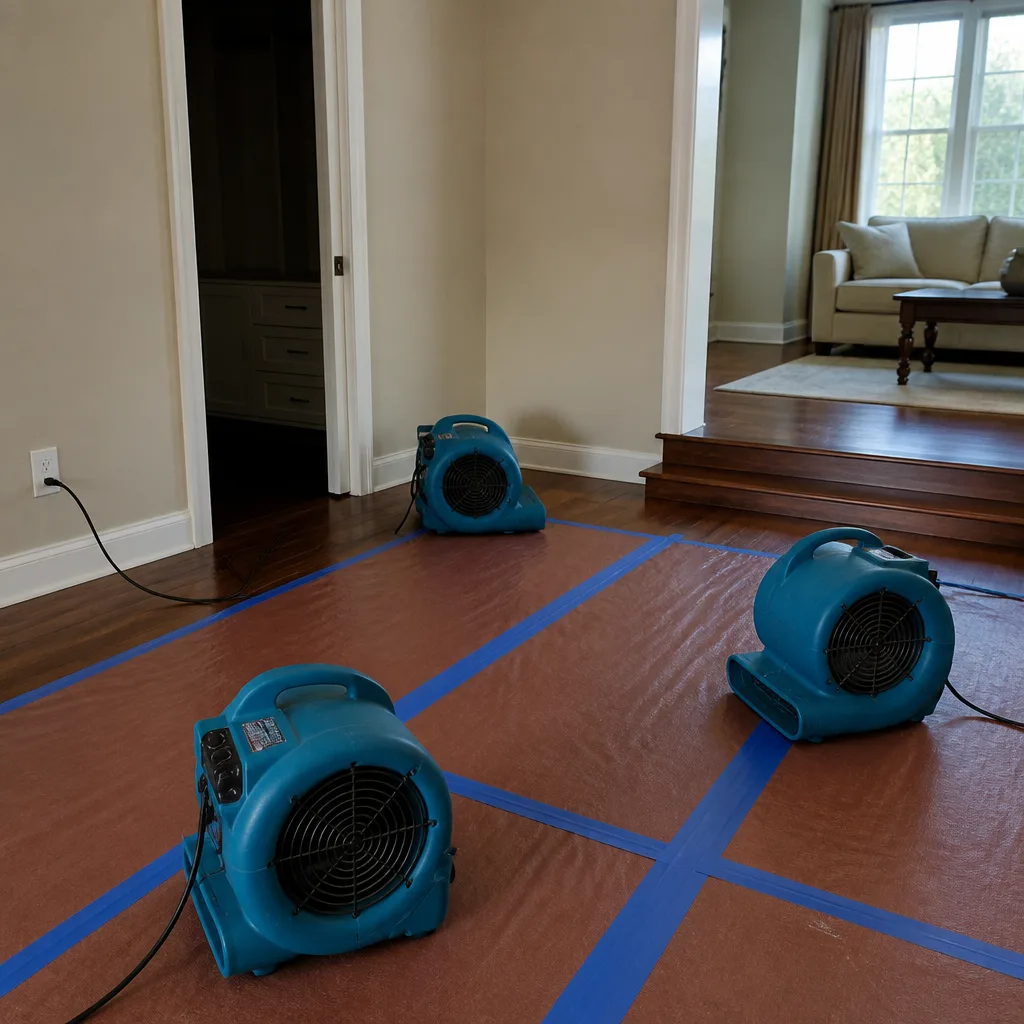
We place Dri-Eaz and Phoenix air movers and dehumidifiers in a calculated drying array, not scattered randomly. Daily moisture readings go into the log. Near Stony Point’s riverfront, we also check for hydrostatic pressure on foundation walls and below-grade spaces that won’t dry from surface treatment alone.
Cleaning & Sanitization
After drying, we clean and sanitize every affected surface. For Category 3 water from Haverstraw Bay, this includes antimicrobial treatment and salt-residue removal that generic restoration companies skip. We run HEPA air scrubbers to clear any airborne particulates.
Corrosion & Specialty Treatment
In a coastal environment like Stony Point, we treat salt corrosion on metal surfaces: door tracks, roller brackets, hinges, electrical panels, and structural fasteners. We specify galvanized or coated hardware where replacements are needed so the same failure doesn’t recur next season.
Repairs & Restoration
We rebuild what needs rebuilding, from drywall and flooring to dock doors and mechanical systems. Because we’re a full-cycle Commercial Restoration company, the same crew that extracted the water finishes the job. Then we hand you the moisture log and the 90-Day Done Right Promise in writing.
Need Emergency Commercial Restoration in Stony Point Now?
Crews minutes away, answering live 24 hours a day. The sooner we start, the less it costs.
Working With Your Insurance Company
Insurance claims for commercial restoration in Stony Point succeed or fail on documentation. The carrier wants to see exactly what was damaged, what category of water was involved, and what it cost to dry and rebuild. We build that file from the first hour. Our team photographs every affected area room by room, logs moisture readings daily, and writes a detailed line-item scope of work that matches industry-standard estimating software. Then we talk to your adjuster directly, so you’re not translating technical details back and forth. The 90-Day Done Right Promise is part of that file too: a written guarantee that the work was done to the standard we promised.
What We Provide Your Insurer
- Thorough documentation of the loss
- Photos of all damage, room by room
- Moisture readings and drying logs
- A detailed, line-item scope of work
- Direct coordination with your carrier
Built for Stony Point’s Loss Calendar
Stony Point’s commercial losses follow a predictable rhythm, and we plan our equipment staging around it. January and February bring deep freezes that burst supply lines in unheated garages, warehouses, and mechanical rooms. March and April thaw brings Hudson River ice jams and snowmelt that raises the water table and pushes groundwater into basements and below-grade storage. Summer thunderstorms dump inches of rain in an hour, flash-flooding low-lying commercial spaces near the marina and the riverfront. September through November is nor’easter season, when storm surge off Haverstraw Bay can drive brackish water under dock doors and through foundation cracks. Each season leaves a different signature. Nor’easter surge is Category 3 salt water that corrodes hardware within days. Winter pipe breaks are clean water but hit when buildings are closed, so the damage has often sat for hours before anyone notices. Knowing the calendar means we keep the right equipment staged close by, and we dispatch with a plan for the specific failure mode, not a generic one.
Commercial Restoration Across Stony Point’s Neighborhoods
Stony Point’s commercial geography shapes how we respond. Down along River Road and the waterfront near the marina, commercial docks and boat storage buildings take the brunt of tidal surge, and salt corrosion on metal doors and hardware is a constant. Properties here in the documented flood zone carry repeat-event histories, so every restoration has to account for the fact that it will likely happen again. On Holt Drive near the commercial corridor, retail and light-industrial buildings face different challenges: flat roofs that pond water, blocked storm drains that back up into loading areas, and aging mechanical rooms that flood during heavy summer downpours. Up in the historic village core around Railroad Avenue, older commercial buildings with plaster and wood-lath construction hide moisture longer, and when the water table rises after a nor’easter, those masonry foundations stay damp for weeks. Each place needs a different drying plan, a different containment strategy, and a different expectation for how long it takes to hit the dry standard. A commercial restoration company serving Stony Point has to know which area they’re walking into before they arrive.
Specialized Commercial Restoration Services We Offer in Stony Point
Office & Retail Restoration
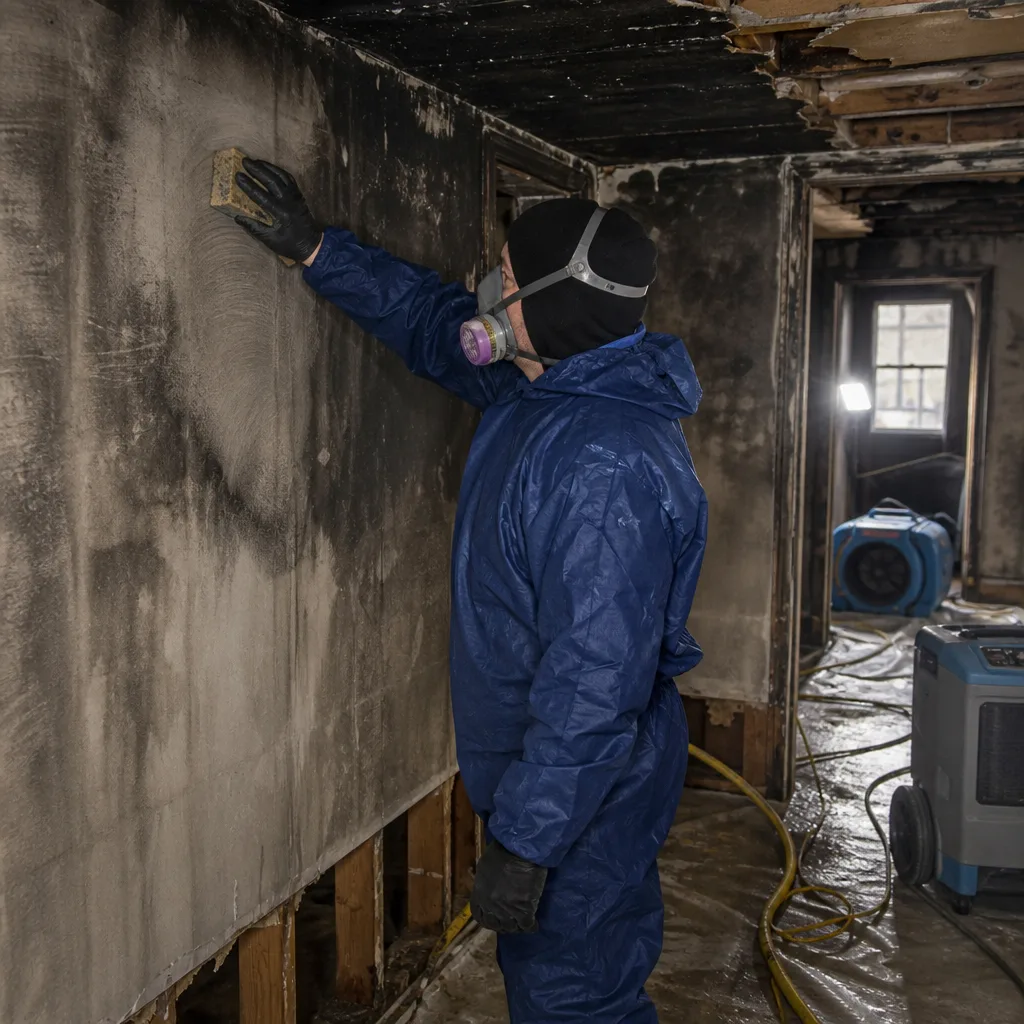
Stony Point storefronts and offices shut down fast after water or fire damage, and every day closed is revenue lost. We extract, dry, clean, and rebuild interiors so you can reopen quickly. For retail spaces along the commercial corridor near Holt Drive, we know the goal is getting displays, inventory, and customer areas back to pre-loss condition without visible signs of the event.
Multi-Unit & HOA Restoration
Multi-unit commercial and mixed-use buildings in Stony Point present a coordination challenge: one roof leak can affect three units, common areas, and a hallway. We handle the full envelope from water extraction to common-area rebuild, and we document each unit separately so the HOA’s insurance claim is clean. Our moisture mapping is unit-specific, because adjacent units can have very different drying profiles.
Industrial Facility Cleanup
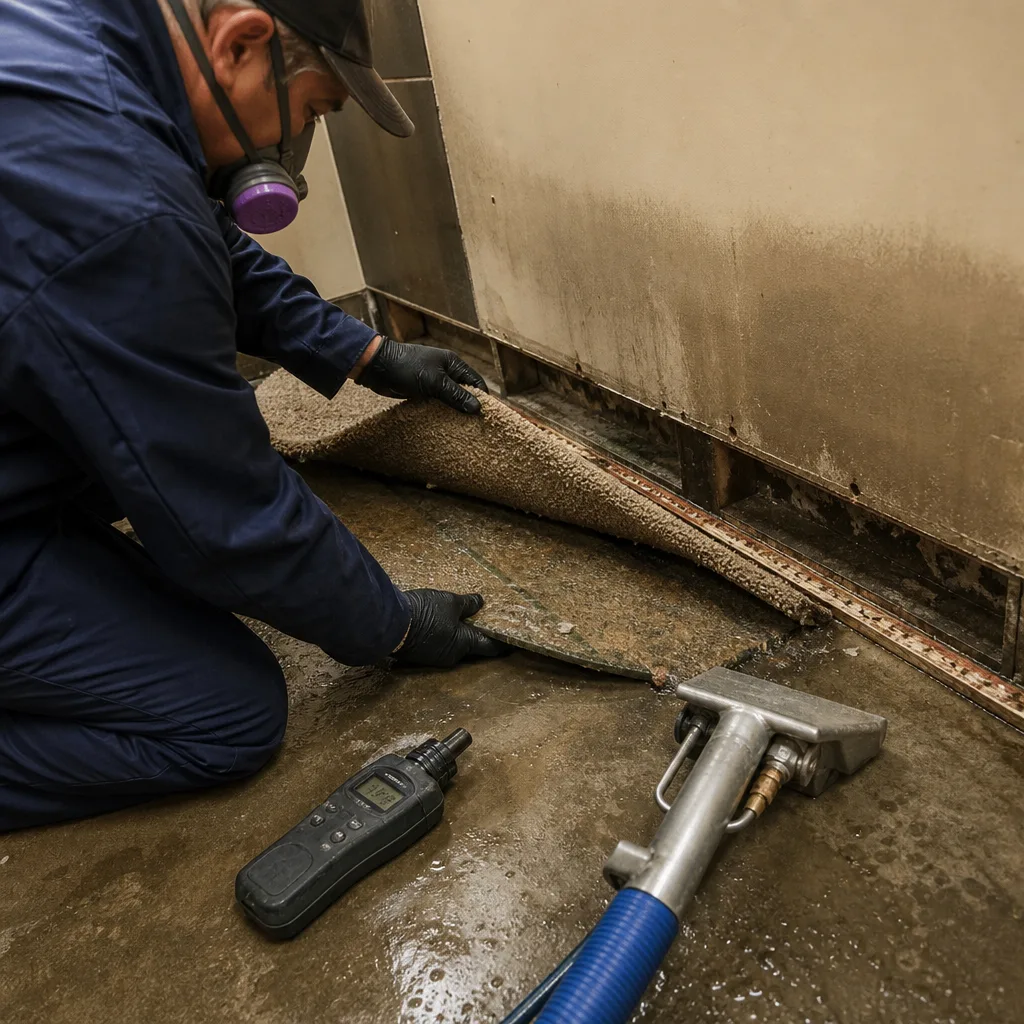
Warehouses and light-industrial buildings near the river deal with oversized spaces, high ceilings, and concrete floors that hold moisture. We bring in commercial-grade air movers and dehumidifiers sized for the cubic footage, plus floor-level drying mats and injection systems for wall cavities. For corrosive saltwater intrusion, we treat metal surfaces before pitting and corrosion spread beyond repair.
Large-Loss Response
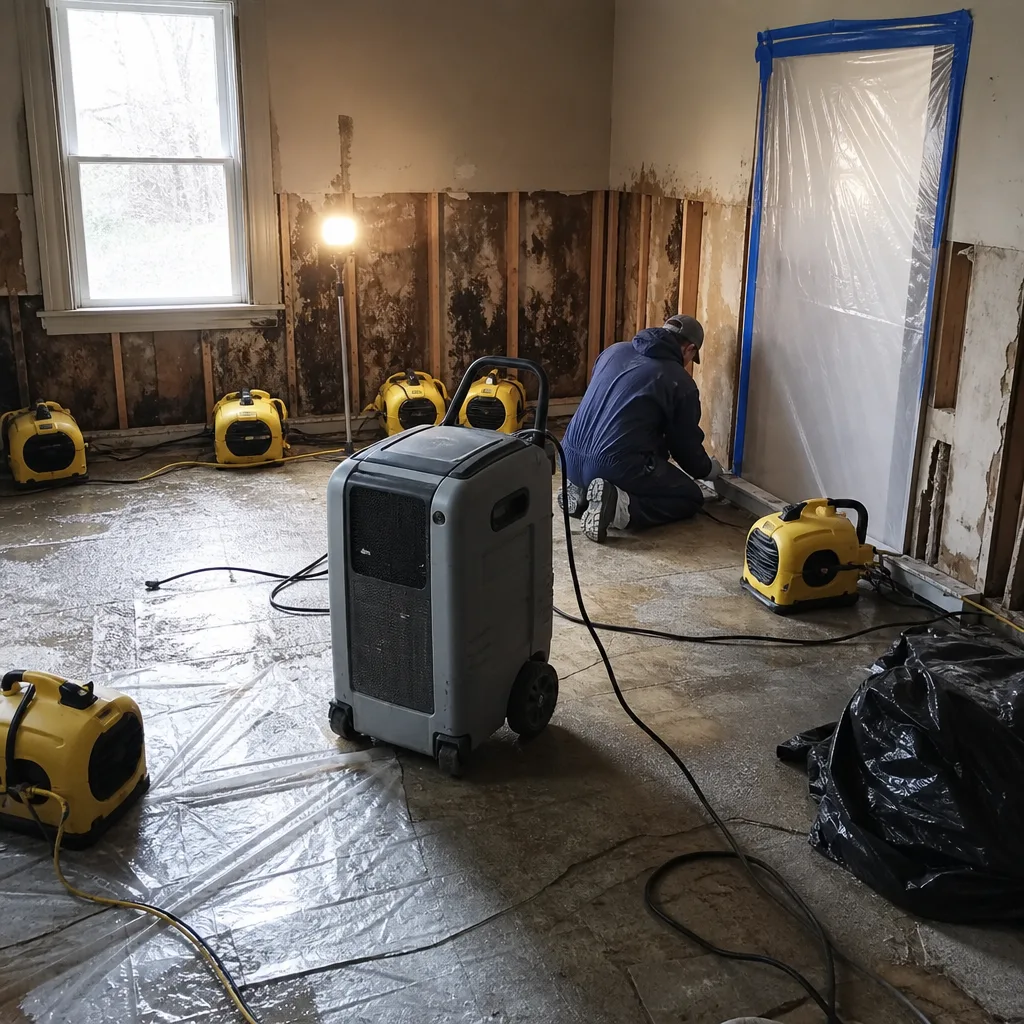
When a Stony Point commercial building takes a major hit, a nor’easter surge through a loading dock or a fire through a warehouse, you need a team that can scale up fast. We stage additional equipment, bring in extra certified crews, and coordinate with your carrier on a day-one mitigation plan. Large losses fail when restoration is delayed; our 24/7 dispatch and local staging keep the response fast.
Business Interruption Minimization
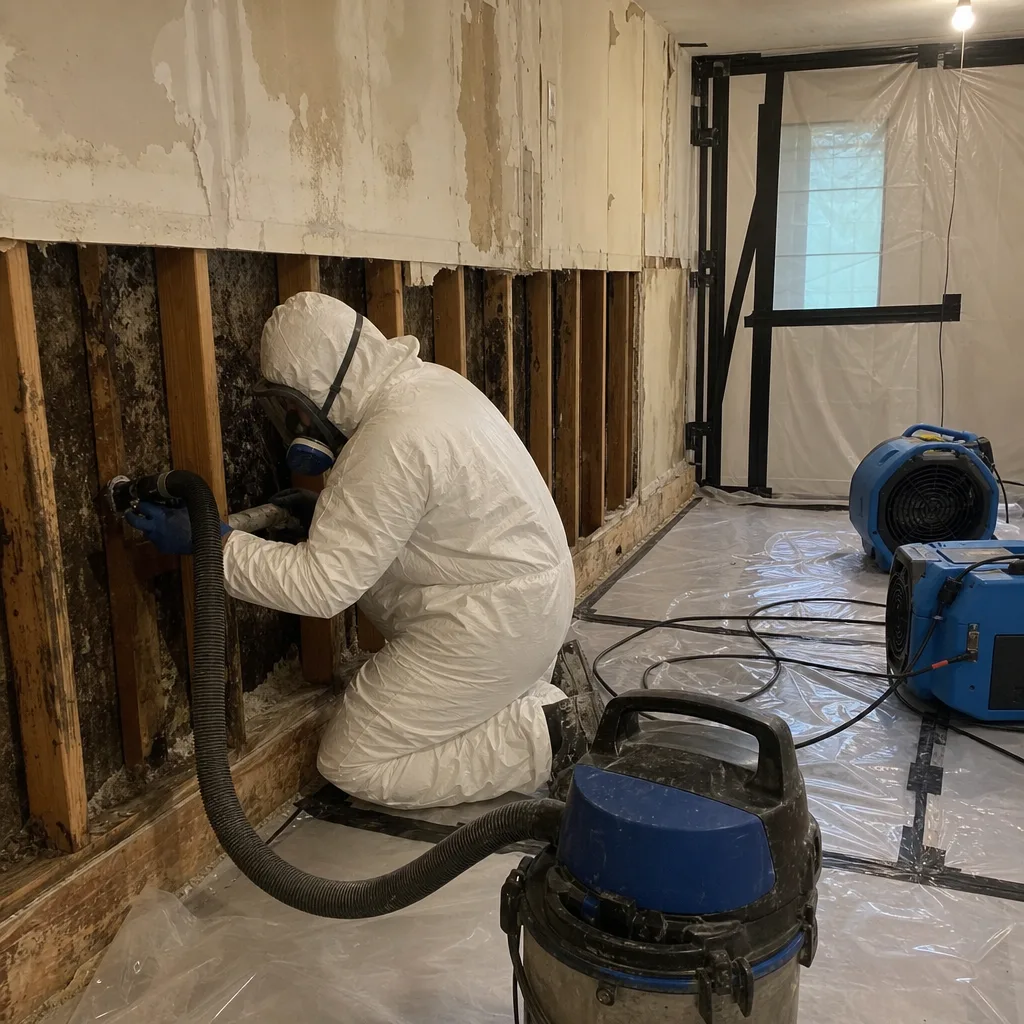
Every hour the doors stay closed costs you money. Our job is to shrink that window. We prioritize extraction and drying on the spaces that matter most first: the dock area, the production floor, the customer-facing spaces. We also provide the documentation your business-interruption claim requires: daily moisture logs, photographic proof of progress, and a written scope that matches the insurance timeline. We can’t make the loss disappear, but we can keep it from lingering.
What happens when you call
- 1
A real person answersNo phone trees - you reach a local pro.
- 2
You get an upfront price rangeHonest numbers before anyone is dispatched.
- 3
A background-checked tech heads outLicensed & insured, dispatched right away.
- 4
You approve before work beginsNothing starts until you say go.
Commercial Restoration Costs in Stony Point, NY
Commercial restoration pricing in Stony Point depends on square footage, water category, and what needs rebuilding. Water extraction and drying for a small retail space or office typically runs $3,500 to $8,000. A warehouse or industrial bay with Category 3 saltwater intrusion from a nor’easter, with containment, corrosion treatment, and structural drying, commonly lands between $12,000 and $45,000. Mold remediation after prolonged damp exposure near the riverfront starts around $1,800 for localized treatment and climbs past $10,000 for full containment and clearance testing across a larger commercial space. Fire and smoke restoration shifts based on soot type and surface area; a small office kitchen fire might run $4,500 to $9,000, while a full warehouse fire rebuild is priced as a reconstruction project with a written scope. What moves the price most in Stony Point: access constraints in the historic village, saltwater corrosion requiring hardware replacement, and whether below-grade spaces need active drainage solutions rather than surface drying. The free visual inspection gets you a firm written scope before any chargeable work begins. Call (914) 809-9936 and we’ll walk you through the numbers for your specific building.
We Also Serve Cities Near Stony Point
Our commercial restoration crews also respond across the surrounding Rockland County area, including Thiells, Haverstraw, Montrose, and Pomona. If your commercial building sits in one of these nearby communities, the same 24/7 dispatch and local crew coverage applies.
Stony Point Commercial Restoration Questions, Answered
How does salt air from Haverstraw Bay affect commercial garage door springs in Stony Point?
Salt air accelerates corrosion on torsion springs, hinges, rollers, tracks, and opener chains, shortening their life by years compared to inland Rockland County. Springs snap without warning when the corrosion reaches the failure point, dropping a commercial door mid-cycle. We specify galvanized or coated springs and stainless hardware for replacements on Stony Point commercial doors, and we recommend corrosion inspections before and after storm season.
What water category applies when the Hudson River surges into a Stony Point commercial dock or warehouse?
Hudson River surge water is Category 3, grossly contaminated. It carries marine bacteria, silt, fuel residue, and salt. Restoration requires full containment, antimicrobial treatment, and chloride removal from masonry and concrete. Treating it as fresh water is a mistake that leads to recurring mold and corrosion. Our IICRC-certified crews classify and remediate to the correct standard from day one.
Why does mold return in some Stony Point commercial buildings near the river after initial remediation?
The near-river water table stays high enough to keep foundation walls and below-grade slabs damp long after surface drying is complete. If a remediation company only dries the air and surfaces, the hidden dampness feeds mold regrowth within weeks. We check for hydrostatic pressure, add below-grade drainage where needed, and run moisture readings until the dry standard is met, not just until surfaces feel dry. That difference is what keeps mold from returning in Stony Point.
How fast can you get a Stony Point commercial bay door operational after a storm?
We respond to Stony Point commercial calls in about 45 minutes, and in many cases we can get a commercial door operational the same visit if the failure is hardware, spring, or track related. If the storm drove salt water into the building, we prioritize extracting and stabilizing the water first so the structure is safe. Call (914) 809-9936 and a live dispatcher tells you exactly when a crew can be there.
Do nor’easters require different drying logs for commercial spaces in Stony Point than inland storms?
Yes. Nor’easter surge leaves salt residue and Category 3 contaminants that require a different drying protocol. We log humidity, grain depression, and material moisture readings daily, but we also document chloride levels and hydrostatic pressure readings on below-grade surfaces. Insurance carriers reviewing nor’easter claims respond better to thorough saltwater-specific logs than standard freshwater documentation. It changes the claim outcome, and we know what the adjuster needs to see.
Will my insurance cover commercial restoration from a Stony Point nor’easter?
Coverage depends on your policy’s flood and surge provisions, which many standard commercial policies exclude unless a separate flood policy is in place. We document everything from the first hour, classify the water correctly, and work directly with your adjuster to maximize the claim. We also bill the carrier directly when coverage applies, so you’re not out-of-pocket while the claim processes.
What should I do in the first 30 minutes after my Stony Point commercial property floods?
Cut power to the affected area if it’s safe to do so, shut off the water source if possible, and move undamaged inventory or equipment to higher ground. Document what you see with photos. Then call us at (914) 809-9936. Don’t enter standing water if there’s any chance it reached electrical systems. The first 60 minutes determine how much can be salvaged, so err on the side of speed.
Can my business stay open during commercial restoration in Stony Point?
Sometimes, depending on the extent of the damage and where the affected area sits relative to your business operations. For small, contained losses, we can seal off the work area with containment barriers and keep customer-facing spaces open. For larger losses involving Category 3 water or structural concerns, we’ll give you an honest timeline for partial or full closure. Our goal is always to minimize your interruption.
Salt Air, Tidal Surge, and Stony Point Commercial Doors
Stony Point is a peninsula with the Hudson River on both sides. That geography puts every commercial garage, loading dock, and warehouse bay door within reach of salt air and, during nor’easters and hurricanes, actual river water. The hardware fails first. Torsion springs corrode, lose their protective coating, and snap without warning. Roller brackets seize. Hinges bind. Opener chains rust and break. A commercial door that fails mid-cycle can trap vehicles, inventory, or people, and in a riverfront building the door is also the flood barrier, so when it fails the water comes in behind it.
At a commercial garage on Railroad Avenue near the historic village core, our techs found torsion springs snapped and roller brackets seized from salt corrosion after a nor’easter drove brackish water under the doors. We replaced them with coated springs and stainless hardware, then ran moisture mapping on the foundation walls. Readings stayed elevated for days due to the high water table, so we kept containment and dehumidification in place until the dry logs met pre-loss condition. That’s the Stony Point pattern: the door fails from salt, and the foundation stays wet from the river. A restoration plan that only fixes the door misses the water behind the walls.
For our full-cycle Commercial Restoration team, the coastal environment isn’t an afterthought, it’s the starting point. We specify galvanized and coated hardware on every Stony Point door repair because bare steel won’t last two seasons here. We run chloride tests on concrete after surge events. We check drainage and below-grade waterproofing on every river-adjacent building we dry. That’s the difference between a restoration that lasts and one that fails again next nor’easter season.
Serving Stony Point, NY - Our Local Coverage Area
We’re based in the Stony Point area and know this community well. Use the map below to see our service coverage - if you’re nearby, we can almost certainly help.
Call Floodline Restoration Co. for Commercial Restoration in Stony Point
If your Stony Point commercial building has water, fire, mold, or storm damage, call (914) 809-9936 right now. A live person answers, day or night. We’ll get a certified crew to your property fast, give you a free visual inspection, and put a written scope in your hands before any work starts. Floodline Restoration Co. has answered the phone with a real person for every one of the 42 years we’ve proudly served these communities. We stand behind the work with the 90-Day Done Right Promise, in writing. Done right, and backed in writing. That’s the deal.
Written by Curt Bowman, Owner at Floodline Restoration Co., serving Stony Point and the surrounding Hudson Valley.