
Free visual inspection and a written scope of work before any mitigation begins - photos, moisture readings, and drying logs go in your claim file
The scope we write is the scope we bill. Anything new gets shown to you, in writing, before we touch it.

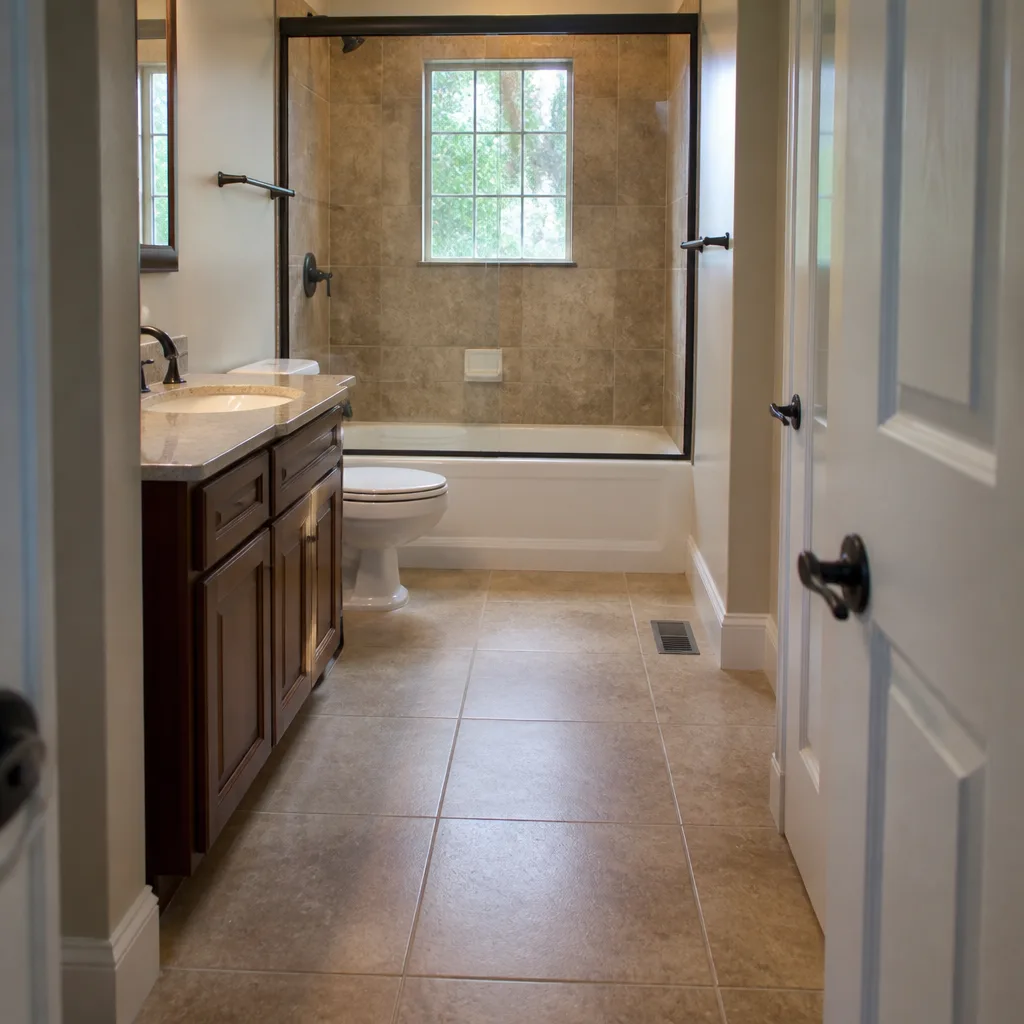

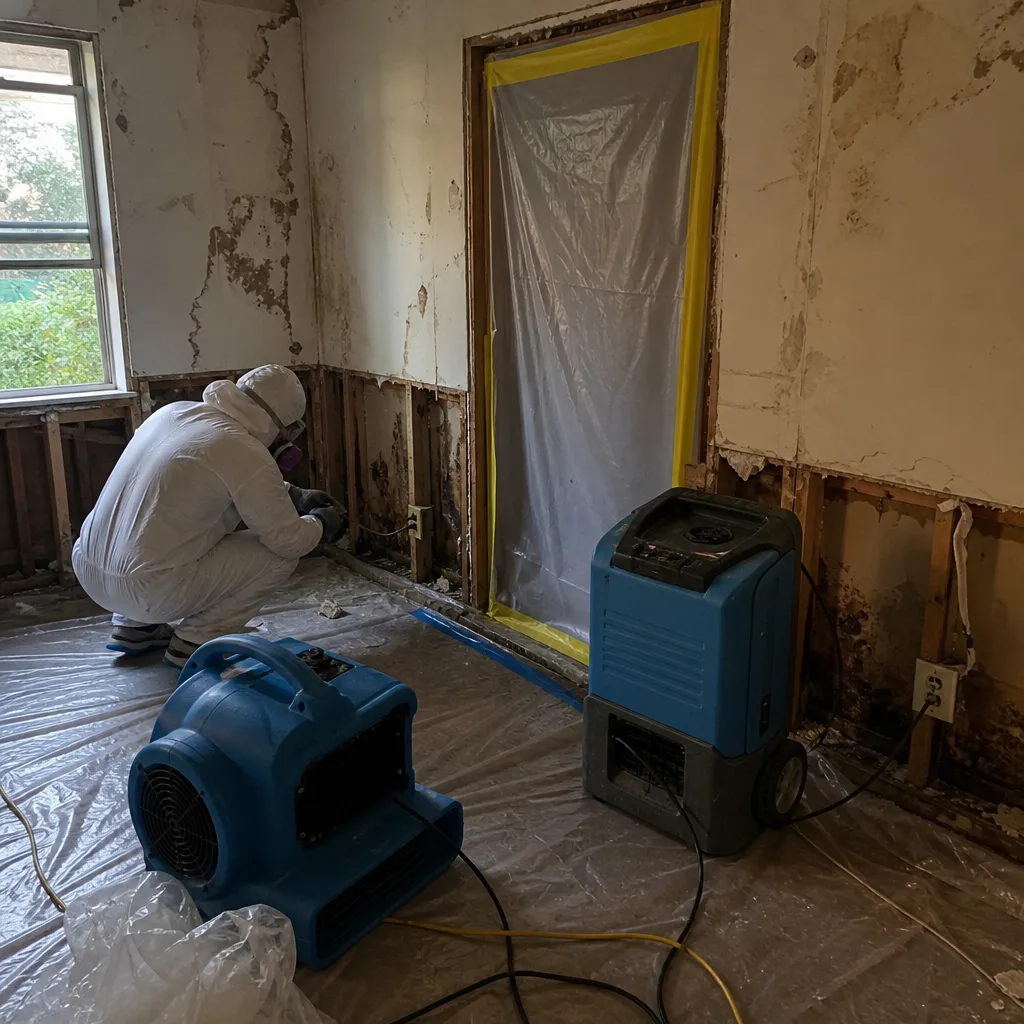 Before
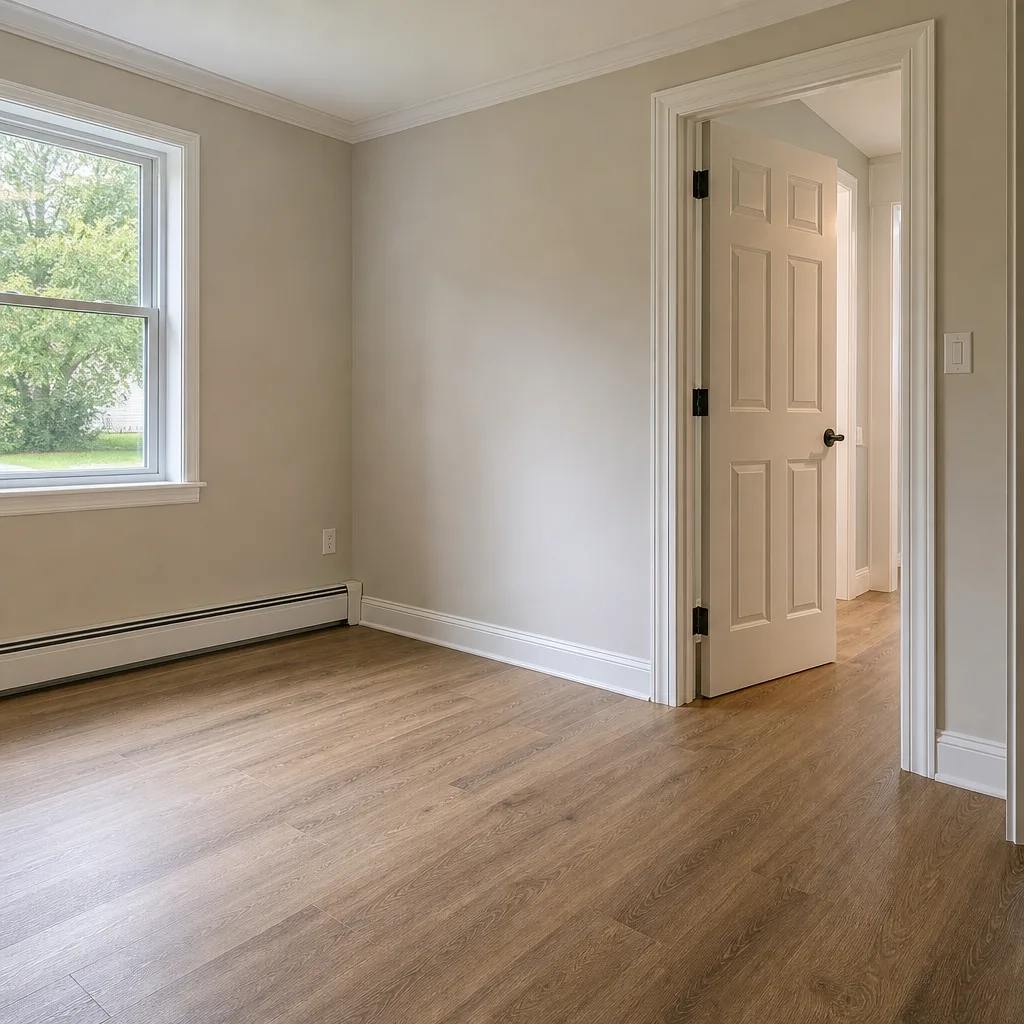 After
After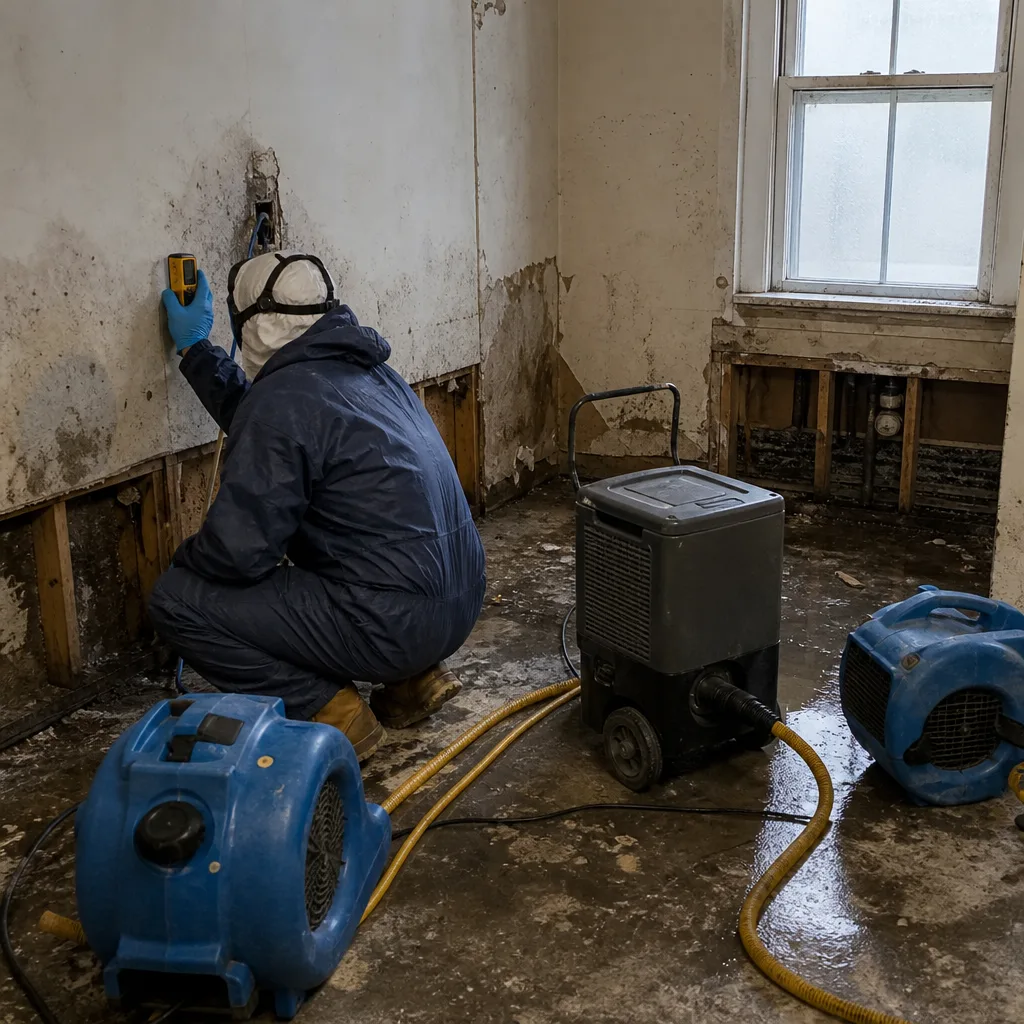 Before
 After
After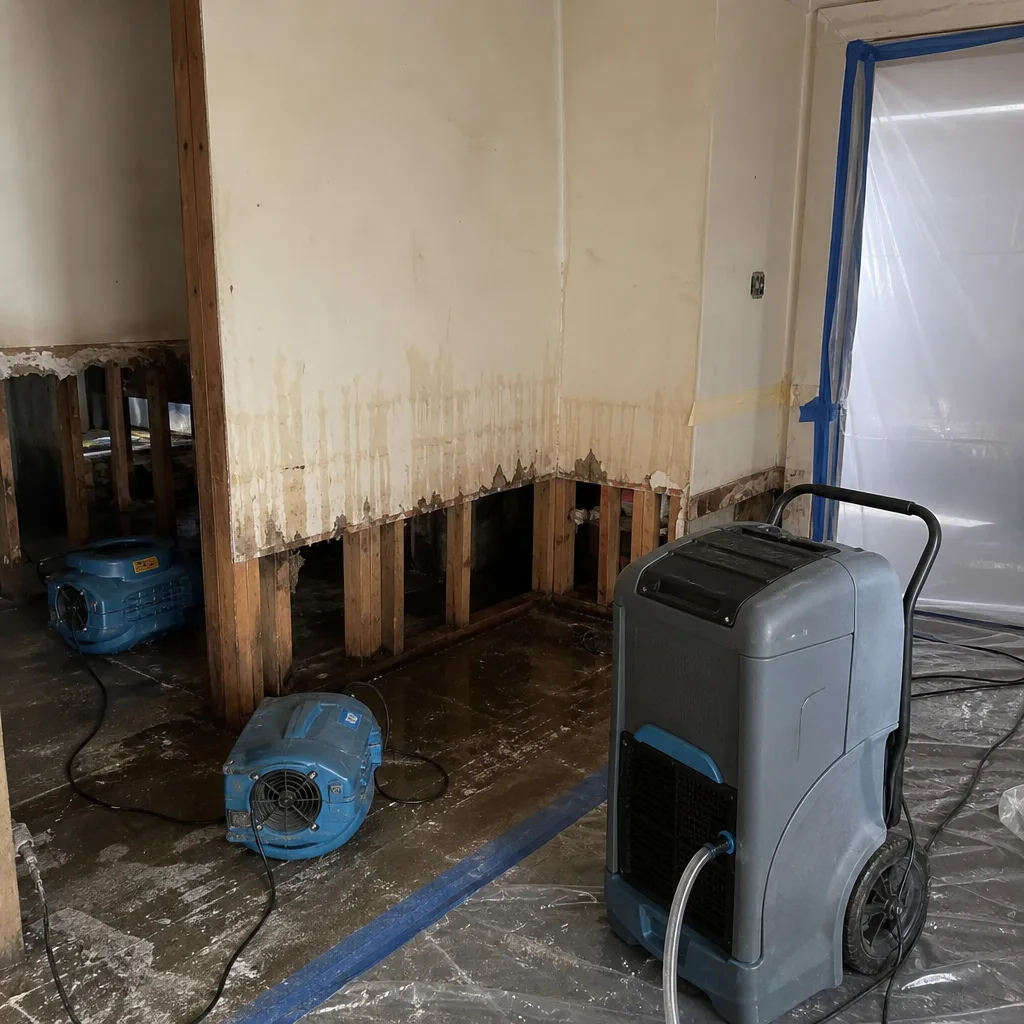 Before
 After
After24/7 Emergency Commercial Restoration in Sleepy Hollow
Commercial water, fire, or storm damage in Sleepy Hollow needs a response measured in hours, not days. Our crews answer live at (914) 809-9936 around the clock and can be on-site in the village within 45 minutes of your call, running a free visual inspection while the damage is still fresh enough to mitigate. That first hour matters because water from the Pocantico River and tidal Hudson moves fast through old commercial buildings, saturating plaster, flooring, and inventory before full extraction even begins. The longer a business stays wet, the more the restoration scope expands into mold remediation and structural drying, which is exactly the path we work to stop. We dispatch from our New York City office to Sleepy Hollow and the surrounding area every day of the year, with background-checked crews trained to IICRC, RIA, and IFA standards. If you’ve got water where it shouldn’t be, call now. A real person picks up, and extraction starts the same visit.
Understanding Commercial Restoration Severity in Sleepy Hollow Properties
Restoration severity in Sleepy Hollow breaks down by water category, building construction, and how long the water sat before response. Category 1 water is clean supply-line water from a burst pipe or failed sprinkler head. Category 2 carries significant contamination like washing machine discharge or sump overflow. Category 3 is the one we see most often along Beekman Avenue and the lower village commercial strips during a nor’easter: brackish tidal water and Pocantico river overflow loaded with sewage, fuel residue, and Hudson River salt. Category 3 demands full extraction, antimicrobial treatment, and often selective demolition of saturated drywall and flooring, because drying alone won’t make that water safe. The age of Sleepy Hollow’s commercial stock compounds the problem. Many buildings date to the late 1800s and early 1900s, with balloon-frame construction and original plaster on wood lath. Those walls wick moisture vertically through the stud bays, hiding water three feet above the visible stain line, so our techs run moisture mapping with thermal imaging and penetrating meters on every exterior wall, not just the wet floor. Skipping that step is how hidden mold shows up forty-eight hours after the reopening.
Why Sleepy Hollow Property Owners Choose Floodline Restoration Co.
- 45-minute response commitment in Sleepy Hollow: live dispatch, local crew routing, extraction running the same visit.
- A real person answers at 2 a.m.: never a recording or an answering service, so you’re talking to a dispatcher who can send a crew right then.
- IICRC-certified crews: our techs hold WRT, FSRT, and AMRT certifications and carry Dri-Eaz, Phoenix, XPOWER, B-Air, and Injectidry equipment.
- Free visual inspection: we walk the damage with you and explain the scope before any work begins, in plain language.
- Direct insurance billing: we bill your carrier directly and talk to your adjuster, so you don’t play messenger.
- One team, extraction to rebuild: the same certified crew that reads the moisture map on day one handles the drying log and the reconstruction, with no mid-job handoff.
Our Commercial Restoration Process
Inspection & Assessment
We document the full loss with photos, map the moisture profile wall by wall, and identify the water category or fire damage class. For Sleepy Hollow buildings with historic status, we also flag any exterior or structural work that may require village preservation review, so the timeline accounts for it from day one.
Extraction & Stabilization
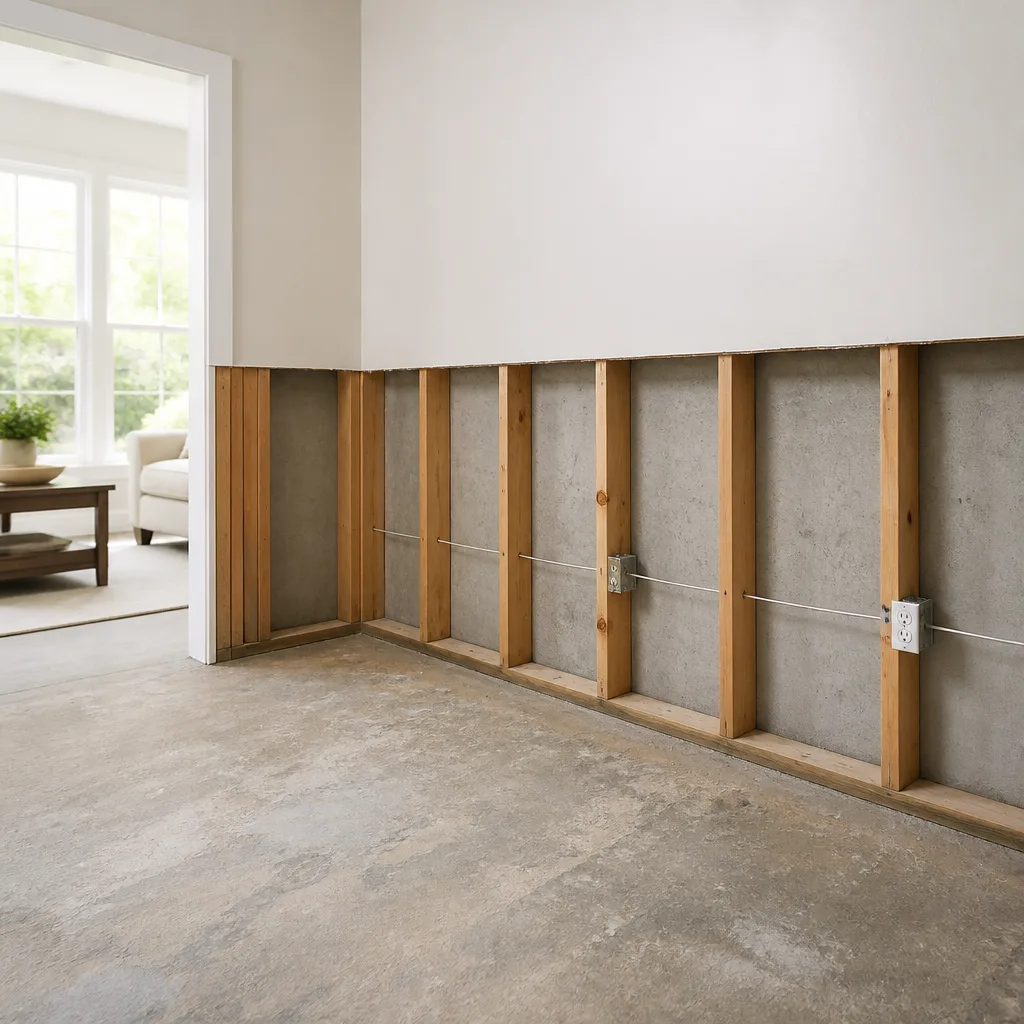
We pull standing water with truck-mounted and portable extraction rigs, then stabilize the structure by removing saturated materials that can’t be dried. In a dual-source flood event, we separate freshwater extraction from brackish tidal extraction, because they require different treatments.
Drying & Dehumidification
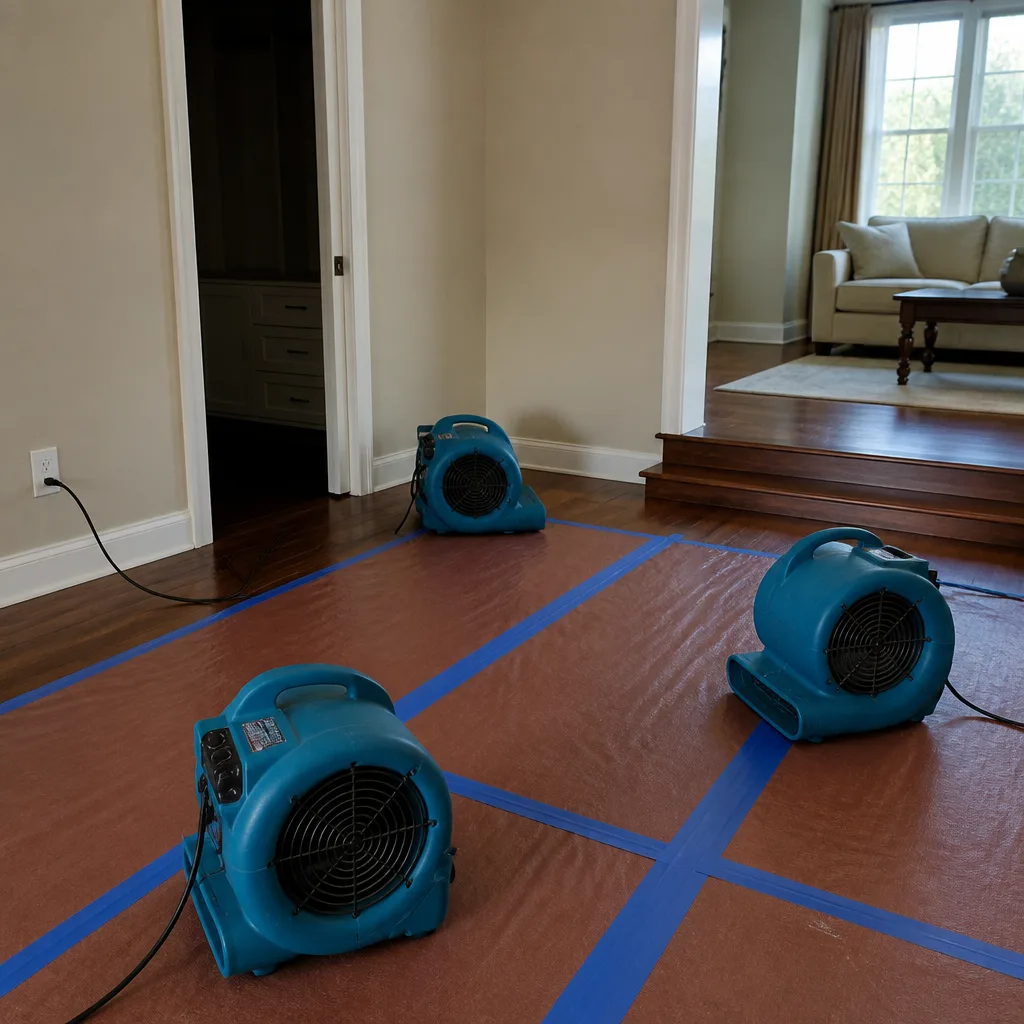
Dri-Eaz and Phoenix dehumidifiers and air movers go into a containment zone sized to the building’s cubic footage. We take moisture readings every 12 hours with hygrometers and thermal imaging, and we hand you and your adjuster the drying log as it fills in.
Cleaning & Sanitization
HEPA air scrubbers run to pull airborne soot, mold spores, or sewage particulates. Hard surfaces get antimicrobial treatment. Soft goods, documents, and inventory move to a clean staging area for triage and recovery.
Specialty Treatment for Commercial Restoration
For Sleepy Hollow specifically, this means large-loss triage across multiple units, document and inventory recovery for flood plain retail, and business interruption minimization: building a phased reopening plan that gets your revenue back before the final punch list.
Repairs & Restoration
We rebuild to pre-loss condition or better, coordinating any preservation review required on historic Sleepy Hollow commercial properties. Every job ends with the 90-Day Done Right Promise in writing.
Need Emergency Commercial Restoration in Sleepy Hollow Now?
Crews minutes away, answering live 24 hours a day. The sooner we start, the less it costs.
Working With Your Insurance Company
Insurance claims for commercial restoration in Sleepy Hollow move faster when the documentation starts in the first hour. We photograph every affected room before any material comes out, log moisture readings throughout drying, and produce a line-item scope of work written to industry standards your adjuster recognizes. From the first call, we communicate with your carrier directly, so you’re not stuck translating restoration detail into claim language. Whether your building sits in the flood plain off Beekman Avenue or higher up near the Pocantico hillside, we give your insurer the evidence they need to process the claim without stalling your reopening. You get a square deal: no surprises on the bill, and a written record the carrier can’t argue with.
What We Provide Your Insurer
- Thorough documentation of the loss
- Photos of all damage, room by room
- Moisture readings and drying logs
- A detailed, line-item scope of work
- Direct coordination with your carrier
Built for Sleepy Hollow’s Loss Calendar
Sleepy Hollow’s commercial restoration season tracks the Hudson Valley weather cycle closely. Nor’easters from September through April are the big one: heavy rain funneled down the Pocantico River valley meets a tidal Hudson already jacked up by storm surge, and the lower village takes water from both directions at once. Those events account for most of the large-loss commercial calls we run here. January and February bring deep freezes that split uninsulated supply lines in older buildings, flooding second-floor offices and retail spaces from above. March’s thaw and April rains push groundwater up through stone foundations and slab edges into basements and storage rooms. Summer thunderstorms can drop two inches in an hour, overwhelming the village drainage on Route 9 and the commercial strips near the old GM plant sites, sending runoff into loading docks and rear entrances. The pattern repeats every year, which means our crews know exactly which blocks flood first and what’s in those basements before we even pull up.
Commercial Restoration Across Sleepy Hollow’s Neighborhoods
Commercial damage presents differently depending on where in Sleepy Hollow your building sits. Down along Beekman Avenue and the lower village, we see brackish tidal intrusion from the Hudson pushing up through floor drains while Pocantico storm runoff comes in at the front door, so the extraction plan has to separate two water sources in one building. The mixed-use corridors around Route 9 and the redeveloped Edge-on-Hudson waterfront carry more modern construction, but their ground-floor retail still floods when village storm drains get overwhelmed, and the newer slab-on-grade builds there let water spread fast under LVT flooring before you see it. Up in the hillside neighborhoods near Sleepy Hollow High School and the quieter commercial pockets off Bedford Road, losses skew toward burst supply lines and roof leaks in converted older residential buildings now used as offices and studios. And over near Philipsburg Manor and the National Register-listed historic district, preservation review on exterior and structural work shapes the restoration schedule more than anywhere else in the village, because the building envelope can’t be touched without proper sign-off. If your commercial property sits within the historic core, we handle that compliance layer as part of the scope, not as a surprise that stalls the job mid-drying.
Our Commercial Restoration team runs every phase of the job, from first extraction to final paint, so a Sleepy Hollow business owner never has to manage two vendors and a preservation board at once. That’s the difference between reopening in a week and reopening in a month.
For property owners and managers throughout Sleepy Hollow, the response clock starts the minute water hits the floor. We know the roads, we know the flood pattern, and we know which buildings on your block are most likely to hold hidden moisture.
Specialized Commercial Restoration Services We Offer in Sleepy Hollow
Large-Loss Response
When a nor’easter puts two feet of Pocantico and Hudson water through a whole commercial strip, you need more than a truck and two techs. We run large-loss response with multiple crews, staged extraction rigs, and a drying plan mapped by cubic footage, not square footage. Sleepy Hollow’s dual-river flood pattern means we often run parallel operations: category 3 extraction on the tidal side, category 2 drying on the freshwater side, both inside the same building.
Industrial Facility Cleanup
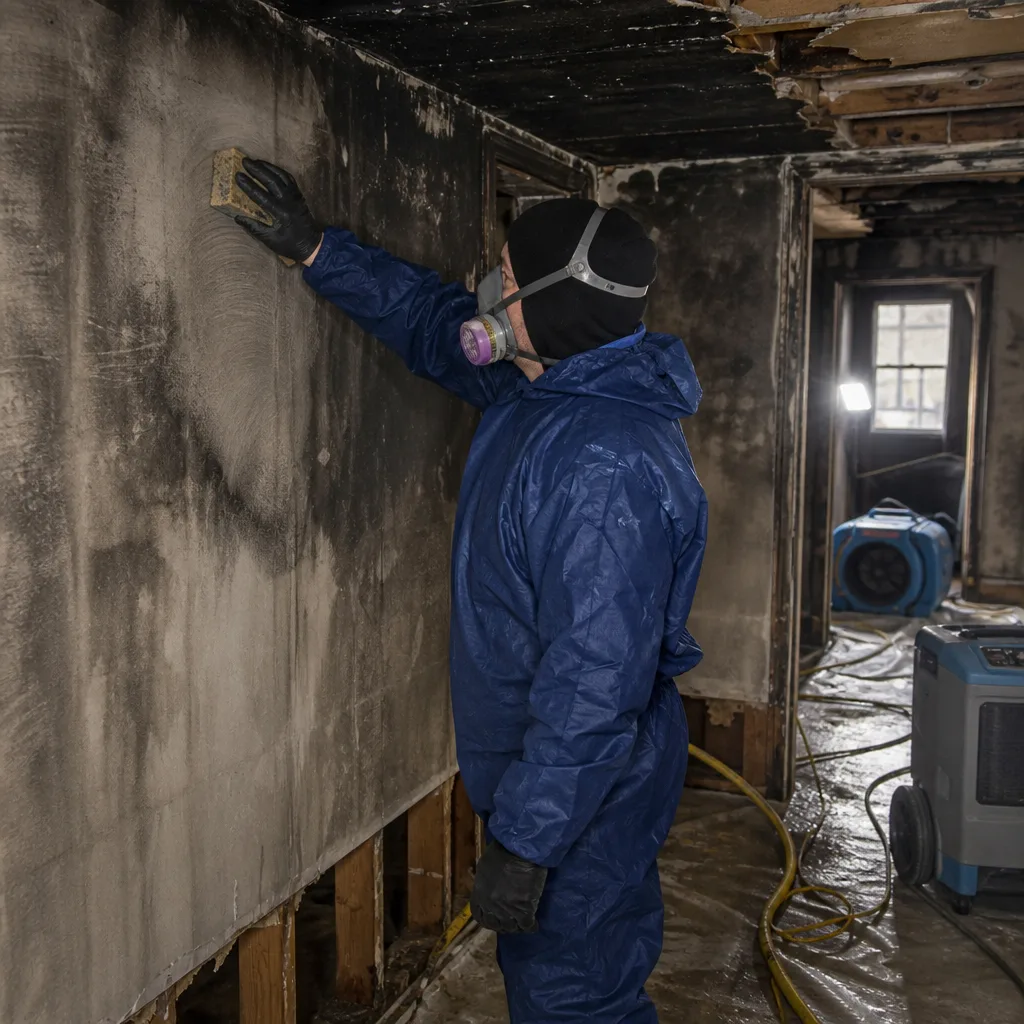
Industrial spaces in Sleepy Hollow, from warehouse bays off the old GM Tarrytown Assembly Plant footprint to light manufacturing near the waterfront, carry heavier contamination profiles and different drying physics than offices. High-bay spaces need desiccant dehumidifiers, and equipment rooms need targeted Injectidry drying under raised floors and inside machinery housings. We clean and dry in place where possible, so you lose production time, not equipment.
Business Interruption Minimization
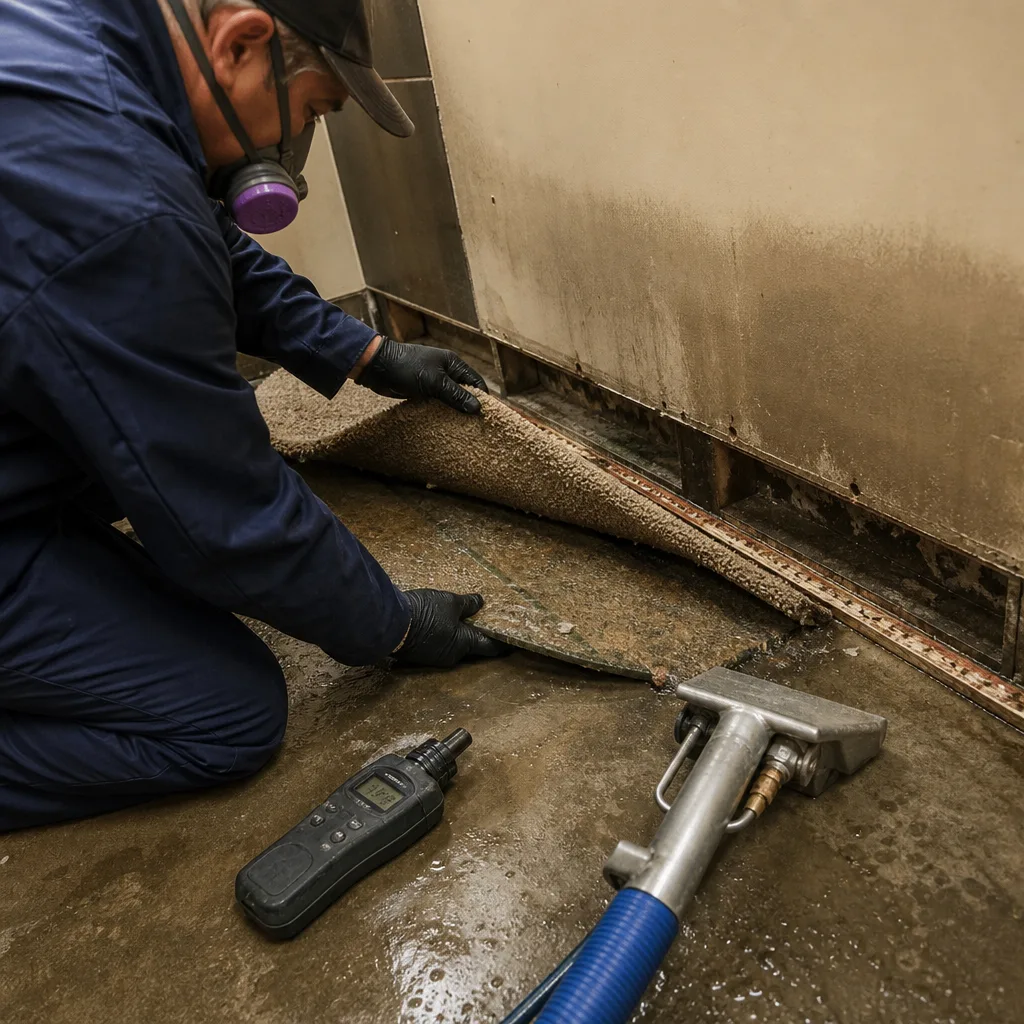
For a Sleepy Hollow retail store on the flood plain, every closed day is lost revenue, and your landlord’s insurance doesn’t cover it. We build the restoration plan around phased reopening: extraction and drying in the back-of-house and storage first, then a clean, contained pathway to keep your doors open where it’s safe. We’ve done this for storefronts on Beekman Avenue after nor’easters, getting the sales floor back in service while the back rooms finish drying. The goal is never full closure; it’s the shortest closure your structure and insurer will accept.
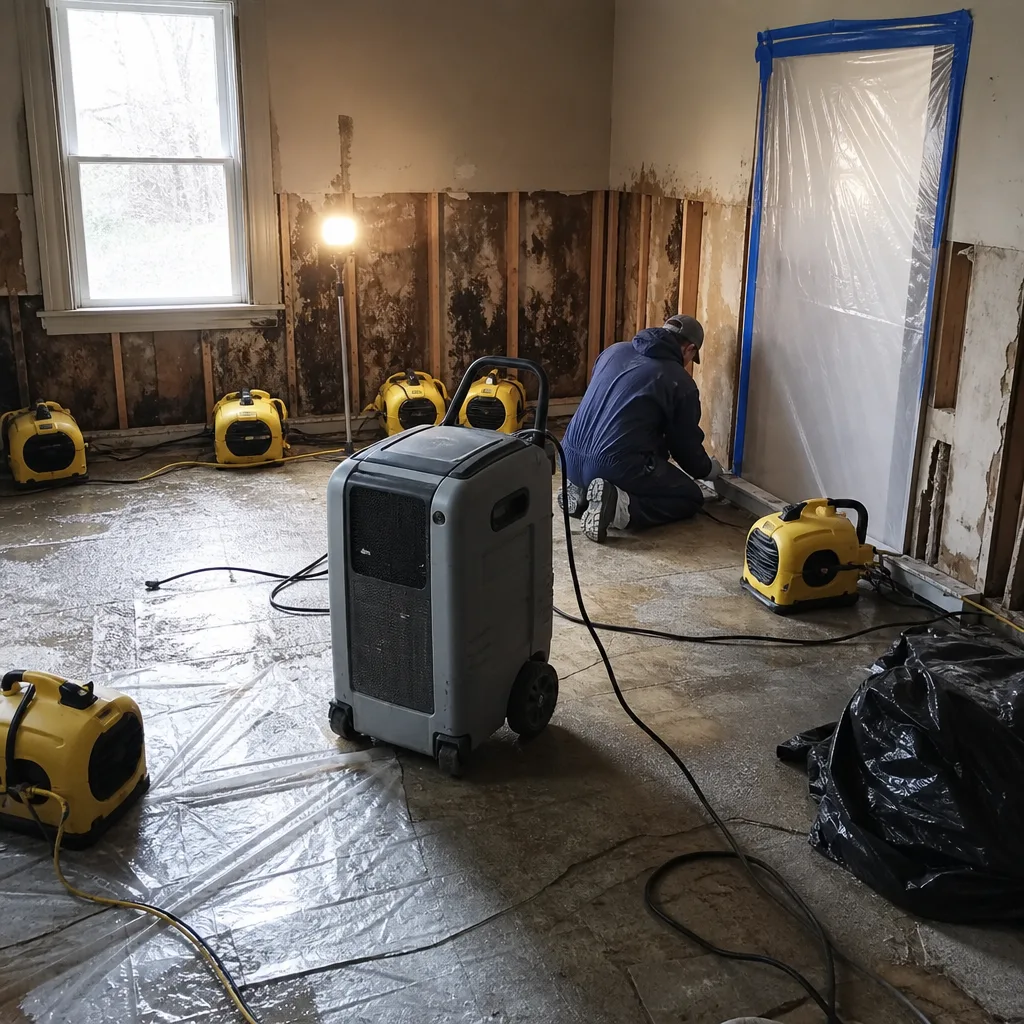
Multi-Unit & HOA Restoration
Condos, co-ops, and mixed-use buildings in Sleepy Hollow hit a different snag: responsibility for the loss is split between individual owners, the HOA, and the building envelope. We scope the damage by unit and by common area, write the line items to those boundaries, and coordinate with the board and the carriers so nobody’s claim gets delayed by an unclear scope. On buildings near the river, the common areas often flood first, and drying them correctly protects every unit above.
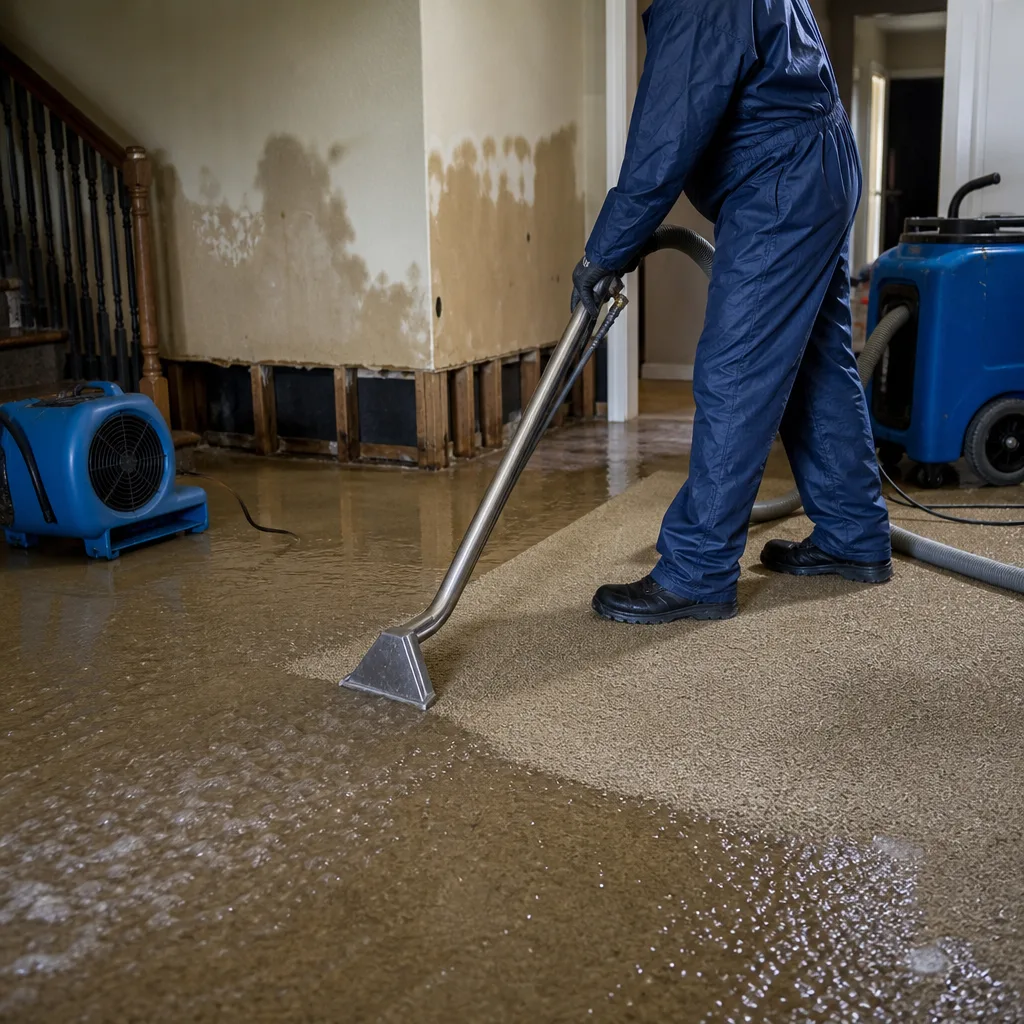
Office & Retail Restoration
Offices and storefronts in the historic core carry extra restoration layers: original plaster that holds moisture, hardwood floors that cup fast, and occasionally preservation review for exterior restoration after a storm-driven window failure. We document everything, dry with the building’s materials in mind, and rebuild interiors to pre-loss condition without erasing the character that makes a Sleepy Hollow storefront what it is.
What happens when you call
- 1
A real person answersNo phone trees - you reach a local pro.
- 2
You get an upfront price rangeHonest numbers before anyone is dispatched.
- 3
A background-checked tech heads outLicensed & insured, dispatched right away.
- 4
You approve before work beginsNothing starts until you say go.
Commercial Restoration Costs in Sleepy Hollow, NY
What should a Sleepy Hollow commercial property owner expect to pay when water or fire hits the building? Honest numbers help, so here they are. A small office water loss from a burst supply line, single room, category 1, extract and dry, typically runs $2,500 to $5,500 in this village. A mid-size retail flood with category 2 water, wet drywall, flooring removal, and structural drying lands between $6,000 and $14,000. A large-loss nor’easter response with category 3 tidal water, containment, antimicrobial treatment, demolition, and rebuild starts around $20,000 and can exceed $75,000 depending on square footage and the preservation review layer on historic buildings. Fire and smoke restoration in Sleepy Hollow’s older buildings runs higher than the county average because soot migrates through balloon-frame wall cavities fast. What moves the price: the water category, how much drywall and flooring comes out, whether historic review applies to the exterior or structural work, and how quickly drying starts. Insurance typically covers the covered portion of the loss, and we bill your carrier directly. The path to a firm number is a free visual inspection and a written scope, not a phone estimate. Call (914) 809-9936 and we’ll walk the building with you.
We Also Serve Cities Near Sleepy Hollow
Our crews respond throughout the lower Hudson Valley and the river towns. Along with Sleepy Hollow, we run commercial restoration in Bardonia, Ossining, Croton-on-Hudson, and New City. Call us and a live dispatcher will route the nearest certified crew to your building.
Serving Sleepy Hollow, NY - Our Local Coverage Area
We’re based in the Sleepy Hollow area and know this community well. Use the map below to see our service coverage - if you’re nearby, we can almost certainly help.
Sleepy Hollow Commercial Restoration Questions, Answered
How does Sleepy Hollow’s dual-river flooding affect the water category for a commercial cleanup?
Dual-river flooding in Sleepy Hollow means one building can take on category 2 freshwater from Pocantico runoff and category 3 brackish tidal water from the Hudson in the same event, and those two waters demand different extraction and sanitization protocols. A crew that treats all of it as category 2 leaves tidal contaminants on the walls, and mold shows up within forty-eight hours. We classify the water source in each affected area and run separate containment and drying where needed. Call (914) 809-9936 for an assessment, and we’ll tell you what you’re actually dealing with.
Do historic commercial buildings in Sleepy Hollow require preservation review before we can start restoration?
Yes, many do. Exterior and structural work on properties within the National Register-listed historic districts and village preservation review areas can require sign-off before we touch the building envelope, and we flag that from the first inspection so it doesn’t stall your reopening. Interior mitigation like extraction and drying can typically start immediately. Our team includes the review layer in the written scope, so you know the timeline before work begins. Call (914) 809-9936 and we’ll tell you whether your building falls under review and what that means for your schedule.
How quickly should a Sleepy Hollow business start drying after a nor’easter flood?
Within the first few hours, ideally. Water in Sleepy Hollow’s older commercial buildings with plaster and balloon-frame construction wicks upward fast, and mold colonization begins in twenty-four to forty-eight hours, sooner in tidal water with organic material. Extraction and drying equipment should be running the same day the water recedes. Our crews answer live at (914) 809-9936 and can route a team to your building within forty-five minutes, with Dri-Eaz dehumidifiers and air movers running the same visit.
Can you handle a large commercial building that floods from both the Pocantico and Hudson at once?
Yes. This is exactly the scenario our large-loss response is built for, and it happens regularly along Beekman Avenue and the lower village. We run parallel operations: category 3 extraction and antimicrobial treatment where Hudson tidal water came in through floor drains, and separate containment with structural drying where Pocantico freshwater entered at grade. We log moisture readings every twelve hours and hand the log to you and your carrier. Call (914) 809-9936 and we’ll stage crews to your exact flood pattern.
What does business interruption minimization mean for a Sleepy Hollow retail store on the flood plain?
It means we build your restoration plan around reopening, not around the full rebuild. For a Sleepy Hollow storefront that floods with the nor’easter pattern, we dry and restore your revenue-generating space first, run a clean, contained pathway so you can open safely, and finish back-of-house drying behind containment. We did this for a shop on Beekman Avenue where the owner reopened in five days while structural drying continued in the back rooms. Every day closed is a day of lost revenue; our job is to make that window as short as the structure allows. Call (914) 809-9936 to talk through a phased reopening plan for your building.
How fast can a commercial restoration crew actually get to Sleepy Hollow?
Our commitment is forty-five minutes from your call to crew arrival, anywhere in Sleepy Hollow and the surrounding river towns. A live dispatcher answers at (914) 809-9936, takes the address, and routes the nearest certified team with the right equipment already loaded. Nor’easter response windows can stretch slightly when the roads flood, but we stage crews in the lower Hudson Valley ahead of major storms so the trucks are already close.
Will my insurance cover commercial restoration from Sleepy Hollow flooding?
Most commercial property policies cover sudden and accidental water damage, including nor’easter-driven flood damage if you carry flood coverage, and fire and smoke damage under standard property coverage. The claim moves faster when the first-hour documentation is solid, which is why we photograph every room before mitigation, log moisture readings throughout drying, and write the scope line by line. We bill your carrier directly and coordinate with your adjuster. Bring the damage, and we’ll bring the paperwork your insurer actually needs. Call (914) 809-9936 and we’ll start the documentation from the first visit.
What certifications do your Sleepy Hollow commercial restoration techs hold?
Our techs are background-checked, uniformed, and certified to IICRC, RIA, and IFA standards, with WRT, FSRT, and AMRT certifications where the job demands them. We run Dri-Eaz, Phoenix, XPOWER, B-Air, and Injectidry equipment, and we’re trained on the specific water categories and drying physics that Sleepy Hollow’s old commercial stock throws at a restoration crew. You’ll see the same faces and the same names from the first extraction to the final walkthrough.
Written by Curt Bowman, Owner at Floodline Restoration Co., serving Sleepy Hollow and the Hudson Valley since 2010.