

Free visual inspection and a written scope of work before any mitigation begins - photos, moisture readings, and drying logs go in your claim file
The scope we write is the scope we bill. Anything new gets shown to you, in writing, before we touch it.
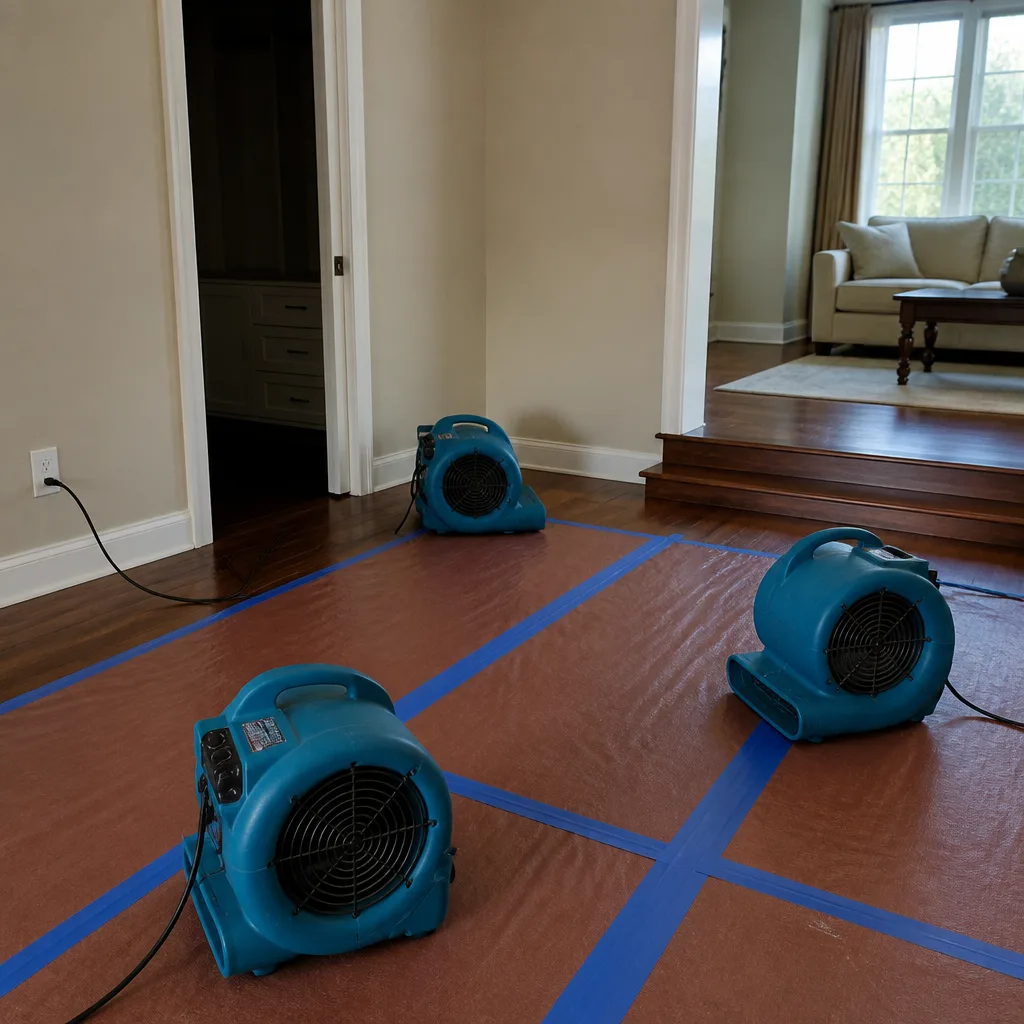
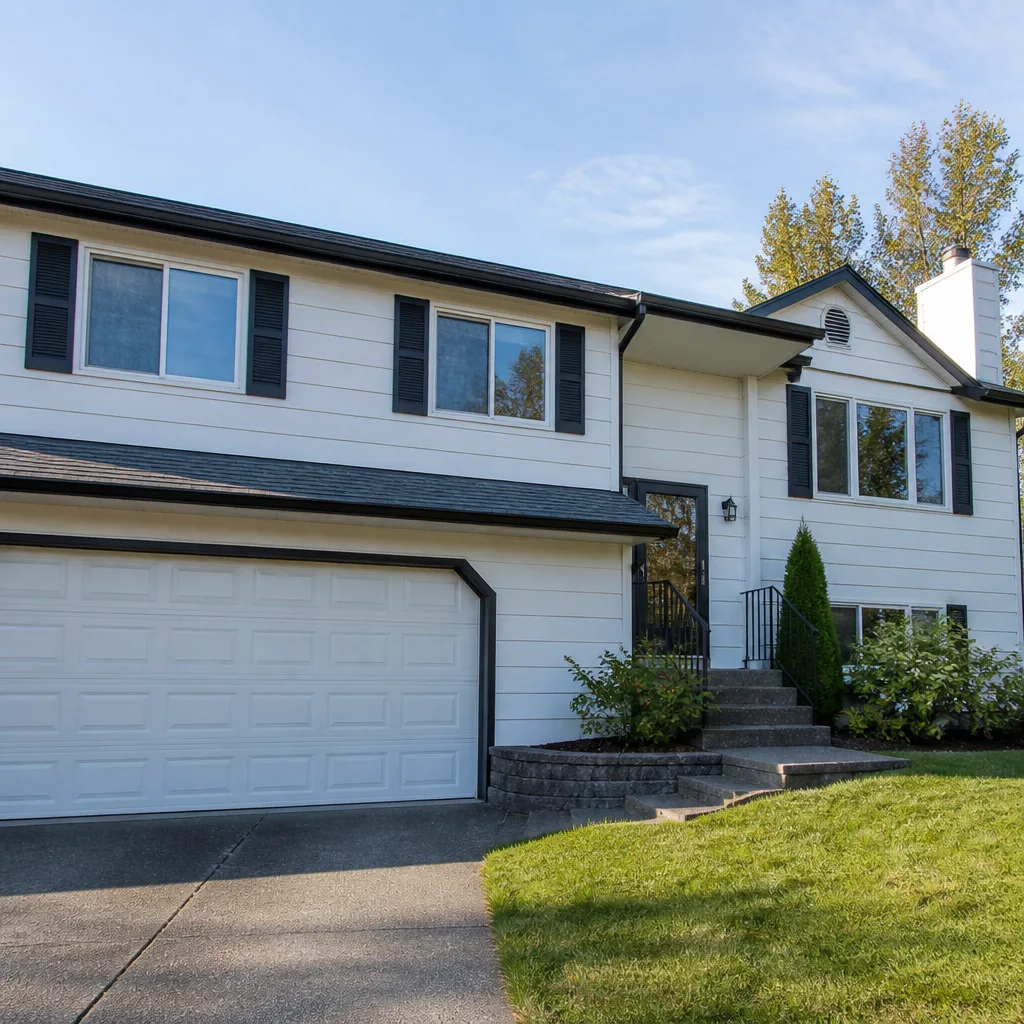
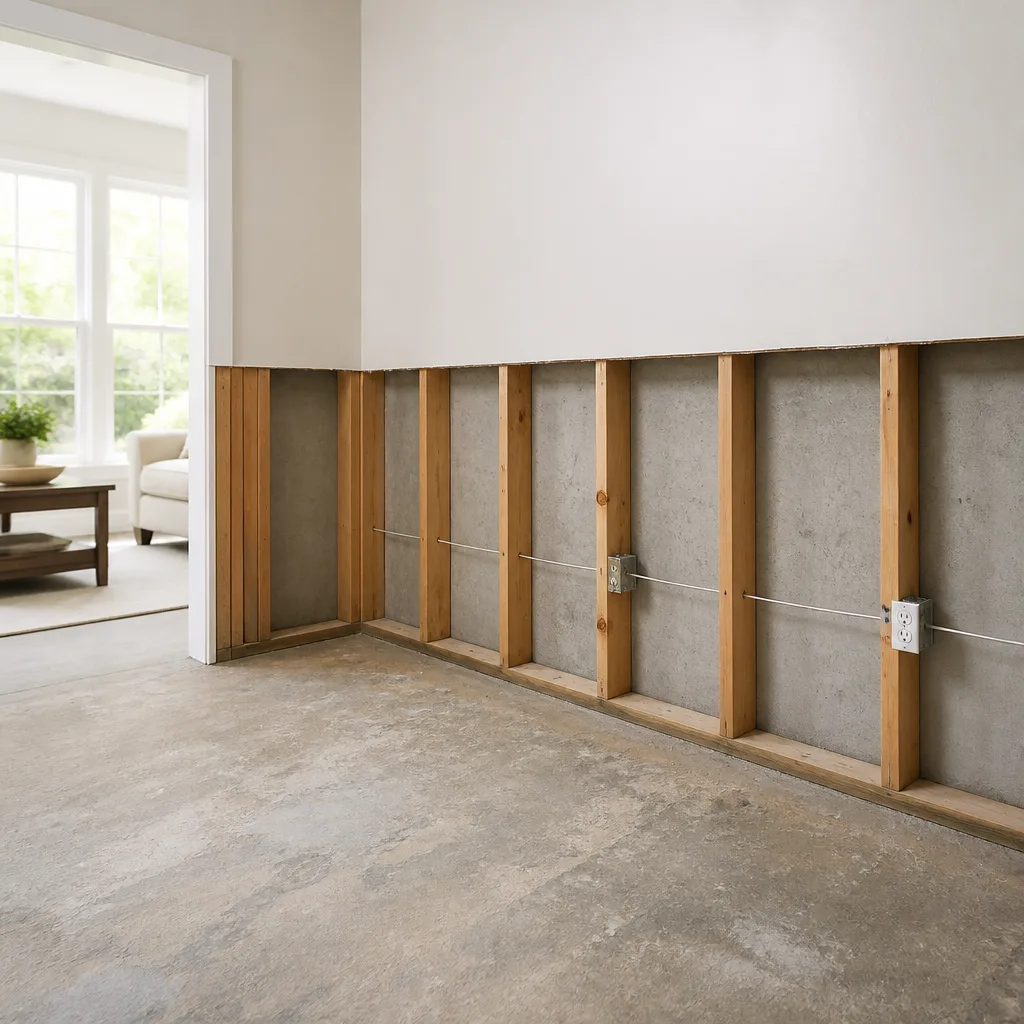

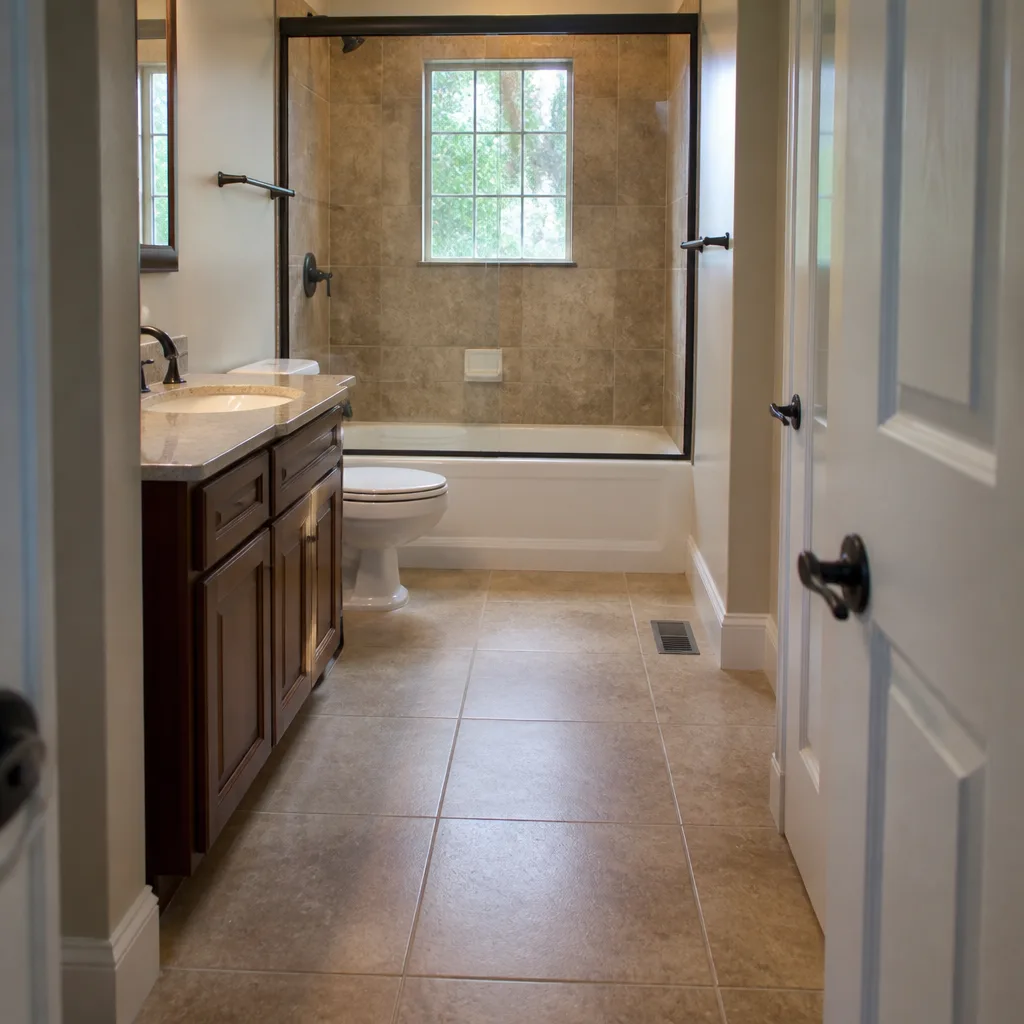
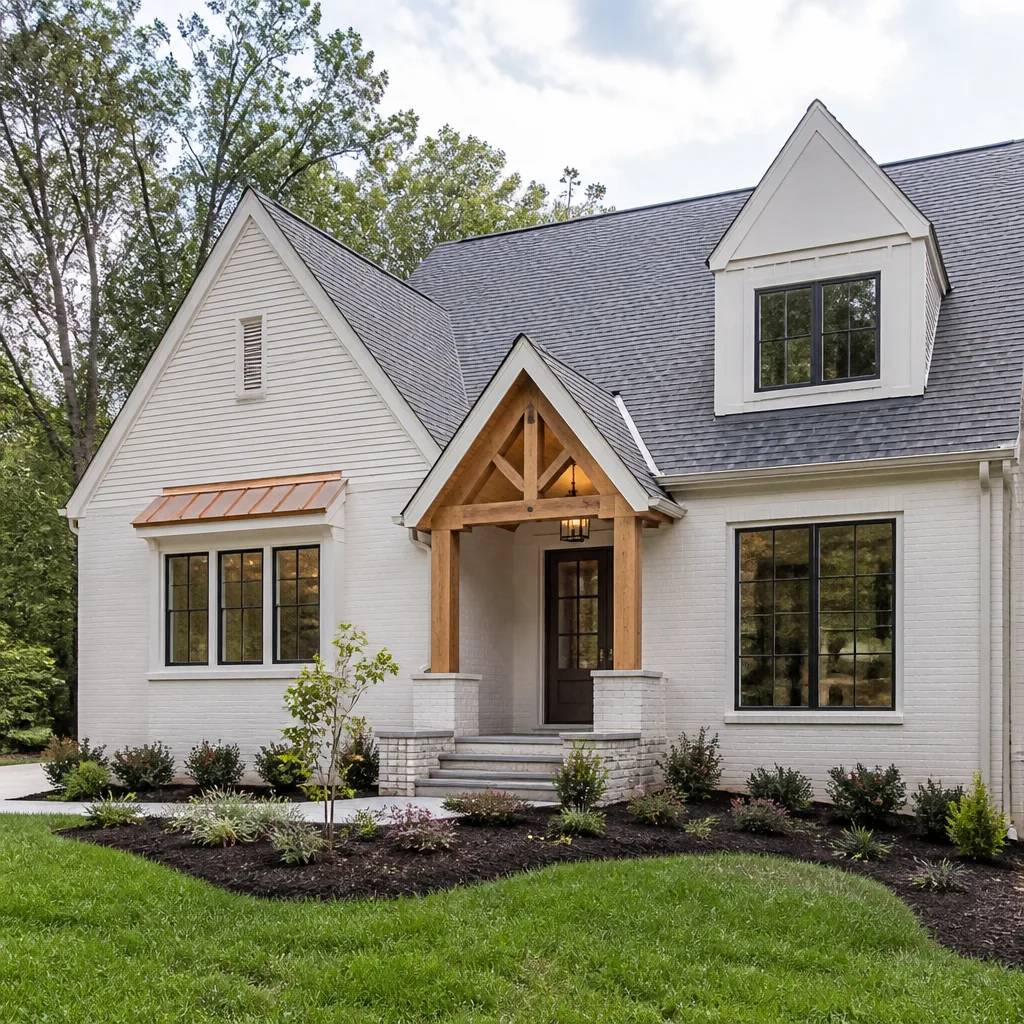
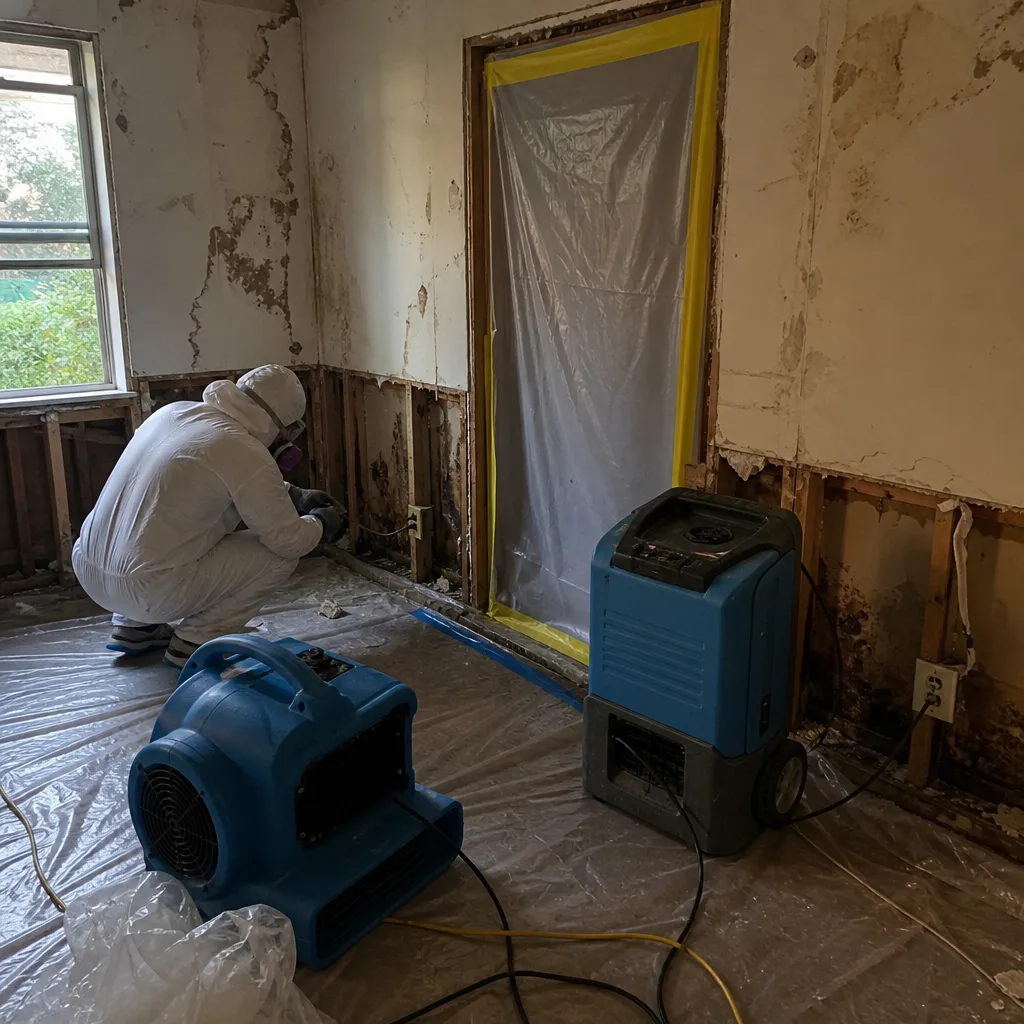 Before
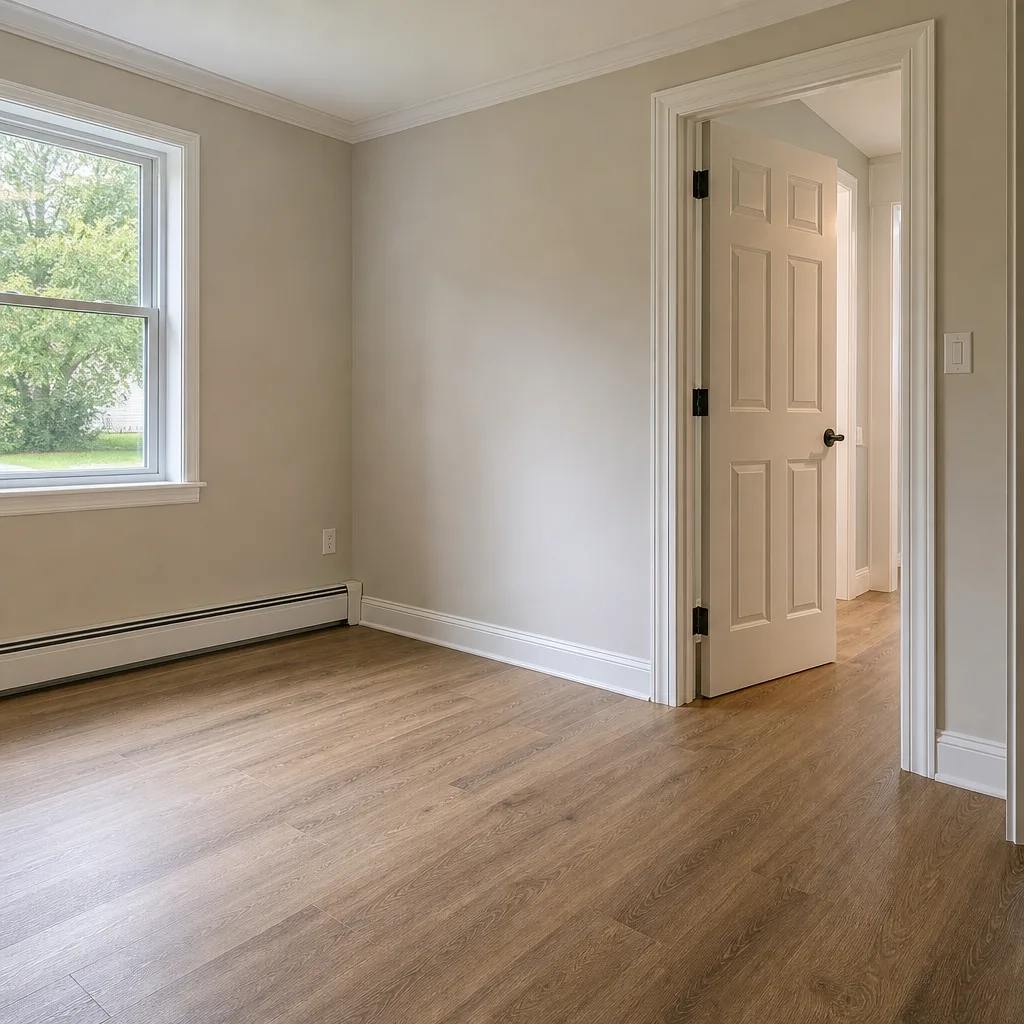 After
After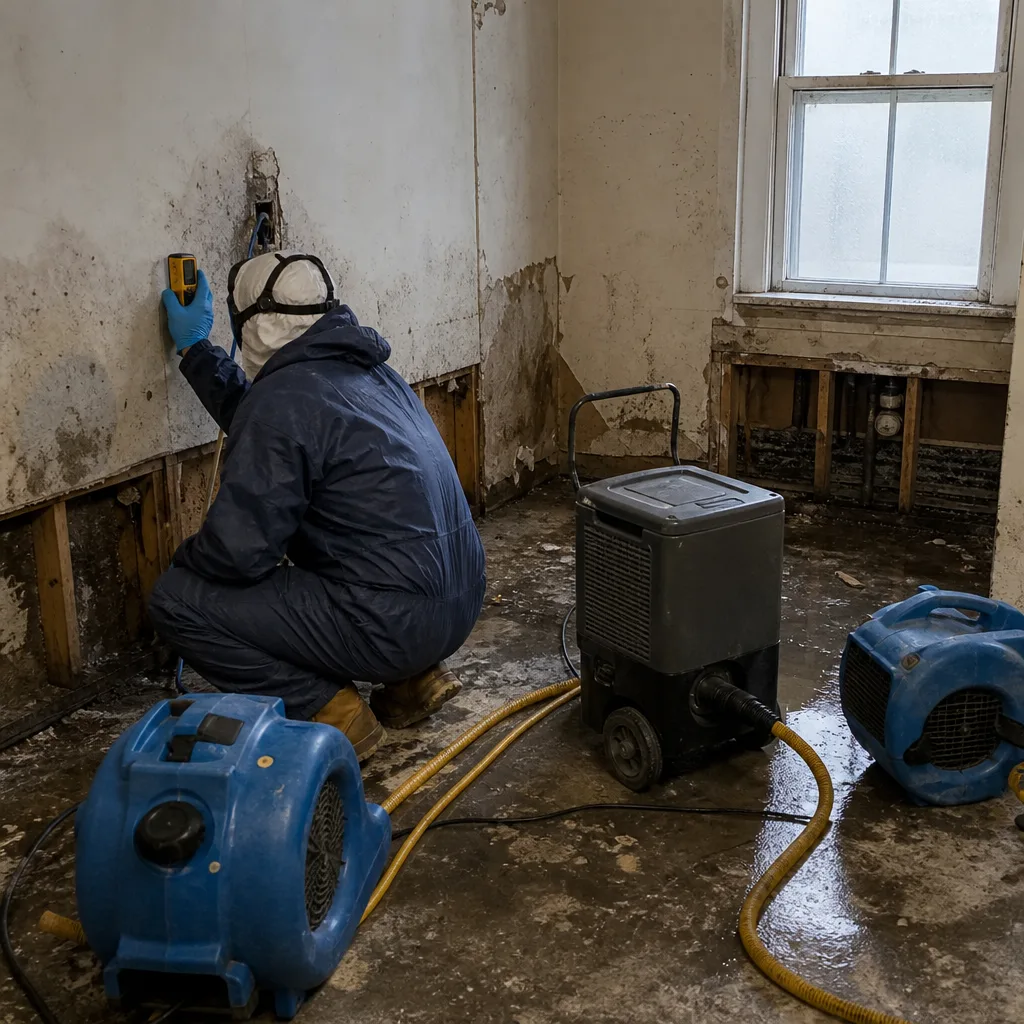 Before
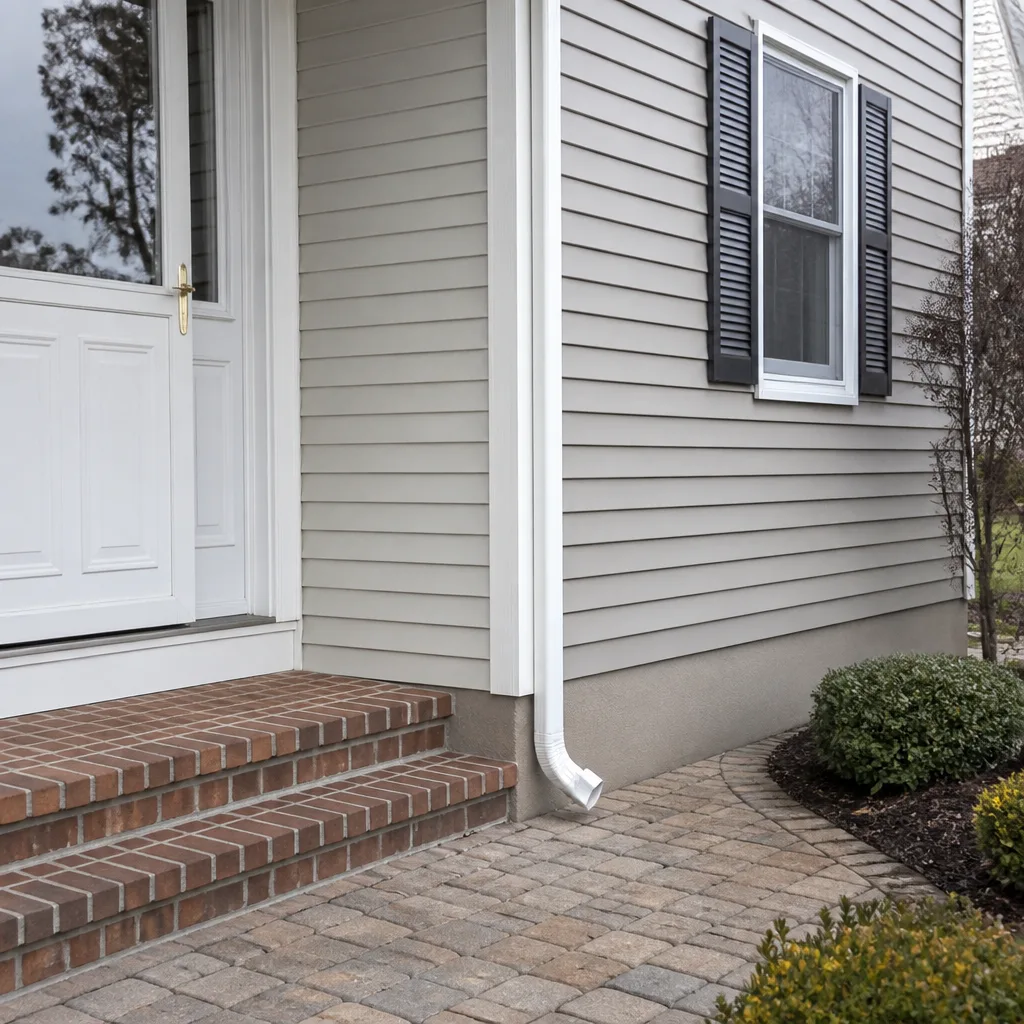 After
After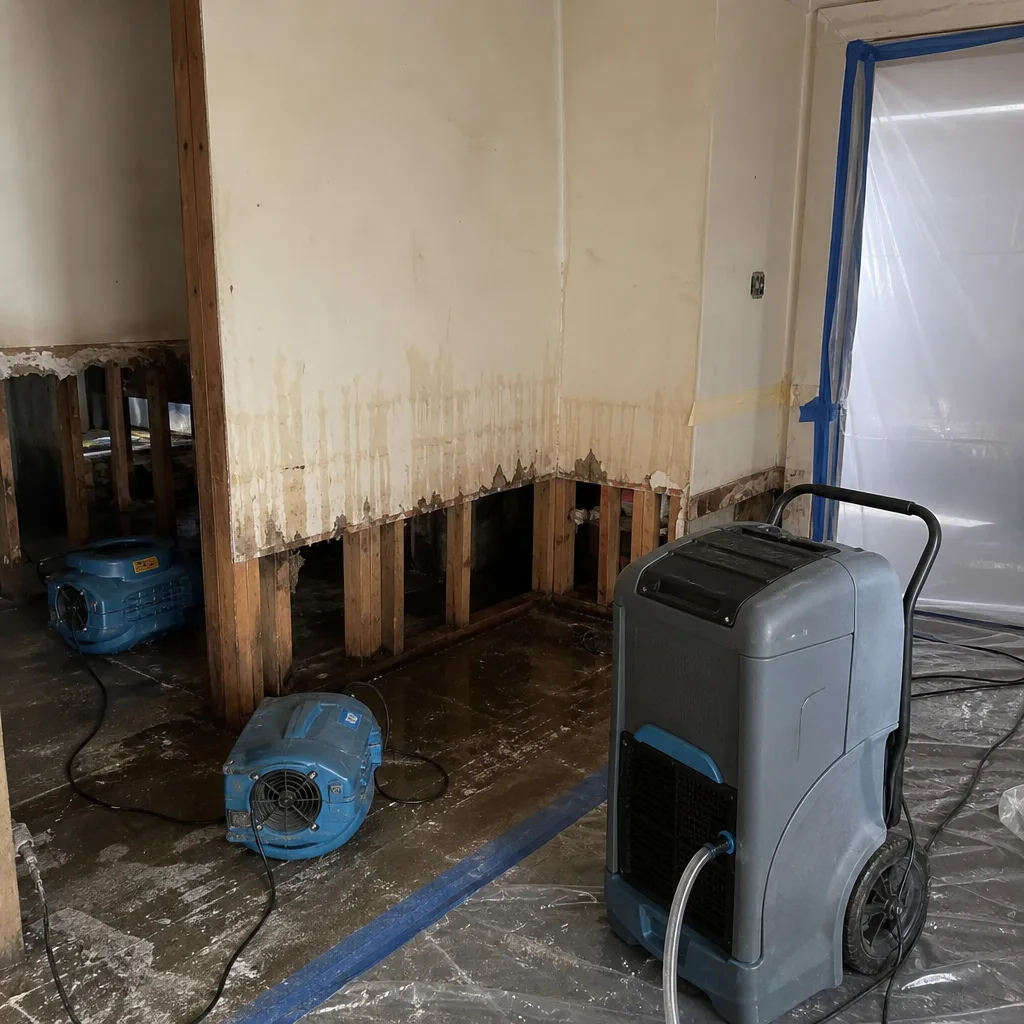 Before
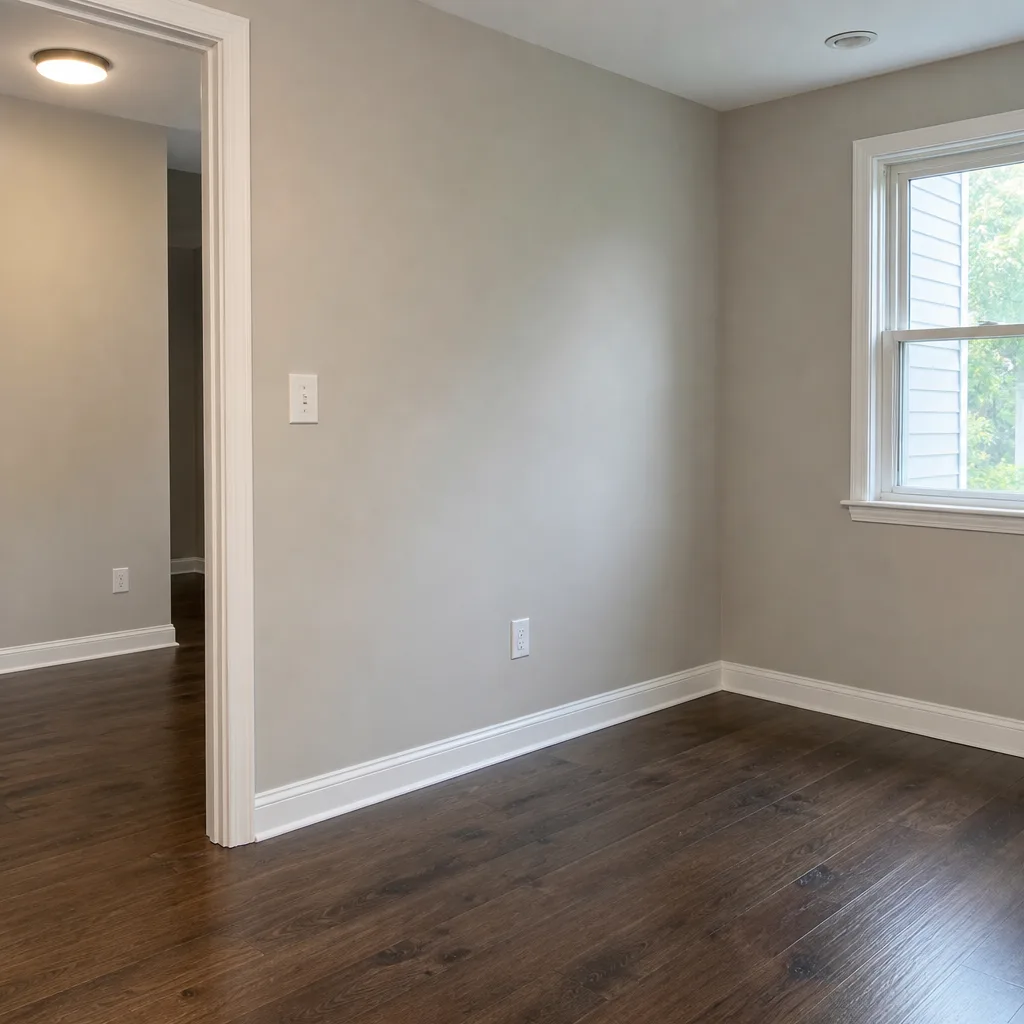 After
After24/7 Emergency Mold Remediation in Hillcrest
Mold remediation in Hillcrest typically costs $1,800-$6,500 depending on containment requirements and how far moisture has traveled through wall cavities. We answer live at (914) 809-9936 around the clock, and a certified crew can be on site in Hillcrest within 45 minutes for a free visual inspection. The first hour matters because Hillcrest’s converted split-levels and Cape Cods hide moisture inside partition walls where mold colonies double every 24 to 48 hours once conditions stay above roughly 60% relative humidity.
If you’ve found mold growth behind a baseboard, smelled that musty odor in a converted addition, or noticed staining on a ceiling below a second-floor bathroom, call now. We’ll get eyes on it before the colony spreads into adjacent cavities. No recording, no callback list. A live dispatcher answers, and our background-checked, IICRC-certified team coordinates the response from Floodline’s New York City office, dispatching crews who serve Hillcrest directly.
Understanding Mold Remediation Severity in Hillcrest Properties
Most Hillcrest mold losses trace back to three conditions our crews see weekly: failed drain lines in unpermitted second or third kitchens, ice-dam seepage through low-pitch split-level roofs, and hydrostatic pressure against aging block foundations after heavy rain. These aren’t quick bleach jobs. When a drain line fails inside an interior partition wall in a 1964 Cape Cod that was converted to two-family living, water travels through the framing before it ever surfaces on drywall. By the time you see the stain, the moisture has already been working for days or weeks.
Severity depends on water type and exposure duration. Category 1 water from a supply line is cleaner than Category 2 from a failed drain stack, which carries soaps, food waste, and organic matter that feeds mold aggressively. Category 3 water from sewage or exterior flooding is a biohazard requiring full containment, negative air pressure, and HEPA air scrubbing. In Hillcrest’s stock of 1950s-1970s construction, we also encounter mold from long-term humidity in under-ventilated crawl spaces and attics where added kitchens were never vented to code. These losses need moisture mapping far beyond what a standard single-family drying plan covers.
Every Mold Remediation job we run in Hillcrest starts with a full assessment: thermal imaging to find moisture inside wall cavities, hygrometer readings to establish a moisture baseline, and air sampling where clearance testing will be required to prove the space is clean at the end.
Why Hillcrest Property Owners Choose Floodline Restoration Co.
- 45-minute response commitment for Hillcrest. We dispatch immediately from our nearby staging area and have crews familiar with W. Eckerson Road, Maple Avenue, and the side streets off Route 45. You won’t wait on a crew that has to relearn the neighborhood.
- A live person answers at 2 a.m. Not an answering service, not a voicemail. A Floodline dispatcher picks up the phone and starts coordinating from that moment. We’ve been doing it since 2010.
- IICRC, RIA, and IFA-certified technicians. Our crews carry WRT and AMRT certifications and follow the IICRC S520 standard for mold remediation. Background-checked and uniformed, every time.
- Free visual inspection with no obligation. We’ll walk the property, explain what we’re seeing, and give you a written scope before any work starts. If we find nothing urgent, we’ll tell you that too.
- Direct insurance billing. We deal with the carrier, document everything with photos and moisture logs, and never ask you to play messenger. Most mold remediation from hidden plumbing failures is covered, and we make sure that coverage gets used.
- One team from containment to reconstruction. We don’t stop at cutting out mold. The same Floodline crew that runs containment and drying rebuilds the wall, the ceiling, the bathroom. You get your house back from one name that’s accountable for all of it.
Our Mold Remediation Process
1. Inspection & Assessment
We start with thermal imaging and moisture mapping using Dri-Eaz probes and hygrometers. In Hillcrest specifically, we trace moisture paths through wall cavities across multiple floors, because added bathrooms and kitchens in converted homes create hidden channels that standard inspections miss.
2. Containment & Stabilization
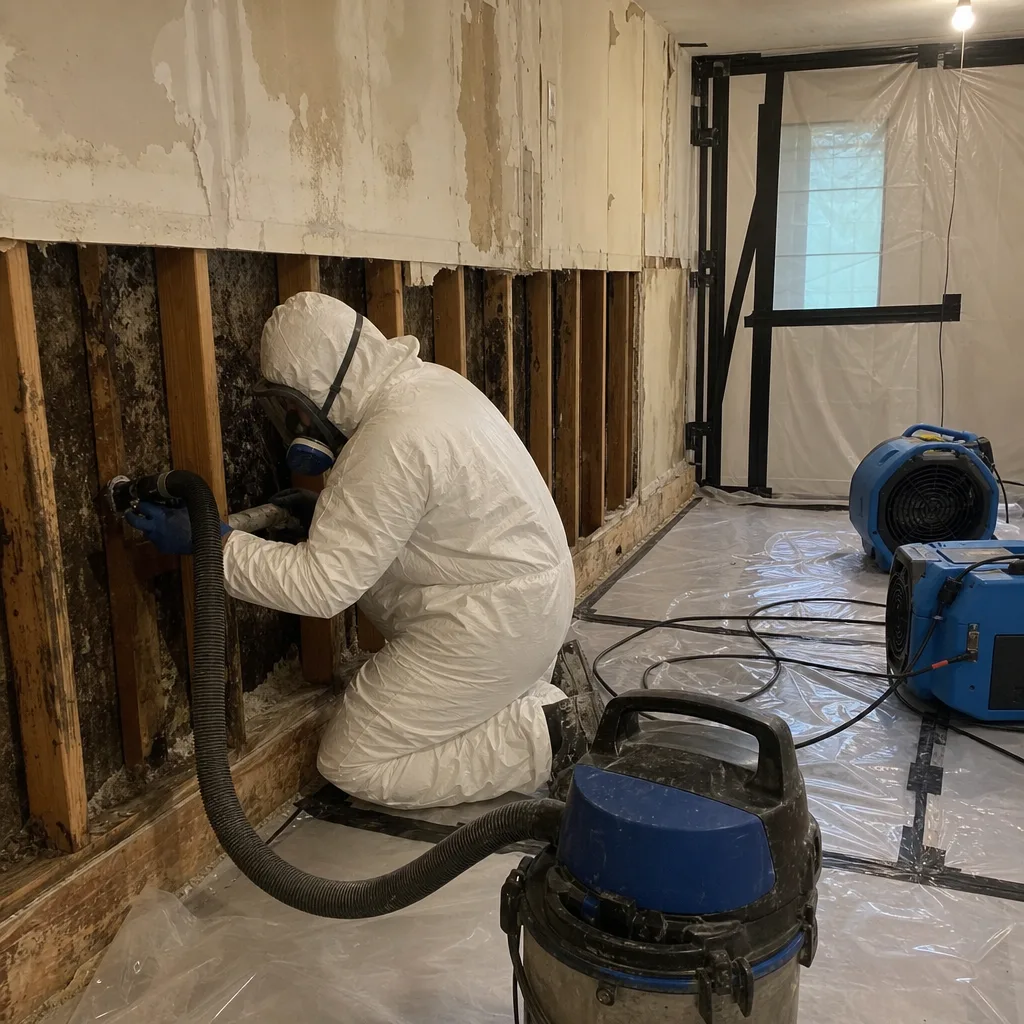
We seal affected areas with 6-mil polyethylene barriers and establish negative air pressure with HEPA air scrubbers. This keeps mold spores from spreading through the rest of your home while we work. Containment goes up on day one, before any cutting starts.
3. Drying & Dehumidification
Phoenix and Dri-Eaz dehumidifiers, XPOWER air movers, and Injectidry systems dry the affected cavities to IICRC dry standard. Daily readings are logged and shared with you and your carrier. In Hillcrest’s converted homes, we often run multiple drying zones simultaneously because moisture rarely stays on one floor.
4. Cleaning & Antimicrobial Treatment
Affected framing and salvageable surfaces receive antimicrobial treatment and HEPA vacuuming. We remove and bag contaminated drywall, insulation, and carpet following IICRC S520 protocol. Anything that can’t be cleaned to standard comes out.
5. Crawl Space & Humidity Control
For Hillcrest homes with block foundations on clay-heavy soil, we address the humidity source that feeds recurring mold: sealing crawl space vents, installing vapor barriers, and converting spaces to conditioned or semi-conditioned systems where the house needs it.
6. Repairs & Restoration
We rebuild what we removed. Drywall, trim, paint, insulation, subfloor. The same crew that did the remediation does the reconstruction, so there’s no handoff and no blame-shifting. Every job carries the 90-Day Done Right Promise in writing.
Need Emergency Mold Remediation in Hillcrest Now?
Crews minutes away, answering live 24 hours a day. The sooner we start, the less it costs.
Working With Your Insurance Company
Most Hillcrest homeowners discover mold only after a covered loss has already happened: a drain line failed inside a wall, an ice dam soaked the attic, a water heater split while you were away. The mold is a symptom of a covered water event. That matters. We document it that way from the first hour, with photos of the original source, moisture readings that establish drying progress, and a line-item scope that separates covered water damage from the resulting mold remediation. Your adjuster deals directly with our documentation team, and we negotiate the claim so you don’t have to. Curt Bowman built Floodline around a dispatch board, not a sales desk, and the claim work runs the same way: one person owns it, start to finish.
What We Provide Your Insurer
- Thorough documentation of the loss, including source identification
- Photos of all damage, room by room, taken before any demolition
- Moisture readings and drying logs updated daily until dry standard is met
- A detailed, line-item scope of work matching IICRC protocols
- Direct coordination with your carrier, including adjuster walkthroughs
Built for Hillcrest’s Loss Calendar
Hillcrest’s mold season doesn’t follow a single calendar; it follows the freeze-thaw cycles and the rain. January and February bring deep freezes that burst original galvanized supply lines in 1950s ranches and Cape Cods, saturating basement walls and feeding mold behind paneling. March and April thaw brings hydrostatic pressure against those aging block foundations as clay-heavy glacial soils finally release winter moisture, pushing water through micro-cracks and into basement framing. July and August thunderstorms can dump three inches in an hour on soils that already drain poorly, flooding crawl spaces and low-grade basements. And every nor’easter season, low-pitch split-level roofs ice-dam at the eaves, sending water into soffit cavities and ceiling drywall where mold takes hold before the stain ever shows on the ceiling.
In converted Hillcrest homes, the calendar is different. Hidden drain line failures happen year-round, whenever that second or third kitchen’s cast-iron stack finally gives out. Those failures don’t care about the weather. They care about load. And every one of them is a mold event waiting behind a wall.
Mold Remediation Across Hillcrest’s Neighborhoods
Hillcrest’s housing stock changes block by block, and our response routes reflect that. Around W. Eckerson Road and the side streets running west toward Route 45, we see the heaviest concentration of 1950s-1960s split-levels, where illegal or lightly permitted second kitchens create the hidden drain line failures this page keeps circling back to. These homes often need full containment across two floors, not one room.
Off Maple Avenue and the streets south toward New Hempstead Road, older ranches on larger lots sit over shallow crawl spaces where clay soil holds moisture against foundation walls. Crawl space treatment and humidity control are the repeat calls there, not dramatic tear-outs. Homeowners notice musty air migrating up through floor registers in summer, and that smell leads us to a vapor barrier that’s either missing entirely or torn to shreds decades ago.
Closer to the Monsey border and the faster-growing eastern blocks, we’re frequently in homes that have been through multiple conversions over the years. Interior partition walls were moved, drain lines were extended, venting was never added. When mold shows up there, it’s rarely in the room where the smell is strongest. We cut open the wall where the moisture map tells us, and we find the leak two floors up and one wall over.
The common thread across all of Hillcrest: standard remediation plans written from a national template don’t work here. Every job needs a real person with a moisture meter in the house, tracing the actual path before opening a single wall.
Specialized Mold Remediation Services We Offer in Hillcrest
Mold Inspection & Testing
A visual inspection tells us something. Air sampling and surface swabs tell us more. In Hillcrest conversions, we run clearance testing at the end of every remediation as proof the space is clean, not just visually dry. Samples go to an independent lab. You get the report. Your insurer gets the report. No one has to argue about what was or wasn’t in the air.
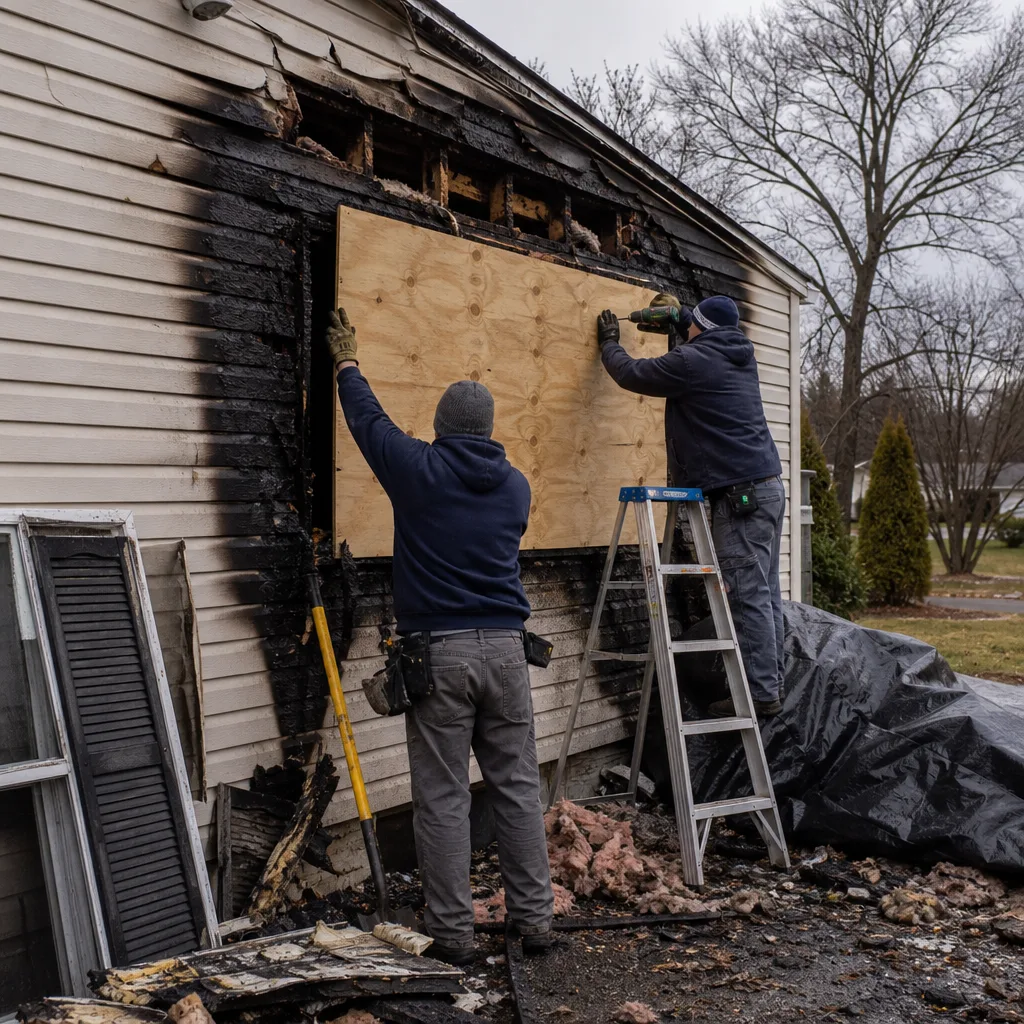
Mold Removal
Removal means cutting out contaminated drywall, insulation, carpet, and trim, bagging it in containment, and disposing of it following Rockland County protocols. It’s the most common service we run in Hillcrest, and it’s the one where containment matters most. Cut mold without containment and you’ve spread spores through the whole house.
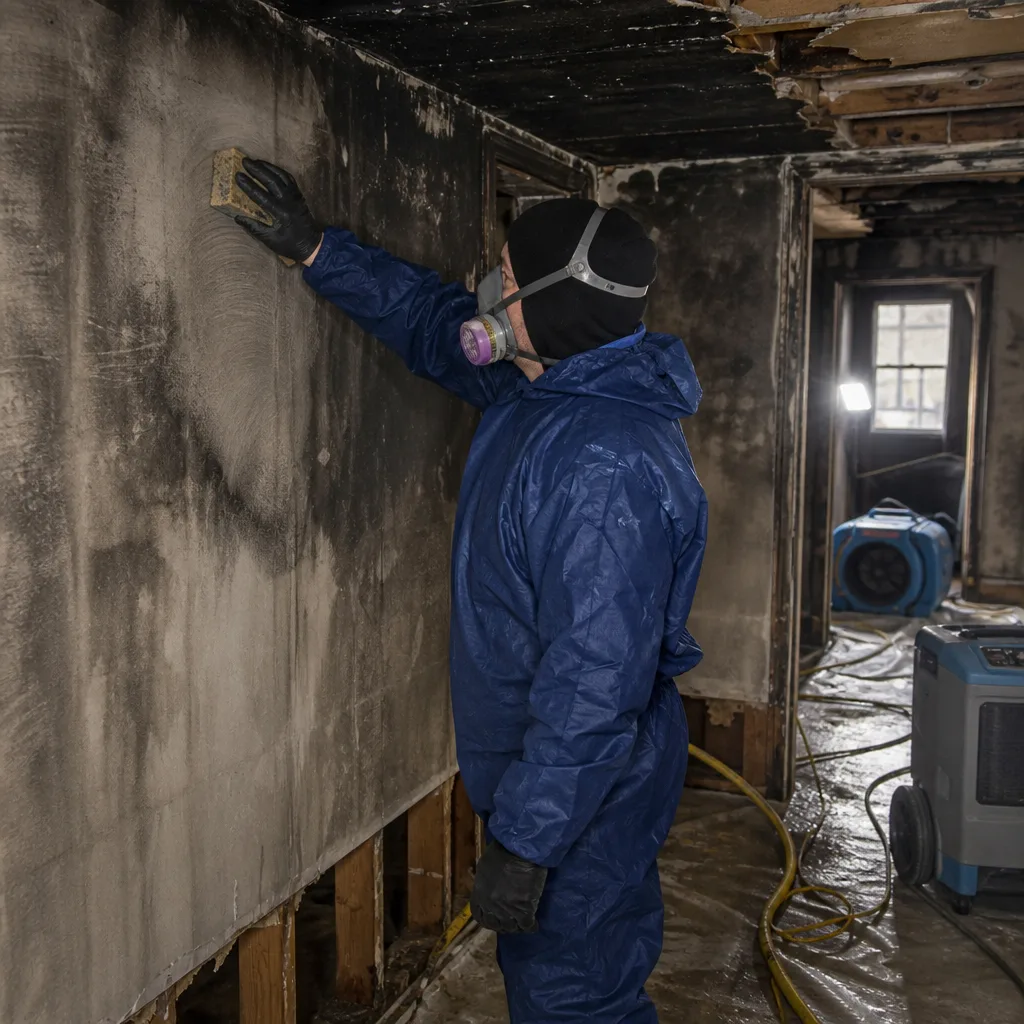
Black Mold Remediation
Stachybotrys chartarum, the one everyone calls black mold, grows where water sits uninterrupted on cellulose: drywall, ceiling tile, wood framing. Hillcrest’s hidden drain failures are perfect incubators. We treat black mold the same way we treat every mold: contain, remove, dry, treat, verify. But we verify harder. Clearance testing after black mold remediation is standard on our jobs, not an upgrade.
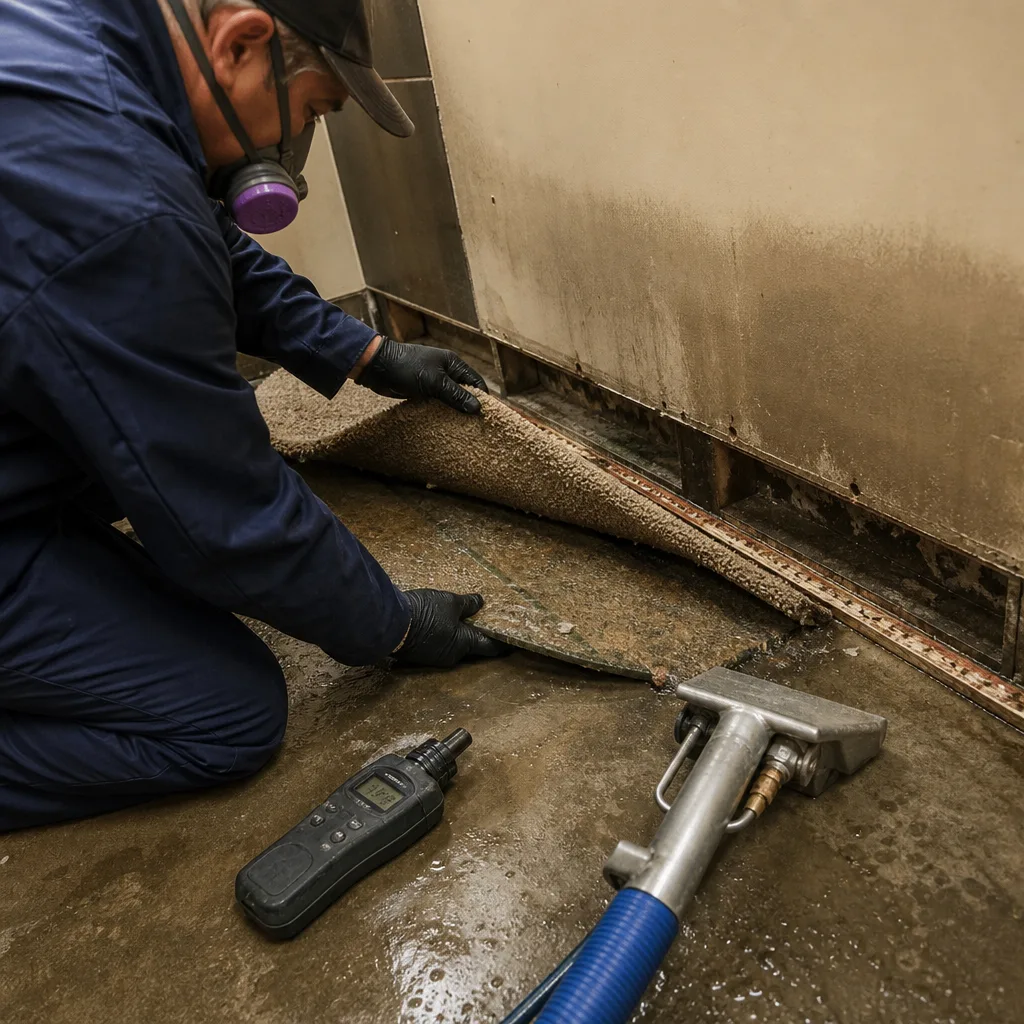
Air Quality Restoration
After physical removal, we run HEPA air scrubbers to pull residual spores from the air and HVAC systems where necessary. For older Hillcrest homes with forced-air heat, mold spores in ductwork are a real concern. We inspect the system and clean what needs cleaning. The goal is air you can breathe without wondering about.
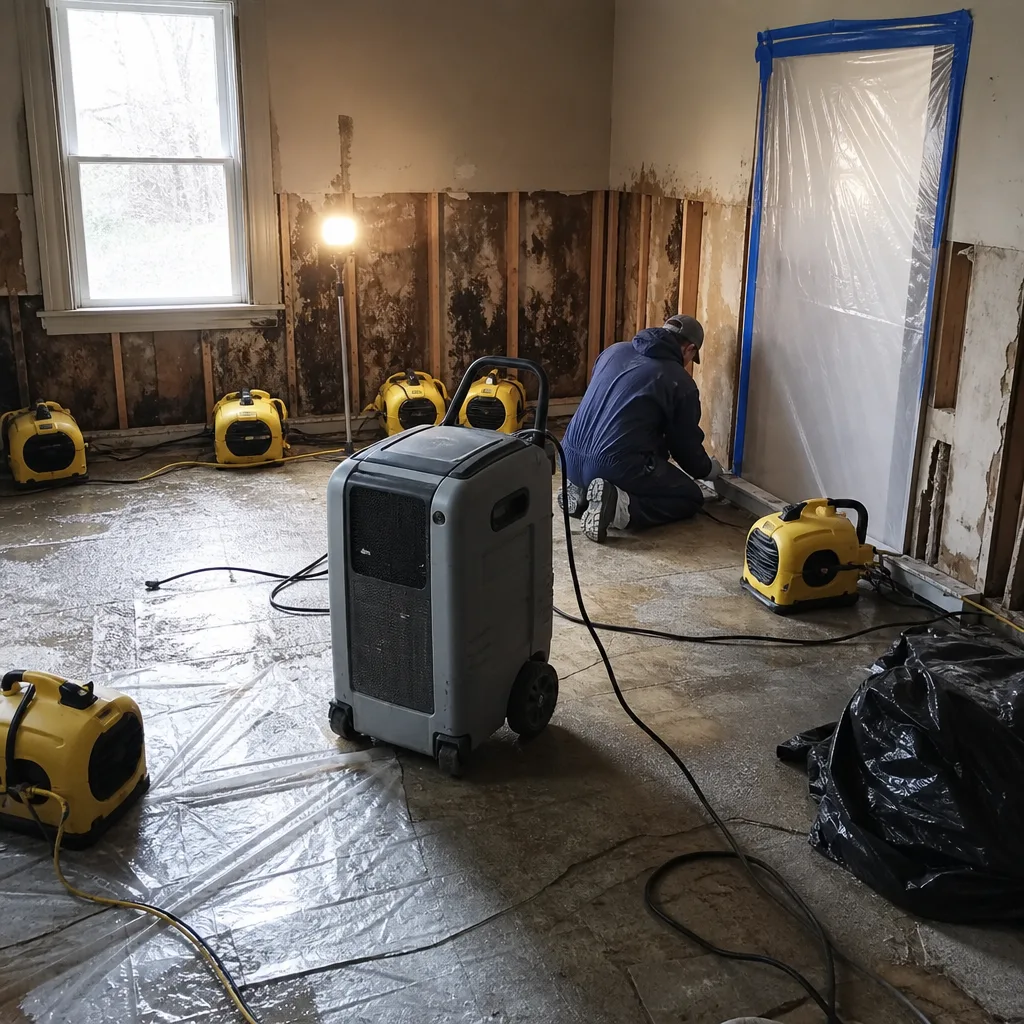
Crawl Space Treatment
Clay soil, block foundation, no vapor barrier: that’s the standard Hillcrest crawl space on older ranch homes. Mold grows on the floor joists and subfloor, and the smell pushes up into the living space all summer. We treat the framing, replace or add the vapor barrier, and address drainage so the moisture doesn’t come back next spring. This is the highest-value mold service in Hillcrest, because it addresses the source instead of just the symptom.
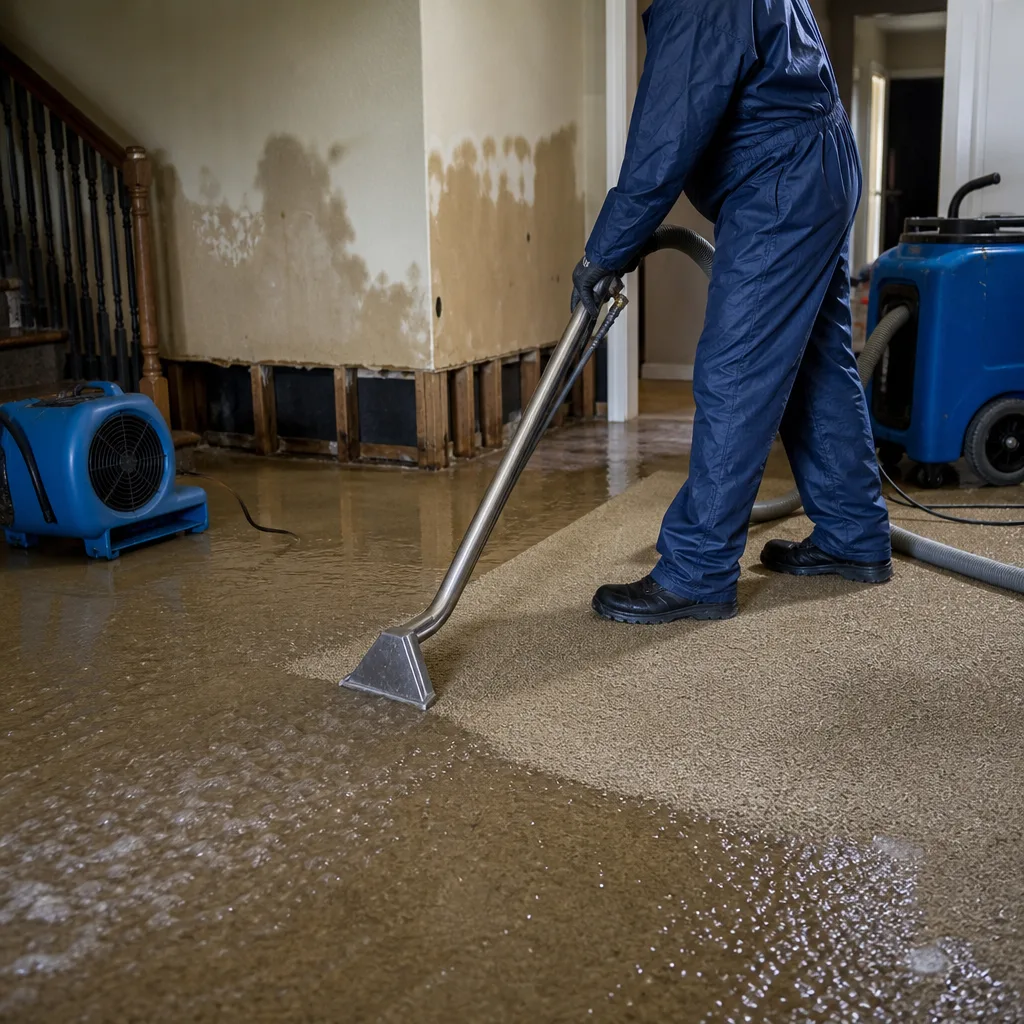
Moisture & Humidity Control
Converting a crawl space from vented to semi-conditioned requires managing dew points and air exchange. We size dehumidifiers to the space, install vapor barriers rated for permanent contact with soil, and occasionally add sump pumps where grading can’t be corrected. In converted Hillcrest homes with added bathrooms that were never vented, we also fix the exhaust issue that’s been pumping shower moisture into wall cavities since the day the addition went in.
What happens when you call
- 1
A real person answersNo phone trees - you reach a local pro.
- 2
You get an upfront price rangeHonest numbers before anyone is dispatched.
- 3
A background-checked tech heads outLicensed & insured, dispatched right away.
- 4
You approve before work beginsNothing starts until you say go.
Mold Remediation Costs in Hillcrest, NY
A typical crawl space mold treatment in Hillcrest runs $1,800-$3,500, depending on square footage and whether we’re replacing a vapor barrier. A contained mold removal in a single bathroom or kitchen wall runs $2,500-$5,500, including drying and basic reconstruction. A full multi-floor mold loss from a hidden drain line failure, the kind we see on W. Eckerson Road and converted split-levels throughout Hillcrest, typically lands between $5,500 and $12,000 after containment, removal, structural drying, and rebuild.
What moves the price: how many floors the moisture traveled, whether multiple kitchens or bathrooms are involved, and what kind of rebuild finishes we’re matching. Insurance covers most of these jobs when the mold stems from a covered water event. Our free visual inspection gives you a firm written scope before any work starts, so there’s no open-ended estimate. Call (914) 809-9936 and we’ll schedule it.
We Also Serve Cities Near Hillcrest
Floodline Restoration Co. serves the entire Rockland County area, including mold remediation in Bardonia, Ossining, Croton-on-Hudson, and New City. The same live dispatch, the same IICRC-certified crews, the same 90-Day Done Right Promise in writing. If you’re in a neighboring town, call the same number and ask for the mold team.
Serving Hillcrest, NY - Our Local Coverage Area
We’re based in the Hillcrest area and know this community well. Use the map below to see our service coverage - if you’re nearby, we can almost certainly help.
Hillcrest Mold Remediation Questions, Answered
Why does mold remediation in Hillcrest often take longer than in neighboring Spring Valley or Suffern?
Because Hillcrest’s housing stock includes a high number of converted Cape Cods and split-levels where added kitchens and bathrooms were built without proper venting or drain capacity. Moisture travels through wall cavities across multiple floors before surfacing, so our moisture mapping and containment work has to cover more area than a standard single-family loss. The drying plan takes longer, not because we’re slow, but because we’re thorough. Call (914) 809-9936 for an evaluation of your specific house.
How do I know if mold in my Hillcrest Cape Cod came from an ice dam or a hidden plumbing leak?
Ice dam mold usually shows up first on ceiling drywall near exterior walls, in late winter or early spring. A hidden plumbing leak shows up year-round, often as staining below a bathroom or kitchen. The quick way to tell: look at the timing and the location. If it’s February and the spot is near the eaves, it’s ice damming. If it’s August and the spot is below a second-floor bathroom, it’s a drain line. Our free inspection settles it with thermal imaging and moisture mapping. Call (914) 809-9936.
Can you dry out a Hillcrest home with original galvanized pipes without tearing out all the walls?
Yes, in most cases. Our drying plan follows the moisture map, not the whole wall. We open only what needs opening, run Injectidry systems and air movers through sealed ports where possible, and take daily readings until the structure hits dry standard. The original galvanized supply lines are usually unrelated to the mold problem unless they’re the source of the leak. If one failed, we’ll recommend a licensed plumber, but we don’t gut walls just to find trouble. Call (914) 809-9936 and we’ll map it before we cut anything.
What should I do right after a hidden drain line leaks in my converted split-level in Hillcrest?
Shut off the water to that fixture if you can identify the line, and call us immediately. Don’t cut into the wall yourself. Hidden drain failures in converted Hillcrest homes mean Category 2 water has usually already been sitting in wall cavities before you noticed anything. Opening the wall without containment spreads mold spores and contaminates the space. The first 30 minutes matter less than the first containment decision: call (914) 809-9936 and we’ll get a certified crew out to seal the area and map the moisture before any cutting starts.
Does my Hillcrest home’s crawl space need mold treatment if the foundation is block and the soil is clay?
If you’re smelling musty air in the house during summer, the answer is probably yes. Block foundations on clay-heavy glacial soil stay damp almost year-round in Hillcrest. That moisture migrates up into floor joists and subfloor, and mold grows in the dark. We treat the framing, install or replace the vapor barrier, and convert the space to stop the moisture at the source. It’s the service we recommend most to Hillcrest homeowners with ranch homes built before 1970. Estimates are free: (914) 809-9936.
How fast can you actually get to my house in Hillcrest?
Within 45 minutes for a visual assessment in most cases, and often faster. We keep crews staged near the Hillcrest area specifically because the response window matters when mold is actively growing. A live dispatcher answers at any hour and starts the clock. The estimate is free, and the inspection tells you exactly what you’re dealing with: (914) 809-9936.
Will my insurance cover mold remediation in Hillcrest?
If the mold resulted from a covered water event, such as a failed drain line, burst pipe, or roof leak, then yes, the remediation is generally covered. We document the source, the moisture path, and the drying process so the claim gets paid. Direct insurance billing means you never front the money and wait for reimbursement. We’ve handled claims across Rockland County and we know what adjusters need to see. Call (914) 809-9936 and we’ll start building that file from the first hour.
Who actually deals with my insurance adjuster?
We do. Floodline Restoration Co. has a documentation team that prepares the line-item scope, the photos, the moisture logs, and the lab results your carrier needs. Your adjuster calls us, not you. You get kept informed, but you don’t get put in the middle. That’s the way we’ve run it since Curt Bowman founded the company in 2010.
Written by Curt Bowman, Owner at Floodline Restoration Co., serving Hillcrest with certified mold remediation, full-cycle restoration, and the 90-Day Done Right Promise in writing.