
Last updated August 25, 2026
Free visual inspection and a written scope of work before any mitigation begins - photos, moisture readings, and drying logs go in your claim file
The scope we write is the scope we bill. Anything new gets shown to you, in writing, before we touch it.


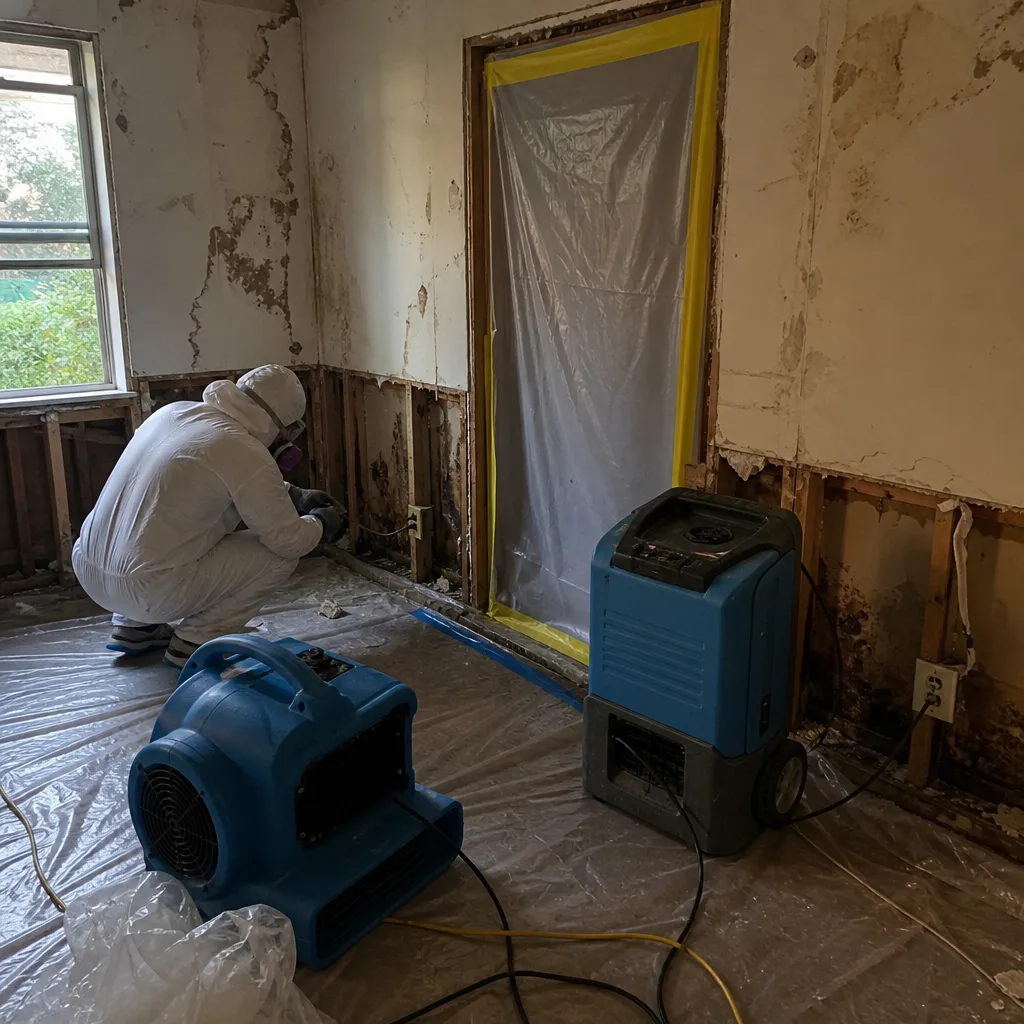 Before
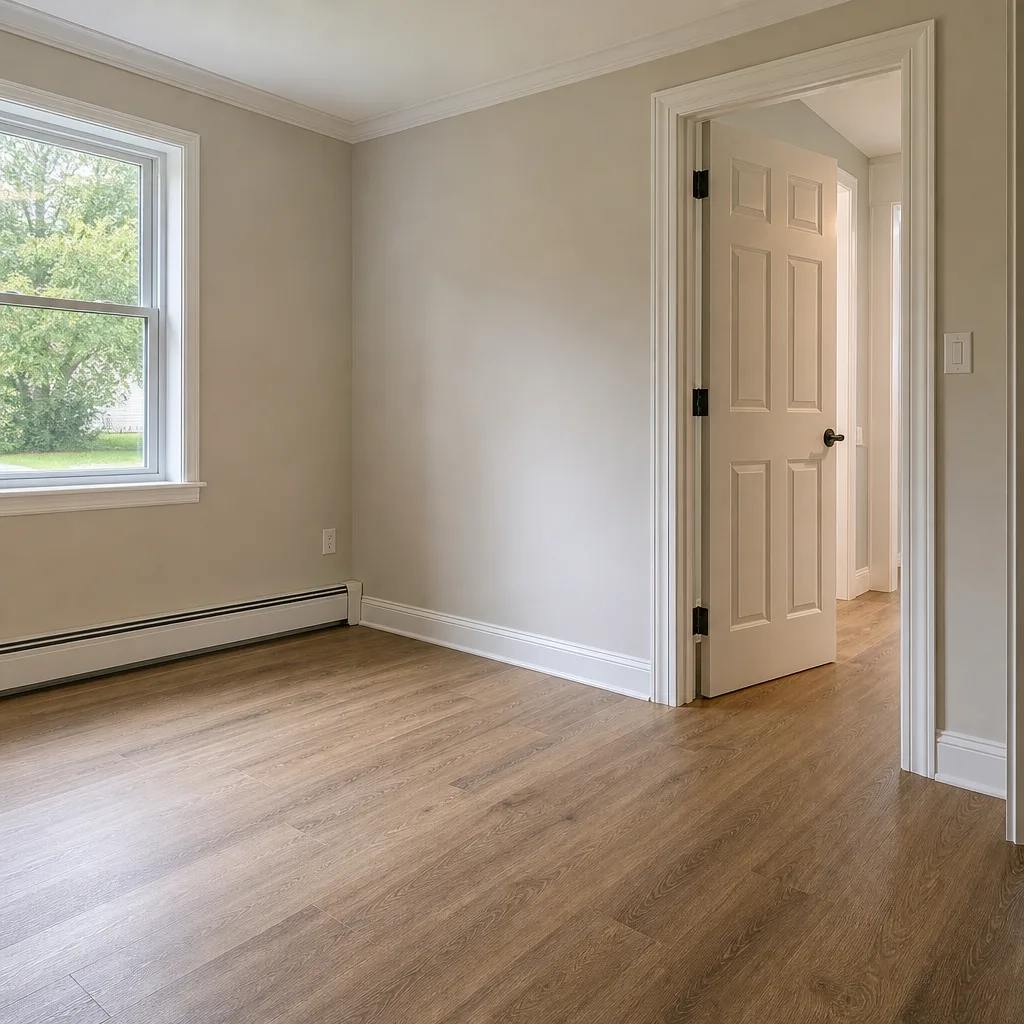 After
After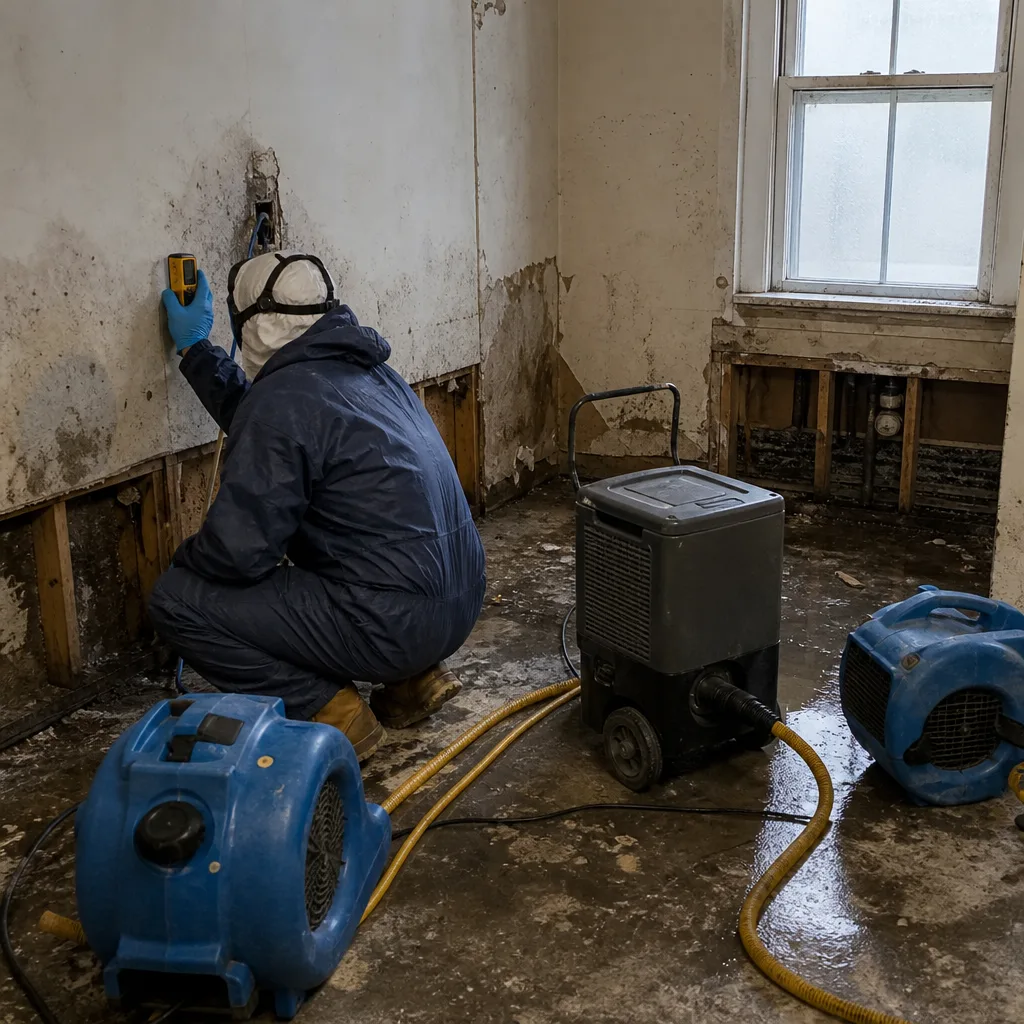 Before
 After
After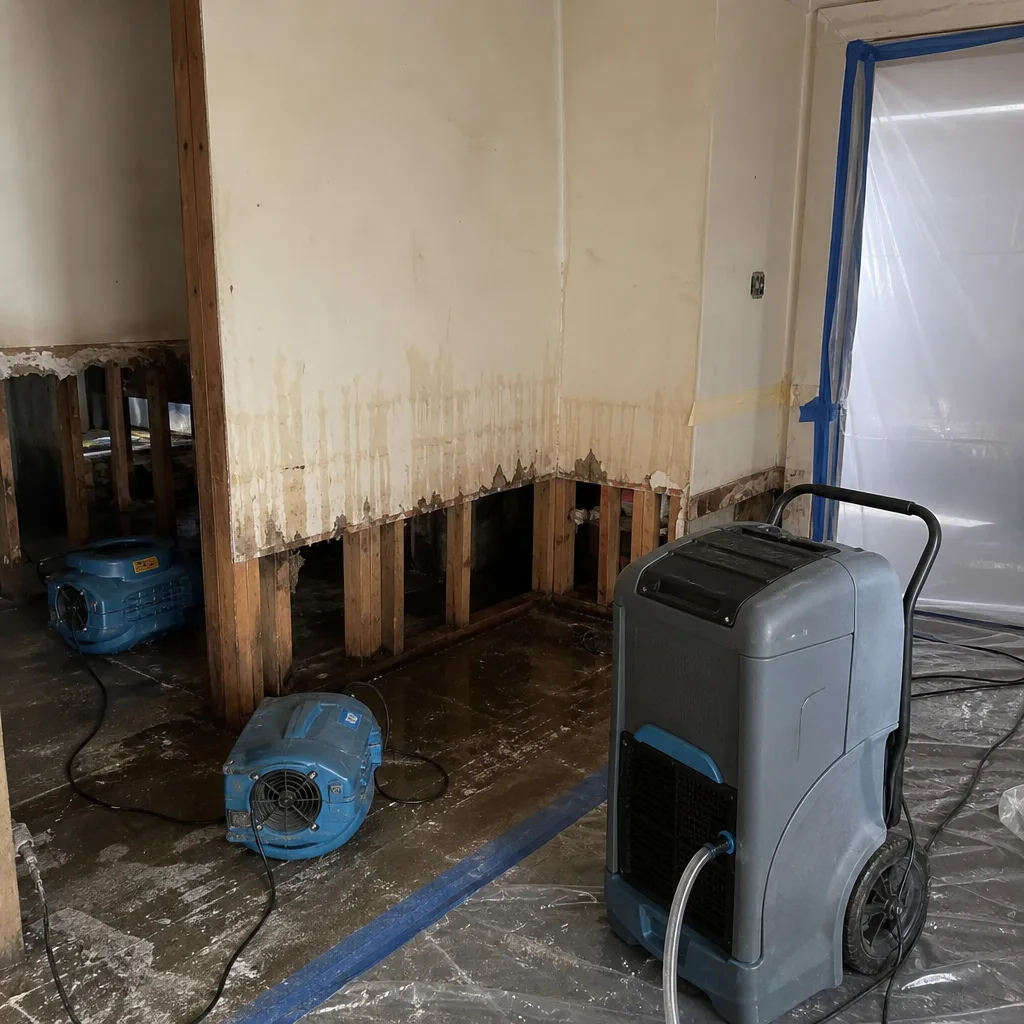 Before
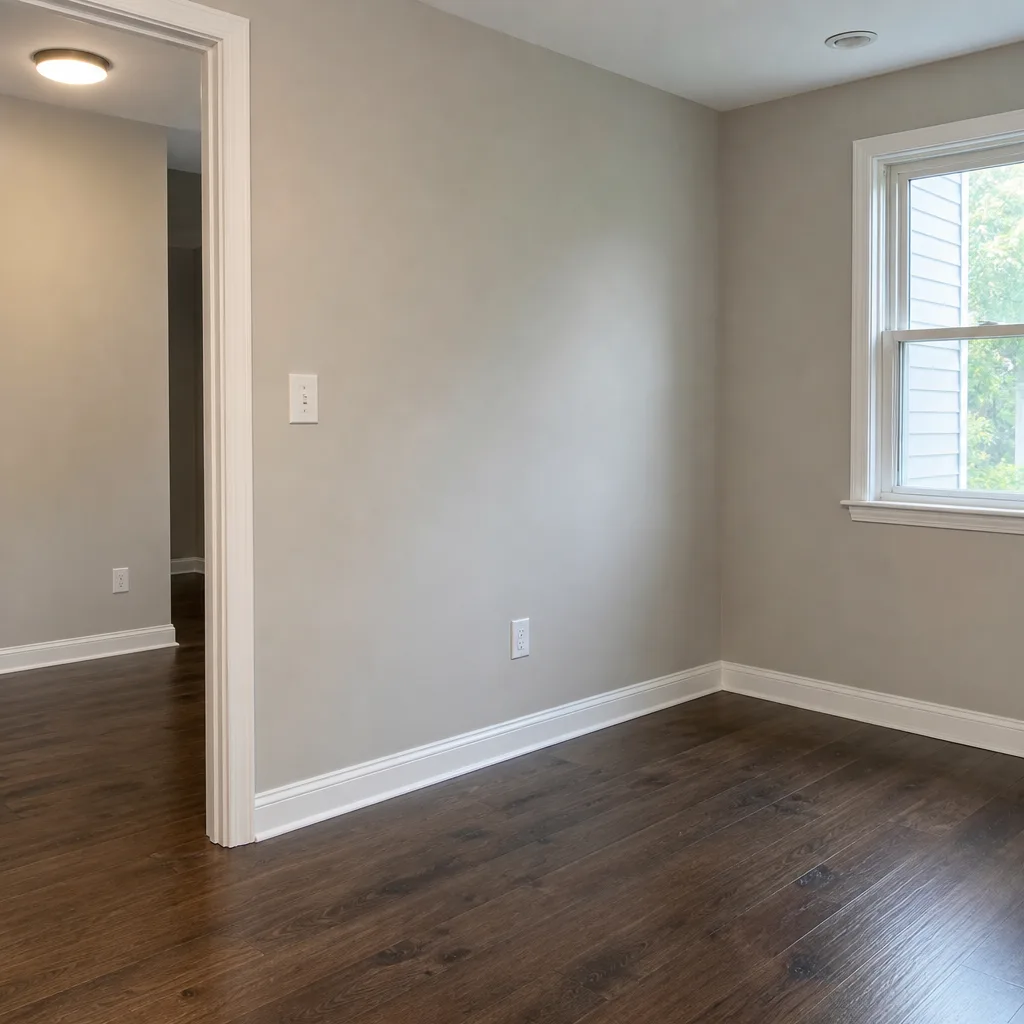 After
AfterDamage Restoration Warning Signs: A Bardonia Homeowner’s Reference Guide
Most Bardonia homes don’t fail all at once. They fail quietly, over months or years, in the places nobody looks: behind the baseboard in the finished basement, under the sink cabinet that holds the holiday platters, inside the wall cavity where the ice dam sent water running down the sheathing last February. The insurance industry has a number for this. Roughly 60% of water damage claims involve damage that was present for days or weeks before anyone noticed. The reason is simple: the first signs are ordinary. A faint line of discoloration. A musty smell that comes and goes. A water bill that ticks up in winter when it shouldn’t. This guide walks through the warning signs that matter most in Bardonia homes built through the 1960s, 70s, and 80s, what they look like, what they mean, and what to do about them before a $400 repair becomes a $14,000 remediation.
Quick Answer
The most reliable early warning signs of damage in a Bardonia home are: water stains or paint bubbling on ceilings and walls, a persistent musty or earthy odor, floors that feel soft or springy underfoot, higher-than-usual water bills, visible mold growth, and cracks or staining around basement walls and window frames. If you’re seeing any two of these together, you’re likely past the prevention stage and into active damage. The faster you act, the less demolition the house needs, and the simpler the insurance claim stays.
Table of Contents
- Water Stains and Paint Bubbling: Reading the Mark on the Wall
- That Musty Smell: What It Actually Means in a Bardonia Basement
- Soft Floors, Cupped Hardwood, and Other Structural Tells
- The Water Bill Warning: Hidden Leaks That Cost You Twice
- Visible Mold and Efflorescence: Knowing the Difference
- Bardonia Basement Walls: Cracks, Staining, and Seasonal Movement
- Ice Dams and Attic Staining: The Winter Damage Cycle
- Common Mistakes to Avoid
- When to Call a Professional
- Frequently Asked Questions
- The Bottom Line
Water Stains and Paint Bubbling: Reading the Mark on the Wall
Water leaves a signature. It’s not always a puddle. In most Bardonia homes, the first visible sign of a problem is a stain on the ceiling, a soft yellow-brown ring, or paint that has begun to bubble and lift away from the wall in a small patch. This means water has been sitting against the drywall or plaster long enough to wick through. The stain is the line the water left, and it’s where the investigation starts.
Ceiling stains under bathrooms are worth treating as urgent, not cosmetic. A slow leak from a wax ring seal under a toilet, a shower pan that failed, or a supply line behind a second-floor bathroom wall can run for weeks before the stain appears on the ceiling below. By then, the subfloor may already be holding moisture, and the framing is on its way to rot. We’ve seen Bardonia colonials where a first-floor powder room ceiling stain traced back to a second-floor tub that had been leaking for six months. The family only noticed because the paint started to peel over the kitchen.
What to look for:
- Yellow, tan, or brown rings on ceilings, especially under bathrooms or along exterior walls.
- Paint that bubbles, blisters, or feels loose when you press it.
- Drywall tape that is separating at the seams, a sign the board behind it is swelling.
- A chalky white residue on basement walls, which is efflorescence, not mold, but it means water is moving through the masonry.
One stain doesn’t always mean a disaster. A single ring under a known leak that was fixed promptly may just need a stain-blocking primer and new paint. But overlapping rings, multiple stains at different points, or a stain that returns after repainting means the source is still active. In that case, the fix is not cosmetic. The source has to be found and the affected material checked with a moisture meter before any repainting happens. Otherwise you’re just covering up a problem that is growing behind the wall.
That Musty Smell: What It Actually Means in a Bardonia Basement
The smell is the warning sign most Bardonia homeowners dismiss first. It’s just the basement. It’s just the crawl space. It gets like that in summer. But a persistent musty or earthy odor is not a normal condition. It’s the smell of microbial growth feeding on wet organic material, and it means moisture is present somewhere in the structure. You are smelling the byproducts of mold and bacteria digesting your drywall paper, the dust on your floor joists, or the cardboard boxes against the wall.
Bardonia’s seasonal rhythm makes this worse. Spring snowmelt and heavy rains push groundwater against foundations. Summer humidity keeps surfaces damp on its own, independent of any leak. Fall and winter mean closed windows and reduced ventilation. A basement that smells musty in July is very often a basement that held water in March and never fully dried.
The smell test that matters:
- Close the basement door overnight. Open it in the morning and breathe in before you turn on the lights.
- If the smell is strongest near the floor, think groundwater or a slab leak.
- If it’s strongest near the ceiling joists, think a ceiling leak, plumbing supply line, or condensation on ductwork.
- If it’s strongest in one corner or against one wall, the problem is local. You can isolate it.
- If it moves around or seems to come from everywhere, the moisture is widespread and you need professional drying, not a dehumidifier.
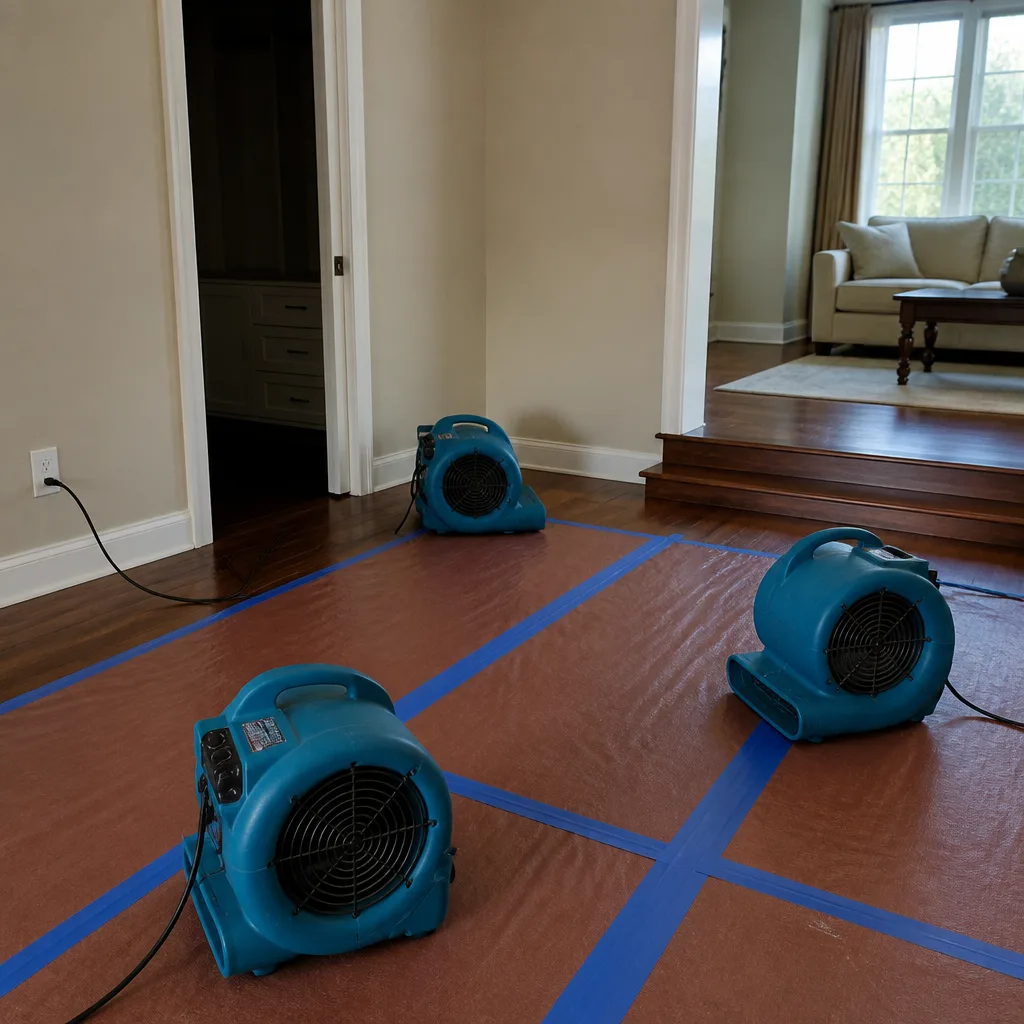
We respond to basements in Bardonia where the homeowner tells us the musty smell appeared years ago and they just learned to live with it. By the time we open the wall, the bottom plate of the framing is compromised and the insulation is black. The earlier you chase the smell, the less of the house comes apart. A well-placed floor fan and a store-bought dehumidifier can mask the symptom for a while, but they won’t remove the moisture trapped inside wall cavities or under flooring. Only professional-grade air movers, like the Dri-Eaz and B-Air units we run, with the right moisture mapping, get a structure back to a dry standard that supports the rebuild.
Soft Floors, Cupped Hardwood, and Other Structural Tells
Your floor should not move. It should not feel soft underfoot, it should not squeak in a new way when you walk from the hallway into the kitchen, and your hardwood should not look like a washboard at the edges of the boards. All of these are structural tells that moisture is changing the wood.
Cupping is the classic early sign. The edges of individual hardwood boards rise higher than the center, creating a shallow U shape across the floor surface. This happens when the underside of the boards is wetter than the top, and the wood expands more at the bottom than the top. In Bardonia homes with finished basements, cupping on the first floor above a basement often means the basement below has a moisture problem, not the floor itself.
Soft or springy areas are a more serious version of the same problem. The subfloor, usually plywood or OSB, is holding enough moisture to lose its structural integrity. It compresses and flexes. If you can press down on a vinyl or tile floor and feel movement, there may be a wet subfloor underneath. Tile that has begun to crack, especially in a grid pattern, can mean the subfloor below has swelled and is pushing against the tiles.
What to check in a Bardonia house:
- Walk the floor barefoot, not in shoes. Your feet will find softness that shoes hide.
- Look for gaps opening up between baseboards and flooring.
- Check for nails popping up through the floor surface, a sign the wood below is swelling.
- Listen for a change in the sound of your footsteps. A hollow, dampened sound can mean water in the cavity below.
Floors are one of the last places moisture shows up visibly, which makes the signs it gives you more serious. By the time the hardwood is cupping or the tile is cracking, the water has been at work for a while. If you catch it at the cupping stage, you can often dry the structure in place with equipment designed for that exact job, including Injectidry systems that dry hardwood from below without pulling the boards up. Past that stage, the flooring usually has to come out.
The Water Bill Warning: Hidden Leaks That Cost You Twice
Your water bill is a diagnostic tool, and most Bardonia homeowners never read it closely enough. Rockland County water isn’t cheap, and a sharp, unexplained rise in usage is often the first and only sign of a leak that no one can see. A toilet flapper that runs an extra hour a day. A pinhole leak in a copper supply line inside a wall. A hose bib that drips slowly behind a bush. None of these make noise. All of them add up.
The math is straightforward. A toilet that runs continuously can waste a few hundred gallons a day, which shows up on the bill within the first cycle. A pinhole leak in a wall cavity is slower but far more damaging, because every gallon it leaks is going into the framing, the insulation, and eventually the finished wall itself. In our experience in Bardonia, a leak inside a wall is nearly always discovered far later than a leak under a sink or behind a washing machine, simply because there’s nothing to see.
The steps to use your bill as an early warning:
- Find your baseline. Look at your average use over the last 12 months.
- Flag any month that is 15% or more above that baseline, once you account for seasonal irrigation or a full house over the holidays.
- On a day when no one is home for at least four hours, note your water meter reading before you leave and when you return. If the number moved, you have a leak somewhere.
- Check the toilet flappers first. Add a few drops of food coloring to the tank and wait 20 minutes without flushing. If the bowl water changes color, the flapper is failing.
- If the meter is still moving and the toilets are fine, check hose bibs, the water heater relief valve, and the crawl space or basement for any sign of water.
A hidden leak costs twice: once on the water bill, and once on the restoration when the leak finally reveals itself. If the bill says something is leaking and you can’t find it, that’s the moment to bring in a professional with a moisture meter and a thermal camera. We’d rather spend an hour finding a pinhole leak in a Bardonia wall than tearing out a wall that has been soaking for six months.
Visible Mold and Efflorescence: Knowing the Difference
Not everything that looks like mold is mold. Bardonia basements, especially older ones with block or stone foundations, very often show a white, powdery or crystalline deposit on the walls. That’s efflorescence, and it’s a mineral deposit left behind when water moves through masonry and evaporates, leaving the dissolved salts on the surface. Efflorescence itself is not a health problem, but it is evidence of a moisture problem, because it only forms when water is moving through the wall. The water that carries the salts is the same water that can feed actual mold growth on wood, drywall, and stored items.
Actual mold takes many forms. Black spots. Green or brown patches. A fine gray dusting across the back of a couch or the surface of stored files. In a closed room with a moisture problem, mold will grow on nearly any organic surface: drywall paper, wood framing, cardboard, leather, cotton, even the dust on a metal shelf. It does not need sunlight. It needs a food source, a temperature above about 40°F, and moisture. Basements in Bardonia provide all three for much of the year, especially in the humid months from June through September.
The tell that separates the two:
- Efflorescence is white or pale and crystalline, often sparkly under light, and it brushes off the masonry easily.
- Mold is usually colored (black, green, brown, gray), appears fuzzy or slimy, and penetrates porous surfaces rather than sitting on top of them.
- If you wipe mold with a bleach solution and the stain returns within a few weeks, it’s growing inside the material, not on the surface.
- If the black spots are on drywall, not masonry, assume mold. Drywall paper is an ideal food source.
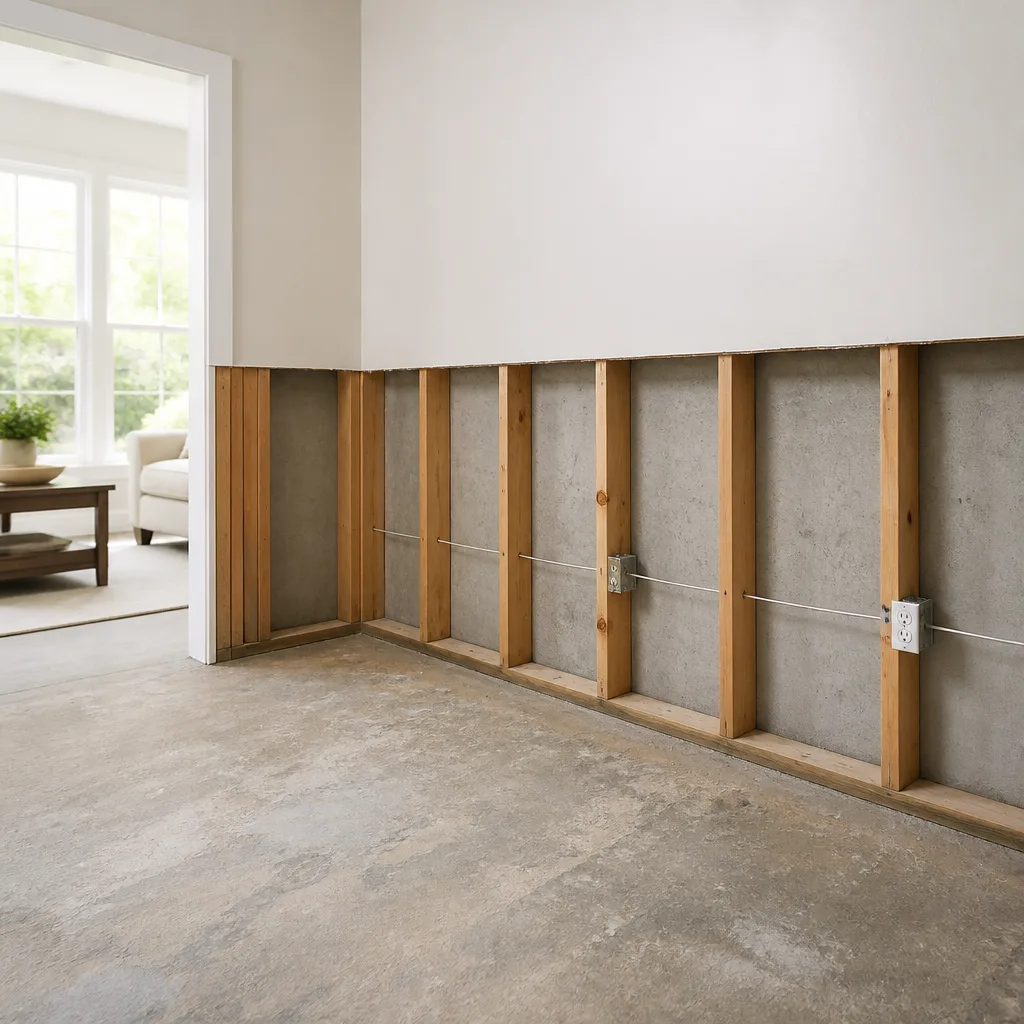
Mold remediation in a Rockland County home is not a surface cleaning job. If it’s growing on drywall, the affected material typically needs to be removed under containment, the cavity dried, and the source of moisture eliminated before anything is rebuilt. A proper remediation company will not just spray the wall and walk away. It will tell you where the moisture came from and what has to change so the mold doesn’t return. If a contractor skips that part, they’re selling you a temporary fix.
Bardonia Basement Walls: Cracks, Staining, and Seasonal Movement
Basement walls in Bardonia live with water pressure. The soil around a foundation expands and contracts with the seasons. In a wet spring, saturated soil pushes against the wall. In a long summer drought, the soil shrinks back. Older foundations, poured concrete or block, move with this cycle, and that movement shows up as cracks.
Most cracks in a Bardonia foundation are not structural emergencies. Hairline cracks that run vertically or in a stepped pattern along mortar joints are often shrinkage or seasonal movement, not a failing wall. What matters is whether the crack is changing, and whether it’s letting water in. A static crack can be repaired. A crack that widens in spring and closes in summer is active movement, and it needs a different conversation.
The signs that matter:
- Horizontal cracks in a foundation wall are more serious than vertical cracks. They can mean the wall is bowing under lateral soil pressure.
- Displacement, where one side of the crack is proud of the other, means the wall sections are moving independently.
- Staining below a crack, dark streaks or mineral deposits, means water has been traveling through it.
- Cracks wider than about 1/8 of an inch deserve a professional look, especially if they appeared suddenly or are growing.
Bardonia sits in a climate with real freeze-thaw cycles. Water that enters a crack in late winter will freeze and expand, forcing the crack wider. Come spring, more water enters, and the cycle accelerates. A crack that was purely cosmetic ten years ago can become a water entry point after enough winters. If you have a crack that seeps after heavy rain, don’t wait for it to get worse. Address it during the dry season, when repairs hold best.
Ice Dams and Attic Staining: The Winter Damage Cycle
Bardonia homeowners know ice dams. They form at the roof edge when heat escaping from the house melts snow on the upper roof, sending water running down toward the cold eave, where it refreezes. The ridge of ice grows, and the water behind it backs up under the shingles, into the soffits, and down the wall cavities. The damage shows itself weeks later, long after the ice has melted, as ceiling stains, wall staining, and mold growing inside exterior wall cavities.
Attic staining is the quieter warning. If you look in your attic in winter and see frost on the underside of the roof sheathing, the attic is too warm and too humid. The freeze-thaw is happening at the sheathing level, not just at the eave. In spring, that frost melts into the insulation. Over a few seasons, the insulation loses its effectiveness, the ceiling below stains, and microbial growth starts on the trusses and sheathing.
What to check each winter in Bardonia:
- After a heavy snow, look at your roofline from the street. Bare patches of roof above heated rooms, with snow still clinging to the eaves, is the classic ice dam setup.
- Check for icicles at the eaves. Icicles themselves are not proof of an ice dam, but thick icicles forming at the bottom of a bare roof patch often are.
- Open the attic hatch on a cold day. You should see a cold, dry attic. Frost, dampness, or visible moisture on nails and sheathing means warm air is getting in.
- Look for staining on the ceiling at the outside walls, the first place melting ice water shows up inside.
- Check the insulation. Wet or compressed insulation loses its R-value and holds moisture against the framing.
Ice dam remediation is part of the restoration picture in Bardonia, but it’s a job for professionals. Getting on a roof in January, steam-melting an ice dam, or chopping ice off a slate or asphalt roof is dangerous work that belongs to a crew with the right training and equipment. The structural fix is usually a combination of sealing air leaks, improving attic ventilation, and replacing wet insulation, the kind of work that follows a proper assessment, not a guess.
Common Mistakes to Avoid
- Painting over water stains without finding the source. A coat of stain-blocking primer stops the stain from showing, but it does not stop the water. The stain returns, or worse, the water finds a new path and damages a different area while the original problem grows hidden behind the wall.
- Waiting for the smell to go away on its own. Musty odors in a Bardonia basement do not resolve themselves in winter when the house closes up. What changes is your ability to ventilate. The moisture stays. The mold keeps growing. The smell returns stronger in spring.
- Using a standard household dehumidifier to dry a flooded basement. A store-bought unit pulls some humidity out of the air, but it won’t reach the water trapped in wall cavities, under flooring, or behind baseboards. A basement will feel dry on the surface while the framing stays wet for weeks, which is exactly when mold establishes itself.
- Filing an insurance claim before documenting the damage. Once the demolition starts, the evidence changes. If the carrier dispatches an adjuster and the wall is already open, the adjuster is working from your account, not from the source conditions. Photo documentation from the first day matters.
- Assuming a small water spot is a small problem. A stain the size of a dinner plate on a ceiling can represent a leak that has been running through the floor assembly above for a month. The visible stain marks where the water finally saturated the drywall, not where the water started.
- Cleaning up storm water or sewage with ordinary household tools. Category 3 water, sewage, and flood water in a Bardonia basement require professional extraction, containment, and disinfection with the right equipment and procedures. Mop-and-bucket cleanup leaves pathogens in porous surfaces.
When to Call a Professional
Some warning signs are informational. Some are actionable. The line between them is where the cost of delay overtakes the cost of a service call. Call a professional when you see any two warning signs at once, a stain and a smell, a soft floor and a rising water bill. Call when the water involved is from outside the house, a sewer backup, a storm, a sump pump that failed. That water carries whatever it passed through, and it demands professional extraction and disinfection, not a shop vac. Call when the affected area is behind finished walls or under floors, where you cannot see the extent of the problem without opening the structure. And call when you’ve already tried the quick fix, the repainting, the dehumidifier, the caulk, and the problem came back. Floodline Restoration Co. offers free estimates in Bardonia, and our crews are working in the area all year. You can reach a live person at (914) 809-9936, day or night.
Frequently Asked Questions
The first signs of water damage are usually a water stain on a ceiling or wall, a musty odor that appears when the house is closed up, or paint that begins to bubble and peel in a localized area. In Bardonia homes with basements, the smell often appears before any visible staining, because groundwater and humidity problems show in the air quality before they show on the walls. If you’ve noticed any of these, call (914) 809-9936 and we’ll assess it honestly, with no pressure to sell work that isn’t needed.
A musty smell usually means microbial growth is present somewhere, because that odor comes from mold or bacteria metabolizing organic material in a damp environment. It does not always mean a large, visible mold problem, and it does not always mean the mold is in the living space. It does always mean there is a moisture problem that needs to be found and corrected. A professional inspection with a moisture meter can locate the source, and in many Bardonia homes, the fix is more contained than the homeowner fears.
A hidden leak often shows up first on the water bill, as an unexplained rise in usage that doesn’t match your household habits. Beyond that, look for warm spots on floors, a sound of running water when no fixtures are in use, a meter that moves when no one is home, and mold or mildew smells with no visible source. In Bardonia, older copper supply lines running through walls and ceilings are a common leak point. If you suspect a hidden leak, call (914) 809-9936 for an assessment, and don’t ignore what the meter is telling you.
Homeowners insurance typically covers sudden and accidental water damage, like a burst pipe or an appliance supply line failure, but not gradual damage from a long-running leak or groundwater seepage that was not addressed. The distinction matters, and the way the damage is documented matters too. Floodline Restoration Co. can work with your carrier on the claim, and we document everything, from the moisture readings on the first day to the dry standard at the end, so you’re not the one explaining the timeline to an adjuster.
Floodline Restoration Co. answers the phone around the clock, and our dispatch is live, not a recording. In most cases, a crew can reach a Bardonia property the same day, and extraction equipment is running during that first visit, not scheduled for a follow-up. The faster water is removed and drying begins, the less material has to be torn out, and the smaller the final bill. If you’re seeing active water, call (914) 809-9936 now.
It depends on the water source, the amount of time the area has been wet, and the materials affected. Clean water from a supply line that was caught quickly can often be dried in place with minimal disruption. Water from outside, sewage, or a leak that has gone unseen for weeks usually demands a more involved approach, with affected materials removed rather than just dried. A good restoration company will show you the moisture readings and explain the options before any work begins, not after. In Bardonia, that conversation starts with a phone call to (914) 809-9936.
The Bottom Line
Damage in a Bardonia home almost never announces itself at the moment it starts. It shows up as a stain, an odor, a soft floor, a water bill that jumped, a crack that seeps, a basement that smells in August. The job of the homeowner is to read those signals early, before the problem spreads behind walls and under floors, and before a small repair becomes a full restoration. The home is where you live, and when water and mold move in, your comfort and your health are the real stakes. Floodline Restoration Co. has worked in Bardonia since 2010, and we’ve seen every version of this story. The ones that end well are the ones where someone called early. The ones that end badly are usually the ones where someone waited, hoping the problem would dry out on its own. If you’re seeing the signs, call (914) 809-9936. We’ll be there when we say.
Written by Curt Bowman, Owner at Floodline Restoration Co., serving Bardonia since 2010.